Cooking for a crowd
If you need to have a set quantity ready for several guests on time, focus on the usable basket area and how many batches you can cook, rather than just the capacity in litres.


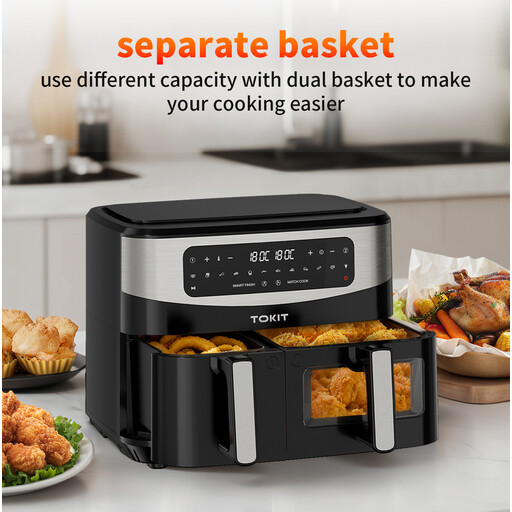
Start by working out how many potatoes you need and how many batches you’ll have to cook. An air fryer’s total capacity doesn’t tell you how much will fit in a single basket at once. A large single basket suits one type of food, while two separate baskets let you cook batches side by side or prepare different sides. For very large quantities, your existing oven may be more practical. You’ll also need a separate plan for keeping the food hot or chilled on the way to your meal.
If you need to have a set quantity ready for several guests on time, focus on the usable basket area and how many batches you can cook, rather than just the capacity in litres.
If evenly golden potato wedges matter to you, allow time to check them and adjust the cooking to suit the size of your wedges and the quantity you’re making.
If there’s a drive or a wait between cooking and eating, plan separately for keeping the food hot or chilled. Don’t rely on your appliance purchase alone.
A good fit if: You’re mainly making one batch of potato wedges and need a single, uninterrupted basket area.
The trade-off: The stated capacity doesn’t tell you how much you can cook with your particular wedge size. Tefal lists a 7.5 l capacity and a 1.5 kg chip capacity for the Easy Fry Mega EY855B; this manufacturer figure isn’t a measured capacity for fresh wedges.
A good fit if: You want to cook two batches side by side, or make potato wedges alongside another side dish.
The trade-off: The total capacity is split between the baskets: the Philips NA352/00 has 6 l plus 3 l, while the COSORI Turbo Tower Compact has two 4.3 l baskets. So check the size of each individual basket and how much room the appliance will take up.
A good fit if: Cooking your planned quantity in an air fryer would mean lots of batches, or you’re already using several oven trays for the meal.
The trade-off: Compare cooking time and electricity use for the quantity you’ll actually be making. Figures for individual dishes don’t necessarily apply to a large buffet.
For an evening meal where you’re bringing a dish, four decisions matter most: quantity and timing, browning, transport, and cleaning and future use. The percentages in the table relate to the main concern of each consumer group described.
| Priority | What to check when buying | Who it matters to most |
|---|---|---|
| Portions and timing | Plan for the number of guests and the quantity of potatoes; compare basket area, food capacity and the number of batches you may need. | If several guests need to eat on time, I want to know whether I can cook the planned quantity without too many batches. Around 36% of consumers prioritise making enough portions within the time available. |
| Even browning | Check that you can adjust the time and temperature, and that the basket is easy to access so you can check and turn the wedges. | I want to keep an eye on the wedges and adjust the cooking to suit their size, rather than relying on a fixed setting for a different dish. For around 29% of consumers, the cooking result comes first. |
| Transport and serving | Plan how you’ll transport the food and serve or reheat it at your destination. | If there’s a journey between cooking and eating, I need a plan that doesn’t rely solely on a keep-warm function at home. Around 21% of consumers consider transport and serving their main concern. |
| Cleaning and future use | Check the care instructions for the exact model, the appliance’s dimensions and the worktop and storage space available. | I want to know whether the appliance will be easy to clean after the meal and fit into my everyday routine. Cleaning and future use are the main priorities for around 14% of consumers. |
In appliances with two baskets, the capacity is split between separate compartments. For example, the Philips NA352/00’s 9 l capacity is divided into 6 l and 3 l baskets.
Compare the area of each basket and the food capacity of the specific model with the quantity you plan to cook. Factor any extra batches into your schedule.
Cooking time and browning depend on factors including the quantity and the appliance. A test using chips won’t tell you how fresh wedges cut to your preferred size will turn out.
Try cooking your potatoes in good time, using the variety, wedge size and batch quantity you plan to serve.
The German Federal Institute for Risk Assessment recommends keeping heated food at a minimum of 60 °C throughout until it is eaten.
Plan for transport and serving time separately. If you can’t check the temperature while travelling, don’t claim the food will be kept safely hot.
The Turbo Tower Compact has two baskets stacked on top of one another, while the TurboBlaze is a single-basket appliance with a 6 l capacity. The ranges cater to different quantities and space requirements.
According to Philips, the NA352/00 splits its total capacity between a 6 l and a 3 l basket, with synchronised cooking times. This could be useful for separate dishes or batches of different sizes.
The Easy Fry Mega EY855B is a model with a large single basket. Tefal lists a total capacity of 7.5 l and a chip capacity of 1.5 kg.
According to MEDION, the LIFE P20 XXL Twin MD 11760 has two separately controlled cooking zones and a total usable capacity of 8.7 l.
The following Joybuy products include single-basket air fryers and models with separate cooking areas, to help you plan portions of potato wedges.
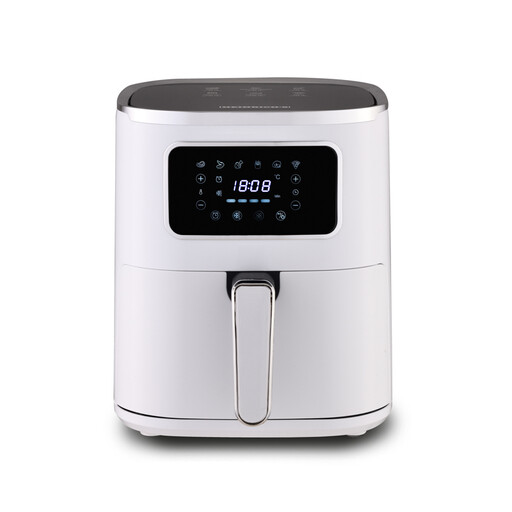 No image available
The stated 5 l capacity can help you start planning quantities. Check how many wedges will fit at once and whether you’ll need to cook additional batches.
The product name also lists 1,450 W and six automatic programmes.
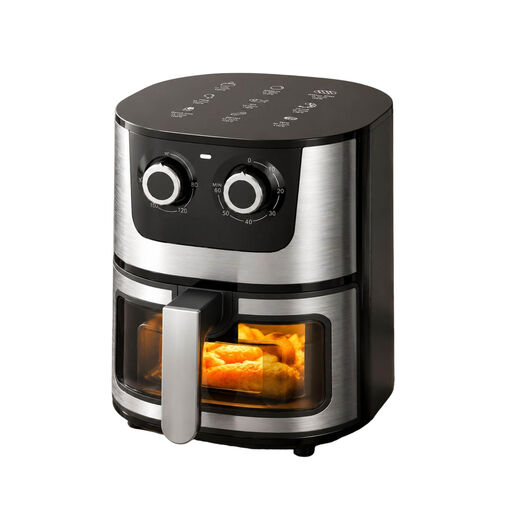 No image available
When planning portions, check the actual basket area and divide the total quantity into batches if needed.
The product name lists a power rating of 1,500 W.
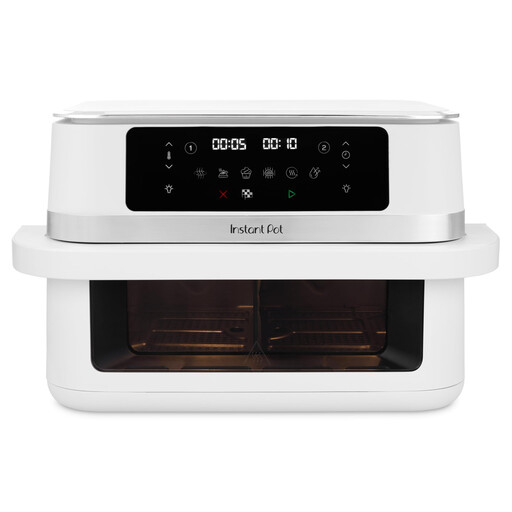 No image available
The stated option to use it as one 12 l cooking area or split it into two separate areas could help you choose between one large batch and separate dishes.
With the divider in place, each area is listed as 6 l, so the full capacity isn’t available as one cooking area.
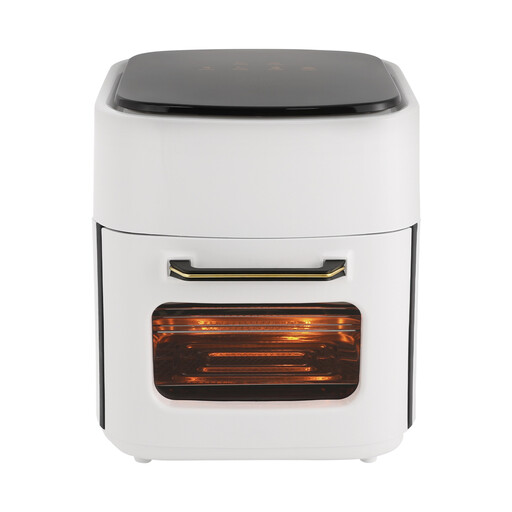 No image available
The stated 15 l capacity gives you a starting point for planning quantities. Compare it with the actual basket area and the number of batches you expect to cook.
The product name lists 1,400 W and a dishwasher-safe basket. Check the care instructions for the exact model.
 No image available
Two cooking areas could be useful for cooking batches side by side or preparing separate dishes. Check how many potatoes will actually fit in each area.
The product name lists a total capacity of 10 l, as well as 220–240 V and 2,850 W.
The usable area of the individual basket matters more than the total capacity alone. Compare the figures for the exact model with your planned wedge size and quantity. If there isn’t enough room for everything, allow for additional batches.
Use a recipe as a starting point and check the colour as they cook. Philips points out that cooking time and temperature can vary depending on the quantity and air fryer model. A test cooking time for chips isn’t a fixed time for fresh wedges.
If you’re keeping cooked food hot, the German Federal Institute for Risk Assessment recommends a temperature of at least 60 °C throughout until it’s eaten. An ordinary food container or the keep-warm function on an appliance left at home won’t prove that the food stays at this temperature on the journey. Perishable side dishes also need to be kept sufficiently chilled during transport.
The German Federal Network Agency says that retailers should provide, among other things, correct CE marking, clear appliance identification and German-language instructions. Check these details for the specific product. CE marking alone doesn’t prove that an independent test has been carried out.
No. For starchy foods, the German Federal Institute for Risk Assessment recommends “golden, not burnt” to limit the formation of acrylamide. Keep an eye on the colour rather than treating a very dark finish as a sign of quality.