
Lieferung heute & morgen

Qualitätsgarantie

Willkommens-Angebote freischalten: KOSTENLOSE Lieferung | Bis zu 80 % RABATT | Kostenlose 30-Tage-JoyPlus-Testphase
App herunterladen
A good air mattress is a flexible and space-saving solution for overnight guests, camping trips, or when a temporary sleeping arrangement is needed. However, the market can be overwhelming, and many products fail to live up to their promises. Common problems include overnight air loss, an unstable sleeping surface, or cumbersome inflation methods. This guide will help you identify the key features and make an informed choice that meets your needs.
Before you decide on a model, it's important to know the typical weaknesses that often only become apparent after the purchase.
To avoid the problems mentioned above, you should carefully examine three technical features. These are crucial in determining the comfort, durability, and user-friendliness of your air mattress.
The method of inflation is a central comfort feature. There are significant differences here:
The internal construction determines the stability and sleeping comfort. Simple air chambers are outdated. Modern air mattresses rely on more advanced systems:
The outer material affects both durability and the sleeping experience.
Instead of making a one-size-fits-all recommendation, we have identified models that meet specific needs and effectively avoid the pitfalls mentioned above.
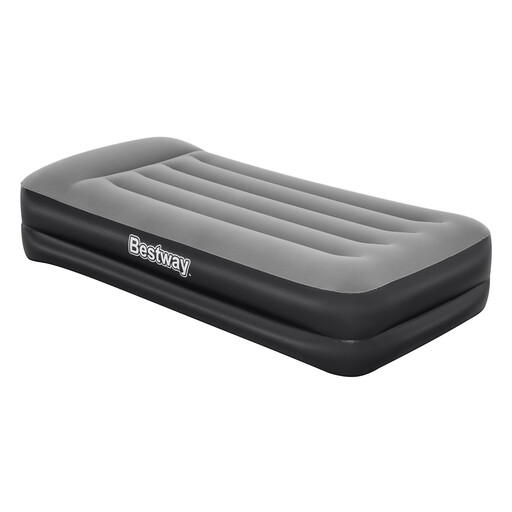
Why it's a good fit: Ideal for anyone who needs a comfortable guest bed quickly and easily. The 46 cm height makes getting in and out of bed easier, which is especially appreciated by older guests.
The built-in 220-240V pump solves the problem of cumbersome inflation. The Tritech construction ensures shape stability and minimises overnight air loss and the "hammock" effect.
Inflates in approx. 3 minutes; the raised sleeping surface offers comfort that rivals a regular bed.
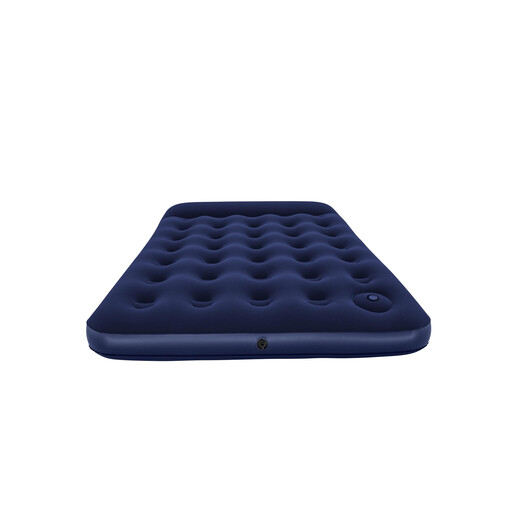
Why it's a good fit: Perfect for camping and festivals where a power outlet isn't available. The built-in foot pump provides independence and saves you from carrying extra gear.
The built-in foot pump eliminates the "pump hassle" without needing electricity. The coil-beam structure provides a more stable sleeping surface than basic models and counteracts sagging.
Power-free inflation and a large quick-release valve for fast deflation in the morning.
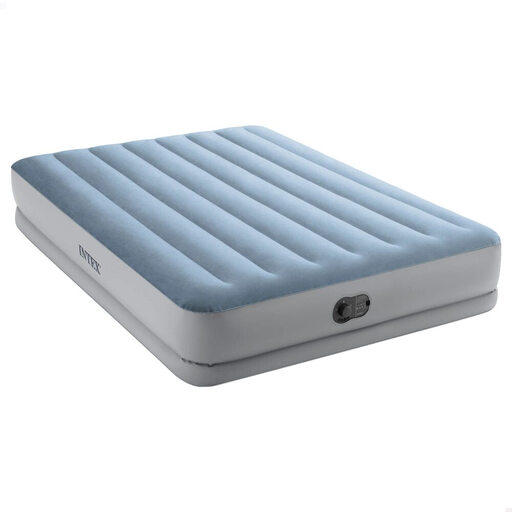
Why it's a good fit: A modern solution for two people seeking maximum flexibility. The USB pump can be powered by a mains adapter, a power bank, or in the car, making it equally practical for home and travel.
The USB pump is a clever solution to the "pump hassle." The Fibertech construction ensures high stability and prevents the typical problems of air loss and an unstable surface.
Flexible power via USB, a generous Queen size for two people, and a built-in USB port for charging devices.
We have compiled a complete, up-to-date list of products that fully meet these strict selection criteria and applicable safety regulations.
A small amount of air loss is often normal and not a defect. When the ambient temperature drops at night, the air inside contracts, making the mattress feel softer. The PVC material may also stretch slightly during the first few uses, which can make re-inflating necessary. However, significant air loss indicates a leak at the valve, a seam, or a small puncture.
The lifespan of an air mattress depends heavily on the frequency of use, storage, and material quality. With careful handling—protecting it from sharp objects, storing it correctly in a dry place, and avoiding over-inflation—a high-quality model can last for several years. Models with reinforced PVC and advanced internal structures are generally more durable.
Air mattresses are primarily designed for temporary use. They do not offer the ergonomic support and air circulation of a conventional mattress. Therefore, they are not recommended for permanent use. However, during transitional periods, such as a move, a high-quality, tall air mattress with a stable internal structure can be a comfortable stopgap solution.