
Lieferung heute & morgen

Qualitätsgarantie

Willkommens-Angebote freischalten: KOSTENLOSE Lieferung | Bis zu 80 % RABATT | Kostenlose 30-Tage-JoyPlus-Testphase
App herunterladen
A good air mattress is a versatile solution for overnight guests, an upcoming move, or your next camping trip. It's quick to set up and just as quick to store away compactly. But the market is crowded, and not every model lives up to its promise. Many buyers are frustrated by leaky valves, uncomfortable sleeping surfaces, or misleading product descriptions.
As your Joybuy Product Recommendation Officer, I'll help you recognise the common pitfalls and make an informed decision. This guide focuses on the objective features that define a high-quality inflatable mattress, so you can find a durable and comfortable sleeping solution.
The disappointment is often immense when a newly purchased inflatable guest bed has lost its air by the next morning. Pay attention to these three critical points to avoid a bad purchase.
To avoid the problems mentioned above, you should carefully examine three technical aspects before buying. These are the primary determinants of comfort, durability, and user-friendliness.
The internal construction prevents the dreaded hammock effect and ensures a stable, level sleeping surface. There are significant quality differences here:
The outer material affects both durability and the feel of the mattress. Most air mattresses are made of PVC (Polyvinyl Chloride). Pay attention to the material thickness and look for reinforced variants, which are considered more resistant to stretching and damage.
A flocked (velvet-like) surface is an important comfort feature. It feels more pleasant against the skin than smooth PVC and prevents bed sheets from slipping during the night.
The method of inflation is a crucial criterion for usability.
Based on the criteria above, we have compiled a few products for typical user profiles.
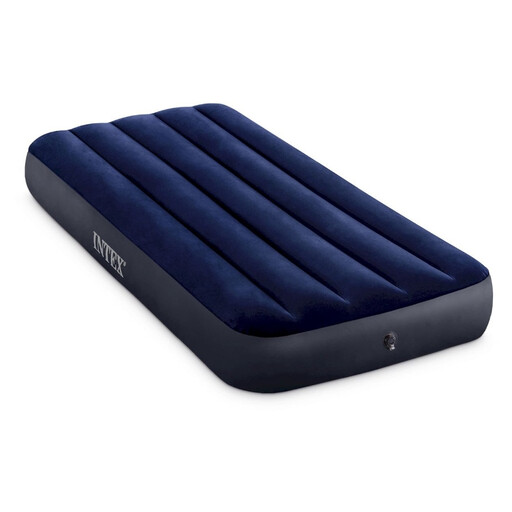
Why This Fits Their Persona: A solid and cost-effective option for occasional use, such as for overnight guests or festivals. Its compact packed size and lack of an integrated pump keep the price low without compromising on fundamental stability.
The Fiber-Tech construction developed by Intex, featuring high-strength polyester fibres, counteracts the "hammock effect" and provides a remarkably stable sleeping surface for this price range.
Flocked sleeping surface for added comfort; 2-in-1 valve for fast inflation and deflation with an external pump.
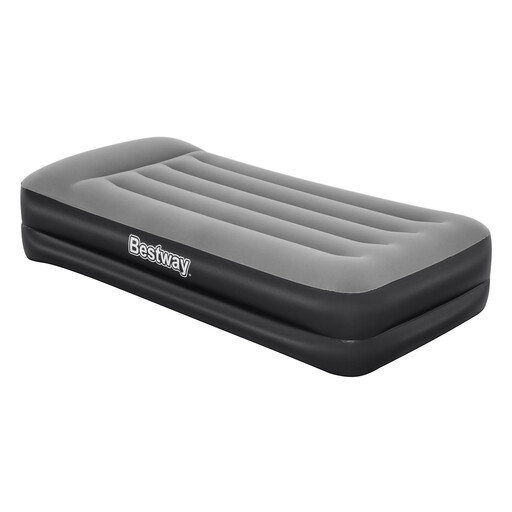
Why This Fits Their Persona: Anyone who regularly and spontaneously needs to offer guests a comfortable bed will benefit from its convenient height and rapid setup. The 46 cm height makes getting in and out easier and gives the feel of a real bed.
According to the manufacturer, the Tritech material is more resistant to stretching than conventional PVC, which minimises overnight air loss. The integrated AC pump inflates the bed in about 3 minutes, avoiding any setup frustration.
Very fast setup thanks to a powerful, integrated pump; comfortable bed height of 46 cm; includes a carrying bag.
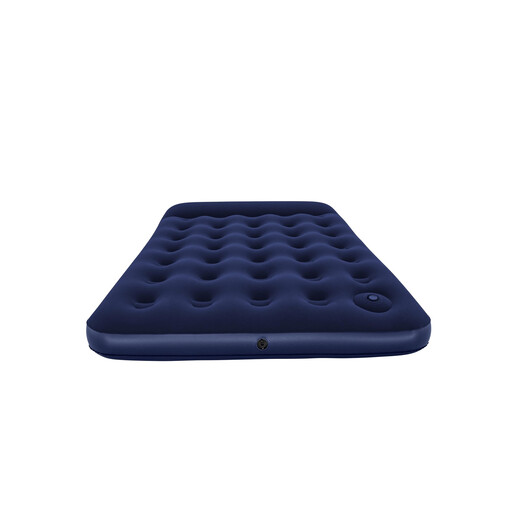
Why This Fits Their Persona: For use in a tent or cabin where no power outlet is available, independence is key. This model offers a practical solution that works without external devices or batteries and is still ready for use quickly.
It elegantly solves the power supply problem in the outdoors with its integrated foot pump. You don't have to rely on batteries that could be dead or a separate pump that you might forget.
Complete grid independence; Coil-Beam construction for good support; large valve for quick deflation.
We have compiled a complete, up-to-date list of products that fully meet these strict selection criteria and UK safety regulations.
It's normal for an air mattress, especially one made of PVC, to need reinflating after the first use. The material initially stretches a bit. Temperature fluctuations also affect the air pressure: as the ambient air cools (e.g., at night), the air inside contracts, and the bed becomes softer. A slight top-up may therefore be necessary depending on the conditions.
An air mattress is primarily designed as a temporary sleeping solution. For permanent use, most models lack the ergonomic support of a conventional mattress, which can lead to posture problems in the long run. Additionally, the material is not designed for daily, year-long use.
To maximise the lifespan of your air mattress, you should store it properly. Ensure the mattress is completely clean and dry before deflating it. Fold it loosely rather than rolling it tightly to avoid creases and material fatigue. Store it in the provided bag in a dry, temperature-stable place, protected from direct sunlight and sharp objects.