
Lieferung heute & morgen

Qualitätsgarantie

Willkommens-Angebote freischalten: KOSTENLOSE Lieferung | Bis zu 80 % RABATT | Kostenlose 30-Tage-JoyPlus-Testphase
App herunterladen
An air mattress can be used as a guest bed, when travelling, at festivals or while camping. However, inflatable mattresses vary considerably in dimensions, construction, valve, weight capacity and pump. You may not realise you’ve made the wrong choice until after buying: the air bed may be too narrow, the pump may not be included or the sleeping height may not suit the intended use.
Terms such as “Queen”, “Full” or “double air mattress” are no substitute for actual measurements. For two people, width and maximum weight capacity are key. For example, a model that is 137 cm wide offers less space than a double air mattress measuring 152 cm across. For one person, a width of 67 to 99 cm may be enough and can make the mattress easier to transport.
Before buying, check:
An air bed with a pump may come with a hand pump or a built-in electric pump. A hand pump doesn’t rely on a mains socket, which can be useful when camping. An electric pump, on the other hand, needs a 220 to 240-volt mains socket, but gets your bed ready more quickly at home.
Also check whether the pump is actually included. For example, the INTEX Camping Air Mattress measuring 67 × 184 × 17 cm requires a standard air pump, which is not supplied.
Labels such as “Premium”, “Ultra Plush” or “extra stable” should be assessed against specific details. These include:
A soft, flocked surface may feel more comfortable than smooth vinyl. However, on its own, it tells you nothing about the mattress’s weight capacity or lifespan.
A single air mattress is suitable for one person and is generally easier to transport. The INTEX Prestige Downy Airbed Cot-Size measures 191 × 76 × 25 cm and is designed to support up to 136 kg. A double air mattress such as the INTEX Classic Downy Airbed Queen offers space for two people, measuring 203 × 152 × 25 cm, and has a stated maximum weight capacity of 272 kg.
Height affects how easy it is to get in and out of bed, as well as how much space the mattress takes up when packed. A low camping air mattress with a height of 17 cm saves storage space. An air bed that is 33 or 46 cm high is easier to get into, but takes up more room at home and is generally less suitable for small tents.
Many models are made from PVC or vinyl. A flocked top can make the surface feel more comfortable and less slippery. The internal construction also plays a part in stability. In the INTEX models mentioned here, Fiber-Tech technology uses a construction made from polyester fibres. However, the weight capacity still varies by model, so always check the product details.
The ground beneath the mattress matters when camping, too: even double-layer vinyl won’t reliably protect it from sharp stones, twigs or animal claws. Using a groundsheet can reduce the risk of damage.
A 2-in-1 valve with a wide opening makes inflation and deflation easier. A self-inflating air bed or an electric model is particularly convenient to set up, while a traditional air mattress inflated with a hand pump takes more time and effort.
Weight, packed size and accessories are also important when travelling. A carry bag or repair patch can make the mattress more practical to use. After use, make sure it is completely dry before folding and storing it.
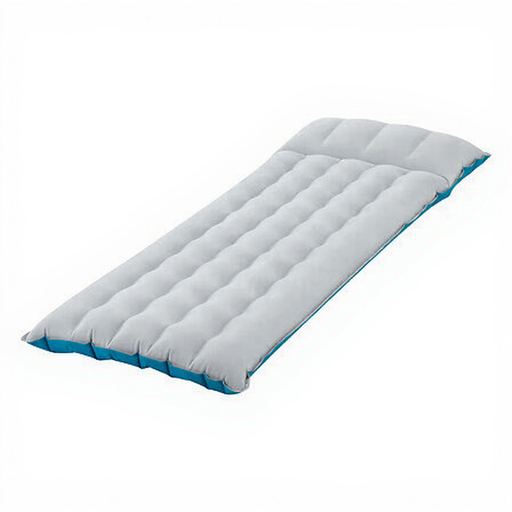
Why this product suits your needs: At 67 cm wide and 17 cm high, this single air mattress is designed for one person and is easy to transport without taking up much space.
The product details clearly state that a pump is not included, so you can plan for this extra purchase in advance.
Double-layer PVC vinyl, 2-in-1 valve, foldable design and a maximum weight capacity of 136 kg.
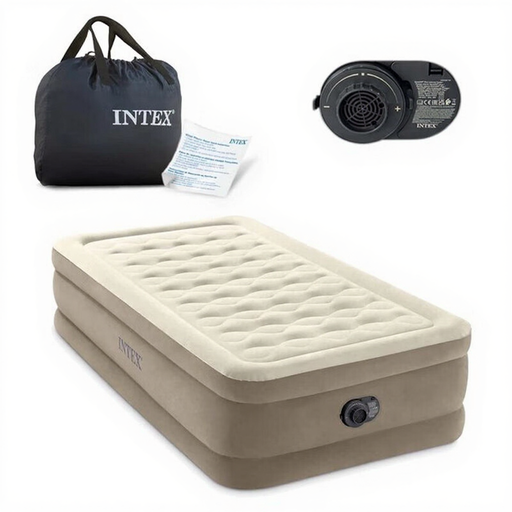
Why this product suits your needs: This raised single air mattress is designed for use at home or as an inflatable guest bed, with a sleeping height of 46 cm.
The built-in electric pump is part of the model. Make sure a 220–240 V power supply is available where you plan to set it up.
Fiber-Tech construction, flocked surface, built-in electric pump and a maximum weight capacity of 136 kg.
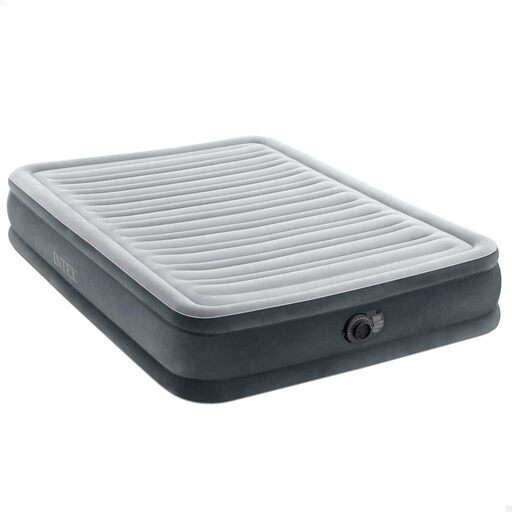
Why this product suits your needs: Designed for two people, this air bed with a pump combines a raised sleeping surface with quick electric inflation for indoor use.
The specifications list both the electric pump and its power supply requirements. This makes clear that the model is not intended for camping without access to mains power.
33 cm height, built-in 220–240-volt pump, Fiber-Tech construction and a maximum weight capacity of 272 kg.
Place every air mattress on a flat, clean surface free from stones, twigs and sharp edges. Don’t overinflate the product or exceed its stated weight limit. Jumping, walking or standing on the air bed can put strain on the seams and internal construction.
When using electric pumps:
After use, store the mattress somewhere dry and cool, away from direct sunlight. The material of a new air mattress may stretch a little at first, so you may need to top it up after the first few uses.
We’ve put together a complete, regularly updated list of products that meet these strict selection criteria and fully comply with the safety regulations in force across the EU.
It depends on the size of the mattress and the type of pump. According to the stated product details, the INTEX Comfortable Airbed takes around three minutes to inflate with its built-in electric pump. A hand pump may take longer, depending on the model and how firm you want the mattress.
There’s no set lifespan that applies to every air mattress. It depends on factors including the material, weight placed on it, surface beneath it, storage and how often it’s used. Sharp objects, heat, direct sunlight and overloading can damage the material prematurely. Before each use, check the air mattress for tears, leaks and damaged valves.
Power consumption depends on the pump’s wattage and how briefly it runs. For an accurate estimate, check the rating plate or instruction manual. If you don’t have access to a mains socket, choose a hand pump or a foldable camping mattress without a built-in electric pump.