
Lieferung heute & morgen

Qualitätsgarantie

Willkommens-Angebote freischalten: KOSTENLOSE Lieferung | Bis zu 80 % RABATT | Kostenlose 30-Tage-JoyPlus-Testphase
App herunterladen
An air mattress may seem straightforward at first: inflate it, lie down and sleep. In practice, though, the material, dimensions, valve, pump and intended use all determine whether it works well when you’re away from home or soon becomes impractical. A festival calls for different features from a guest bed or a mattress for regular use at home.
1. Mistaking height for lasting comfort
A raised airbed makes it easier to get in and out of bed. But height alone says little about how stable the sleeping surface is. The internal construction, maximum weight capacity and ability to adjust the firmness to suit you are what matter.
2. A pump isn’t always included
A camping air mattress with a large 2-in-1 valve will often need a standard pump. Before buying, check whether it comes with a hand pump, an electric pump or no pump at all. An integrated electric pump is handy indoors, but you’ll need a power socket.
3. ‘Suitable for camping’ doesn’t necessarily mean suitable for carrying in a rucksack
An inflatable mattress may pack down compactly and still be too heavy or bulky for a long hike. For trekking and backpacking, weight, packed size and insulation matter more than an especially soft, raised sleeping surface.
A single air mattress around 76 to 100 cm wide is suitable for one person. For two people, look for models around 137 cm wide or more; a double air mattress measuring 152 cm across gives you more room to move. The usable length should exceed your height, so your head and feet don’t hang over the edges.
Also check the maximum weight capacity stated by the manufacturer. For the INTEX models featured here, for example, the stated limits are 136 kg for single models and 272 kg for the Queen model. These limits must not be exceeded. If two people are sharing, consider not only their combined weight but also the added strain caused by movement.
PVC or vinyl forms the durable outer layer of many airbeds. A flocked surface can make the mattress more comfortable and help stop bedding from slipping. For outdoor use, it’s important to choose a clean, level spot: stones, twigs, animal claws and sharp objects can damage even hard-wearing materials.
A waterproof sleeping mat or a thin aluminium sleeping mat can provide an extra layer of protection and moisture resistance beneath an air mattress. However, a basic foil mat isn’t a suitable sleeping surface on its own for cold nights. For better insulation, choose a foam mat such as a camping mat with a stated R-value.
A 2-in-1 valve with a wide opening makes the mattress easier to inflate and deflate. An integrated electric pump works quickly, but needs a 220–240-volt power supply. A hand pump doesn’t rely on mains power, but takes more time and effort to use.
A self-inflating mattress works differently from a traditional airbed: it usually contains foam and often needs only a little extra inflation. So, if you’re looking for a particularly compact option, make sure you know the difference between an air mattress, a sleeping mat, a self-inflating mattress and a folding foam mat.
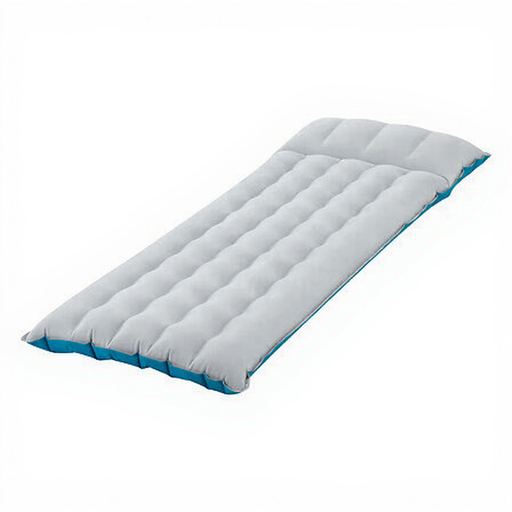
Why it’s a good fit: This single air mattress weighs 1.71 kg and packs down compactly for camping, travel or occasional overnight stays.
The product details clearly state the dimensions, maximum weight capacity of 136 kg and the pump accessories required. A standard pump isn’t included, so you’ll need to buy one separately.
67 × 184 × 17 cm, double-laminated PVC vinyl, flocked sleeping surface and wide-opening 2-in-1 valve.

Why it’s a good fit: This memory foam mattress is designed for regular use on a suitable bed frame, rather than as a traditional travel airbed.
The product description recommends a suitable, stable base and allows up to 72 hours for the mattress to expand. This makes clear that it isn’t a guest bed you can use straight away.
Three layers of comfort foam, AirCell viscose memory foam and Cool-Flex gel foam; seven stated comfort zones; Oeko-Tex and CertiPUR certified, according to the product details.
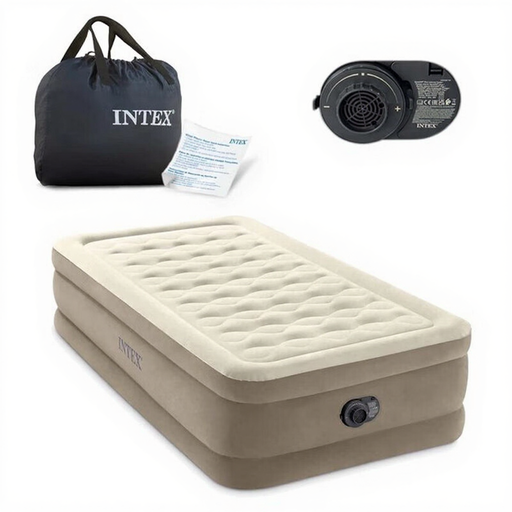
Why it’s a good fit: At 46 cm high and with an integrated electric pump, this airbed is particularly well suited to use as an indoor guest bed.
The integrated 220–240-volt pump means you won’t need a separate one. Remember, though, that you’ll need a power socket and this model is designed for one person.
99 × 191 × 46 cm, inflation time of around 2.5 to 3 minutes according to the product details, weight capacity of up to 136 kg and a carry bag included.
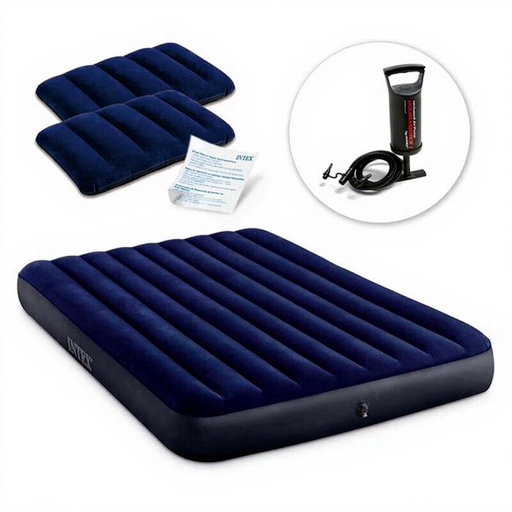
Why it’s a good fit: This double air mattress is designed for two people and can be used at home or when travelling as a flexible guest bed.
The package includes a hand pump and two inflatable pillows, so you won’t need to buy a separate pump. Bear in mind, however, that inflation takes longer.
203 × 152 × 25 cm, weight capacity of up to 272 kg, hand pump, two pillows and 2-in-1 valve, according to the product description.
We’ve put together a complete, regularly updated list of products that meet these strict selection criteria and the safety regulations in force in the EU.
It depends on the material, temperature, load, valve and surface beneath it. A slight change in firmness overnight may be caused by temperature differences and doesn’t necessarily mean there’s a hole. If the mattress regularly loses air, check the valve, seams and surface methodically.
For camping, a compact packed size, durable outer material and suitable weight are essential. A higher airbed can be a good option for car camping. For hiking, a lightweight camping mat or foam mat is usually more practical. A thin, waterproof sleeping mat can also help protect against moisture from the ground.
Traditional airbeds are generally designed for occasional use. If you need a mattress for everyday use, choose one specifically designed for this purpose and place it on a suitable base. A memory foam mattress with stated comfort zones has a different construction, so it shouldn’t be treated as equivalent to a portable camping air mattress.