
Lieferung heute & morgen

Qualitätsgarantie

Willkommens-Angebote freischalten: KOSTENLOSE Lieferung | Bis zu 80 % RABATT | Kostenlose 30-Tage-JoyPlus-Testphase
App herunterladen
An air mattress can serve as a space-saving guest bed, for camping, or as a temporary sleeping solution. However, when buying one, it’s not just about the price and sleeping surface. Unclear size specifications, unsuitable pumps, or insufficient weight capacity often mean the product doesn’t suit your everyday needs.
This buying guide from the Joybuy Product Recommendation Officer will help you check the most important technical details and choose an inflatable mattress tailored to your intended use.
Terms like “Twin”, “Full”, “Queen” or “King” usually come from the international sizing system. A Twin air mattress is generally designed for one person, while Full and Queen models can be suitable for one or two people depending on their width.
What really matters are the centimetre measurements. A Queen-size air mattress measuring 152 × 203 cm offers two people more space than a Full model at 137 × 191 cm. Before buying, you should also check whether the mattress will fit in the intended room, tent or vehicle.
An air mattress with a built-in pump can make setup much easier. However, the power supply is key:
For festivals or camping, a camping air mattress with a USB or foot pump is often more flexible than a model with a mains plug. For a regularly used inflatable guest bed at home, however, an electric pump can make more sense.
A low-profile air mattress is more compact to transport. Raised models, around 30 to 42 cm high, make it easier to get in and out of bed. This can be particularly handy for frequent use in a guest room.
The maximum weight capacity must match your needs. For a double air bed, it’s the combined body weight that counts. You should also allow a little extra margin, because point loads – for example, when sitting on the edge – behave differently to evenly distributed lying weight.
Many models are made from PVC or vinyl. A flocked surface can feel softer and helps prevent bedding from slipping. The internal air chambers are also important for stability. Coil-beam, wave-beam or fibre-tech constructions describe different internal structures designed to support the mattress’s shape.
However, such terms are no substitute for concrete specifications. Look out for:
A short inflation time is especially useful when you need the guest bed at short notice. Manufacturer figures refer to a specific power source, pump type and intended fill level. An electric pump with an inflation time of around three minutes is not comparable to a manual pump.
Deflation is equally important. A quick-release valve or a pump with a deflation function makes packing up much easier. Before storing, the mattress must be completely dry to prevent moisture from building up during longer periods of storage.
For a guest room, taller models with a larger sleeping surface are ideal. When camping, weight, packed size, power supply and the nature of the ground are more important. An insulating or protective groundsheet can protect the underside from stones, twigs and other sharp objects.
Regardless of where you use it, remember: an air mattress is not a water toy or a rescue aid. It should not be over-inflated, used near an open flame, or used as a trampoline or seat for children.
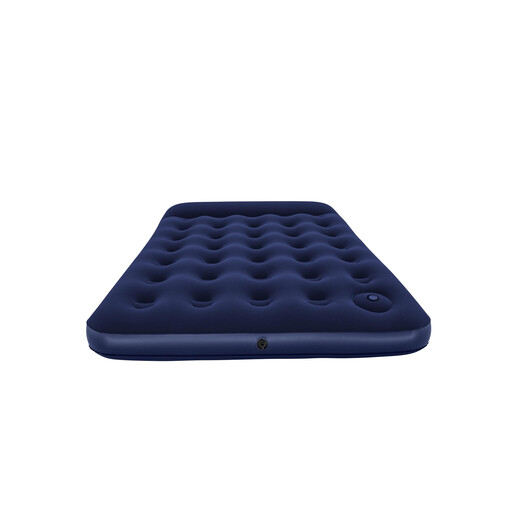
Why this product fits the profile: The Full size offers a comparatively wide sleeping surface, while the built-in foot pump doesn’t need a mains socket. This makes it suitable for occasional overnight stays and simple camping trips.
The power supply isn’t taken for granted. The product specification also mentions a large two-way quick-release valve for deflating.
Flocked sleeping surface, built-in foot pump, and suitable for both indoor and outdoor use according to the product description.
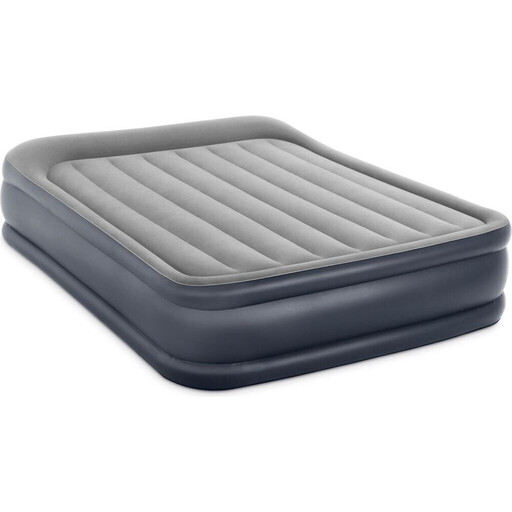
Why this product fits the profile: This raised Queen-size air bed is designed for two people and appeals to buyers who prefer a higher sleeping position in the guest room.
The product data specifies 42 cm height, a built-in 220-volt pump, and an approximate inflation time of three minutes.
Two-in-one design combining mattress and base, flocked surface, and electric inflation and deflation function.
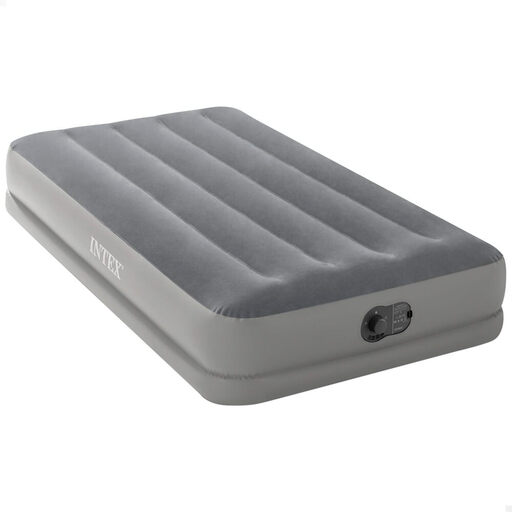
Why this product fits the profile: This Twin air mattress is designed for one person and combines 30 cm height with a USB pump. It’s ideal for festivals, camping and mobile overnight stays using a power bank or USB mains adapter.
The required power source is clearly defined: according to the product specification, the USB pump needs a 5-volt supply. This prevents false expectations about when it can be used.
191 × 99 × 30 cm, maximum weight capacity of 136 kg according to the product data, and built-in FastFill USB pump.

Why this product fits the profile: This double air bed offers Queen dimensions and a built-in pump that, according to the product data, runs on four D batteries. This makes it suitable for flexible locations without a mains socket.
The batteries are not included. This note makes the ongoing requirements clear before first use.
203 × 152 × 30 cm, approximately three minutes inflation time according to the product specification, and Tritech material with a quick-release valve.
We’ve put together a full, regularly updated list of products that meet these strict selection criteria and fully comply with EU safety regulations.
To keep your air mattress usable for as long as possible, place it on a clean, flat surface. Before inflating, remove any stones, twigs, pet hair and sharp edges. The surface can be cleaned with a damp cloth and mild soapy solution. It must be completely dry before folding.
For electric pumps: keep water away from the pump housing, cable and connector, and unplug the mains lead after inflating. Batteries should be removed from the compartment during longer periods of storage. A repair patch can fix small damages, provided this is permitted according to the instructions.
That depends on the pump type, size and desired fill level. The models mentioned in the product data take approximately three to seven minutes. With USB pumps, you also need to consider the output of the power source.
There’s no one-size-fits-all answer to this. It depends on the material, frequency of use, storage conditions and the ground it’s placed on. Over-inflation, heat, sharp objects and improper folding can put strain on the seams and PVC surface.
A slight loss of pressure can occur due to temperature changes, material stretching after first use, or a valve that isn’t fully closed. If you notice repeated significant air loss, check the valve, seams and surface for damage.