
Lieferung heute & morgen

Qualitätsgarantie

Willkommens-Angebote freischalten: KOSTENLOSE Lieferung | Bis zu 80 % RABATT | Kostenlose 30-Tage-JoyPlus-Testphase
App herunterladen
An air mattress can be a practical solution as a guest bed, camping air mattress or temporary sleeping arrangement. However, inflatable mattresses differ significantly in terms of sleeping surface, construction, stability and packed size. If you only focus on the low price or an especially high sleeping height, you risk overlooking important details.
A wide double air mattress offers more space when inflated, but it also requires a sufficiently large tent, vehicle or guest room. For hiking, what matters most is the weight in your rucksack. A 15 cm thick camping mat may feel more comfortable than a thin inflatable sleeping mat, yet when folded it often takes up more volume.
Always check both specifications:
Some models come with an air mattress with integrated pump or a foot pump. Others require a separate hand, foot or electric pump. According to the product description, the Bestway Full and Queen Air Mattress require an air pump that is not included in the delivery.
If you overlook this information, you could face a practical problem when camping or with unexpected overnight guests. Also pay attention to the valve type, inflation time and whether the air can be released quickly.
Terms like "ergonomic", "particularly comfortable" or "pressure-relieving" should not be assessed in isolation. More meaningful are objective data such as material, construction type, sleeping height, firmness level, number of air chambers and weight capacity, where provided by the supplier.
An inflatable mattress with a PVC surface should be evaluated differently from a self-inflating mat made of nylon with TPU coating. For regular overnight use, foam models such as a memory foam mattress may be more suitable than a classic air bed.
For a guest room, a larger sleeping surface and a comfortable entry height usually matter most. For festival-goers, hikers and campers, however, weight, packed size and a robust outer shell are decisive.
PVC is common in many classic air beds. A velour-like surface can feel warmer and help reduce bed linen from slipping. For outdoor products, nylon or polyester fabrics with TPU coating are frequently used. These materials can be water-repellent; however, the specific manufacturer's specification remains decisive.
Always place your air mattress on a flat, clean surface. Stones, thorns, glass shards and sharp edges can damage even robust materials. After use, the mattress should be completely dry before being folded and stored.
If you use a mattress frequently in the bedroom or guest room, you might also consider non-inflatable options. According to the product description, the MLILY models combine comfort foam, AirCell viscose memory foam and Cool-Flex gel foam in a three-layer construction. The variants feature seven comfort zones and are specified with a medium-firm firmness level H3.
Regarding certifications: Öko-Tex and CertiPUR refer to defined material or emission requirements respectively. Before purchasing, check what the specific certification for each model actually covers. A certification is no substitute for individually selecting the right size, firmness level and base.
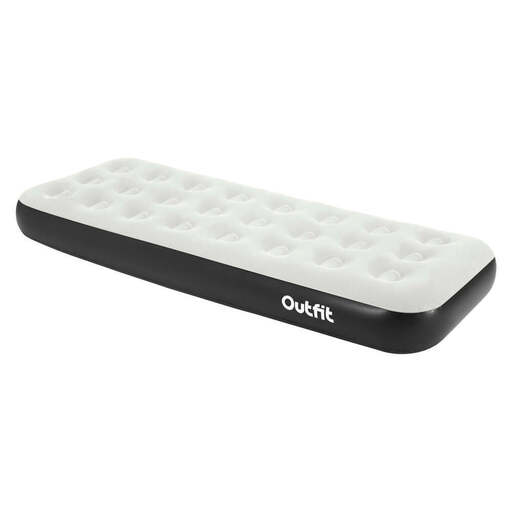
Why this product fits the profile: This single air mattress measures 191 × 73 × 22 cm and is intended for camping, festivals and occasional indoor use.
The product details clearly state the required pump, the dimensions and an included repair kit. This makes it easier to assess accessory needs and transport requirements.
PVC construction, 22 cm height, 1.45 kg weight and suitability for both indoor and outdoor use.

Why this product fits the profile: This 160 × 200 cm model is designed as a more permanent sleeping surface with three layers and a medium-firm firmness level H3.
The selection is based not only on the name "Air Mattress", but on verifiable details about construction, size, firmness level and material certifications.
Three-layer memory foam/gel foam construction, seven comfort zones and, according to product details, Öko-Tex and CertiPUR certification.
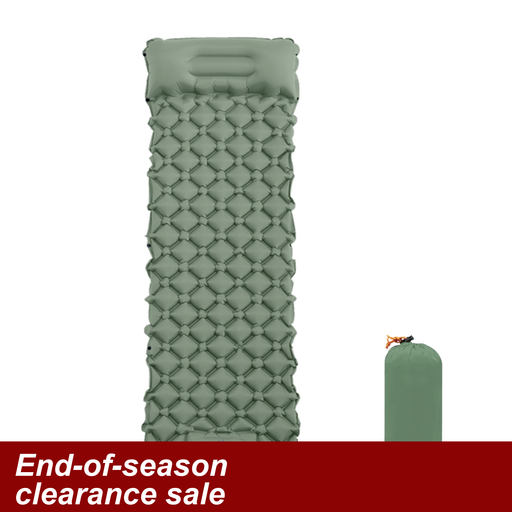
Why this product fits the profile: This inflatable camping mat is aimed at outdoor users who want to combine low weight, an integrated pillow and compact storage.
The weight of 690 g and packed size of 26 × 10 cm are clearly stated. The integrated foot pump reduces the need for additional pump accessories.
192 × 58 × 15 cm when inflated, 50D nylon with TPU coating, integrated pillow and side connection option for two mats.
We have compiled a complete, regularly updated list of products that fully meet these strict selection criteria and the safety regulations in force in the EU.
An air mattress is not a flotation device. It should not be used on water. Children must only use it under appropriate supervision. Also avoid open flames, intense heat and stress caused by jumping.
The lifespan depends on the material, frequency of use, ground surface, storage and load. Regularly check the seams and valve. Small damages should only be repaired with a repair kit suitable for the material.
Some pressure loss can occur due to temperature changes. Do not over-inflate the mattress, close the valve completely and, if pressure loss recurs, first check the valve and seams. A clean, level surface reduces additional stress.
For two people, a wide double air mattress or two connectable camping mats are options. What matters are the actual external dimensions, weight, sleeping height and the weight capacity specified by the supplier. For regular use in the bedroom, a 160 × 200 cm or 180 × 200 cm foam mattress could be an alternative solution.