
Lieferung heute & morgen

Qualitätsgarantie

Willkommens-Angebote freischalten: KOSTENLOSE Lieferung | Bis zu 80 % RABATT | Kostenlose 30-Tage-JoyPlus-Testphase
App herunterladen
An air mattress can save a lot of space as a guest bed, travel bed or camping solution. However, when buying one, it’s not just the sleeping surface that matters. What’s crucial is the setup, valve, pump type, weight capacity and where you plan to use it. If you focus solely on quick inflation or a soft surface, you can easily overlook important limitations.
A short inflation time is only practical if you have the right power or energy source available. An air mattress with a pump and a 220–240 volt connection works well in a guest room, but it’s less flexible for a campsite without electricity. Models with a USB pump need a suitable power bank or USB adapter. With a built-in battery pump, you’ll need to remember to buy the right batteries separately.
A double model that’s 152 cm wide doesn’t just need room for the mattress itself. You also have to account for access on either side and where the pump will sit. For small tents or narrow rooms, a single air mattress around 76 to 99 cm wide may be more suitable. That’s why you should always check the inflated dimensions against your tent’s interior size, door width and available floor space before buying.
PVC and other flexible materials can still stretch after the first use. This can make your inflatable mattress feel softer the next morning. Temperature changes also affect air pressure: cooler ambient air can give the impression that the mattress is less full. First, check that the valve is firmly closed and that the mattress is on a flat, clean surface.
For one person, common sizes are 191 × 76 cm or 191 × 99 cm. A double air mattress or a queen-size airbed around 152 × 203 cm gives two people more sleeping space, but it also needs a larger footprint. The height affects how easy it is to get in and out: models that are 25 to 33 cm high can feel more comfortable in a guest room than flat camping mats.
The stated maximum weight capacity is important. With a double model, you need to consider the combined weight of all users. Luggage, pets and jumping on or off the mattress can add extra strain. So, you shouldn’t exceed the manufacturer’s recommendation.
Many airbeds are made from PVC or vinyl. A flocked top surface can feel more pleasant and helps stop bedding from slipping around easily. Internal beam, coil or Fibre-Tech constructions affect shape stability and pressure distribution. However, they don’t replace a traditional mattress and aren’t designed for jumping or playing on.
For camping, weight, packed size and the durability of the underside are also important. A self-inflating sleeping mat made from nylon with a TPU coating is lighter to carry than a tall PVC airbed, but it usually offers a narrower sleeping surface.
A large two-way valve makes inflating and deflating easier. A built-in electric pump reduces setup time, but it does need a power source. Hand, foot or separate electric pumps are more flexible and can be replaced, but you’ll need to buy or carry them separately.
After use, the air mattress should be allowed to dry completely. Dirt, sand, small stones and sharp objects can damage the material. A repair patch is handy, but it doesn’t replace careful choice of where you place the mattress. For storage, a dry, cool place away from direct sunlight is recommended.
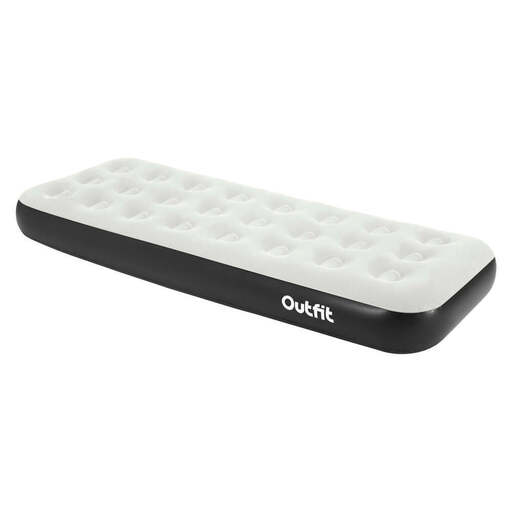
Why this product fits the profile: This single air mattress measures 191 × 73 × 22 cm and is designed for one person, for both indoor and outdoor use. Its weight of 1.45 kg makes it easy to transport.
The product details clearly state the dimensions, material and number of users. A suitable hand, foot or electric pump must be chosen separately.
Compact single size, PVC with an additional coating and repair patches included.
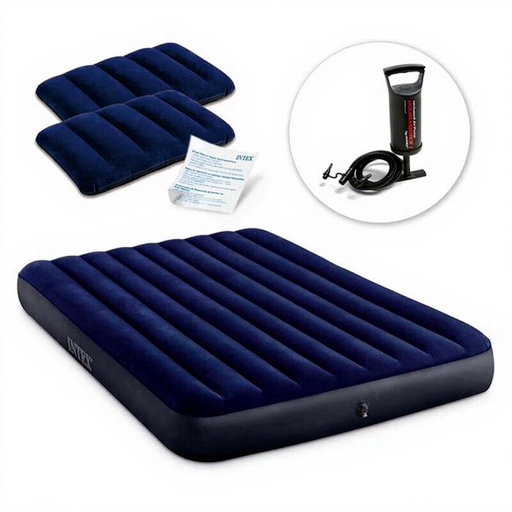
Why this product fits the profile: This queen-size airbed is designed for two people, is 25 cm high and comes with Fibre-Tech construction, a flocked surface, a hand pump and two inflatable pillows.
The pump and accessories are clearly listed. The maximum weight capacity of 272 kg gives you a concrete figure to plan with.
Two-person sleeping surface, 2-in-1 valve and accessories for use at home, camping or while travelling.
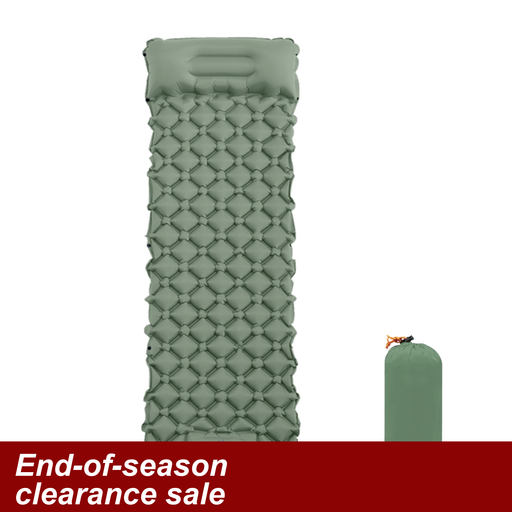
Why this product fits the profile: According to the product details, this camping air mattress weighs 690 g, has a built-in pillow and a foot pump, and can be packed down compactly for backpacking trips.
The built-in foot pump means you don’t need a separate pump or to inflate it by mouth. The compact packed size reduces storage space needed.
50D nylon with TPU coating, built-in pillow and connecting elements for joining two mats together.
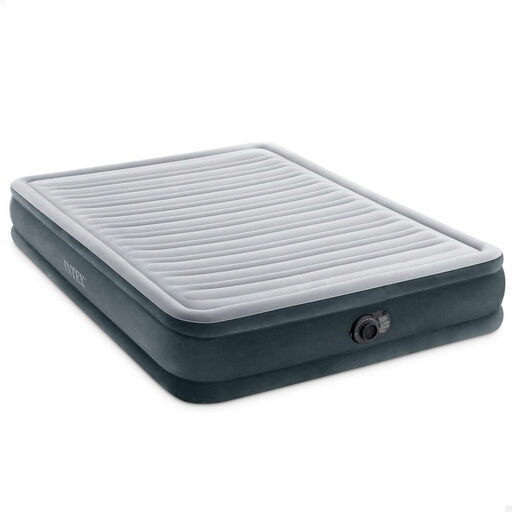
Why this product fits the profile: This raised airbed for camping and home use offers a 33 cm high sleeping surface and a built-in electric pump for inflating and deflating.
The product description states the power supply is 220–240 V, the weight limit is 272 kg and the approximate inflation time is three minutes.
33 cm entry height, flocked surface, Fibretech construction and built-in pump.
We’ve put together a full, regularly updated list of products that fully meet these strict selection criteria and the safety regulations in force in the EU.
That depends on the pump type, the volume and the firmness you want. Built-in electric pumps take around three to six minutes for the models mentioned. A hand pump can take longer, but it works without a plug socket. For camping, foot pumps or USB pumps are practical, as long as you have a compatible power source.
How long it lasts depends on the material, storage and how much it’s used. Sharp surfaces, heat, pet claws and overloading can damage PVC or TPU. A clean base, properly closed valves and dry storage all help to reduce wear on the material. Before each use, you should check the air mattress for cracks, leaks and damaged seams.
A built-in pump usually only runs for a few minutes when inflating or deflating. So, the ongoing power consumption is limited during normal use. For outdoor use, a USB model, a battery pump or a manual pump is more suitable than a 220–240 volt device. The key is to check the power supply details against where you plan to use it before you buy.