
Lieferung heute & morgen

Qualitätsgarantie

Willkommens-Angebote freischalten: KOSTENLOSE Lieferung | Bis zu 80 % RABATT | Kostenlose 30-Tage-JoyPlus-Testphase
App herunterladen
An air mattress or inflatable guest bed offers a flexible and space-saving sleeping solution—whether for last-minute overnight guests, a camping trip, or the next festival. However, the vast selection of models can quickly become overwhelming, and not every product lives up to its advertising. Before you make a decision, it's crucial to understand the typical weak points that often only become apparent after the purchase.
This guide will help you identify the key features and make an informed choice. We'll highlight three common problems that can lead to disappointment and explain which technical parameters you should pay close attention to.
Many buyers focus on superficial features and later face unpleasant surprises. These three points are particularly critical:
To avoid a bad purchase, you should focus on objective, technical criteria. These three aspects are crucial for comfort, durability, and functionality.
The longevity of an air mattress depends directly on its material and internal structure. Look for the material thickness specification (often given in "gauge" or millimetres). For outdoor use or frequent use, a thicker vinyl or PVC material is recommended.
Even more important is the internal construction. Models with vertical or horizontal air beams offer significantly more stability than those with just a single air chamber. Technologies like Fiber-Tech, where thousands of polyester fibres connect the top and bottom surfaces, create a firm, level sleeping area and prevent the "pudding effect" mentioned above.
The choice of pump should be based on the planned location of use:
The dimensions determine not only whether the mattress is suitable for 1 person or for 2 people, but also the level of comfort. A greater height (e.g., 30 cm and up) makes getting in and out of bed much easier and provides better insulation from the cold ground. For use in a tent, however, a flatter sleeping pad or air mattress is often more practical as it takes up less space.
Here are some models tailored to specific use cases that purposefully avoid the pitfalls mentioned.
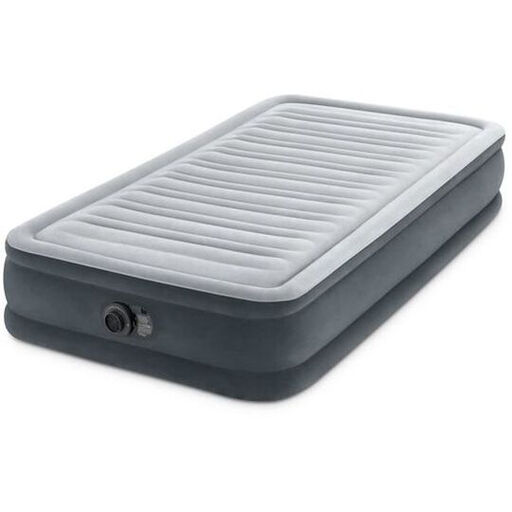
Why This Fits Their Persona: Ideal for users who need a comfortable guest bed quickly and easily. The 33 cm height and integrated electric pump offer comfort almost like a regular bed.
The Fiber-Tech construction prevents the "pudding effect" and ensures stability. The integrated 220-240V pump is perfect for home use, bypassing the problem of unsuitable pumps for indoor settings.
Fast inflation in approx. 2 minutes; comfortable 33 cm height for easy entry and exit.
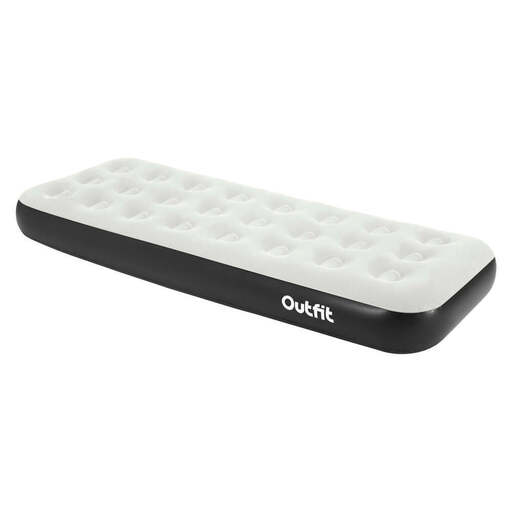
Why This Fits Their Persona: A straightforward and lightweight solution for mobile use. Its compact dimensions and low weight make it ideal for tents and backpacks.
This model deliberately omits an integrated pump, opting for a standard valve. This makes it less prone to failure and flexible for use with any external pump—a key advantage in the outdoors.
Low weight (1.45 kg); suitable for indoor and outdoor use; includes a repair patch.
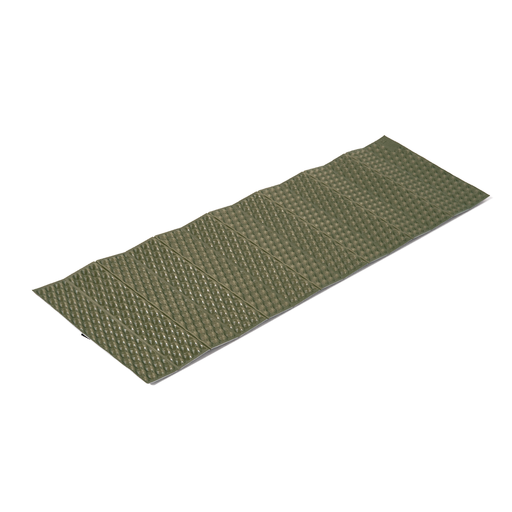
Why This Fits Their Persona: An alternative to an air mattress for trekking and camping in cooler conditions. This sleeping pad offers reliable insulation and is extremely lightweight and durable.
As a foam pad, it completely bypasses the typical problems of air mattresses: no punctures, no air loss, and no defective pump. The egg crate structure provides good insulation (R-value 2.6).
Extremely lightweight (approx. 750 g); puncture-proof and wear-resistant; provides consistent insulation performance.
We have compiled a complete, up-to-date list of products that fully meet these strict selection criteria and German safety regulations.
Ensure the mattress is completely dry and clean before deflating it. Fold or roll it loosely and store it in the provided bag in a cool, dry place. Avoid direct sunlight and storing it in a highly compressed state, as this can damage the material over time.
A slight loss of air overnight can be normal and is often due to temperature fluctuations. When the ambient temperature drops, the air inside contracts, leading to a slight drop in pressure. However, significant air loss that requires re-inflation indicates a leak. Check the valves and the surface for any damage.
The R-value is a measure of a material's thermal resistance. Simply put: the higher the R-value, the better the pad insulates against the cold from the ground. A pad with an R-value of 1-2 is suitable for summer, while for use in cooler temperatures or winter, an R-value of 3 or higher is recommended. The R-value is an objective indicator of a sleeping pad's insulation performance.