
Lieferung heute & morgen

Qualitätsgarantie

Willkommens-Angebote freischalten: KOSTENLOSE Lieferung | Bis zu 80 % RABATT | Kostenlose 30-Tage-JoyPlus-Testphase
App herunterladen
An air pump needs to match the valve, the required pressure and where you plan to use it. If you only look at a high wattage or a large litre rating, you could end up buying a model that’s impractical for everyday use. An electric air pump for air mattresses, for example, delivers a high airflow, but that doesn’t automatically make it suitable for bicycle or car tyres.
Typical buying mistakes come down to three points:
For bicycle tyres, car tyres and sports balls, the maximum pressure in bar or PSI is what matters. A bicycle pump or floor pump with a pressure gauge makes it easier to keep an eye on things while inflating. The pressure specified by the tyre manufacturer should be your guide; the pump’s maximum value must not be exceeded.
For air mattresses, inflatable boats and large inflatable items, it’s often the airflow that counts. A pump for air mattresses needs to move a lot of air in a short time, but usually doesn’t require high pressure. Some electric models can also suck air out, making storage easier.
An electric pump with a pressure gauge is especially handy when you need to set a specific tyre pressure. For quick jobs on the go, a compact inflator with adapters can be enough.
Before buying, check which connections you’ll need:
A hand pump usually comes with a flexible hose and several nozzles. With electric pumps, the adapters should fit securely and the air outlet must stay clear during operation.
A hand pump is independent of mains electricity and batteries. Models with a double-action stroke move air on both the up and down stroke, and can be practical for camping or household use. A sturdy aluminium floor pump offers a stable base for bicycle tyres and a pressure gauge that’s easy to read.
With a cordless air pump, besides the maximum pressure, you need to consider battery compatibility, charging time and runtime. If the battery is sold separately, you’ll need to factor in the extra cost. Battery-operated pumps are portable, but they do require the right batteries.
An air pump is not suitable for water. A submersible dirty water pump works on a different principle and is used for pumping water out of cellars, ponds or excavations. Here, the relevant values are flow rate, maximum immersion depth and permitted particle size.
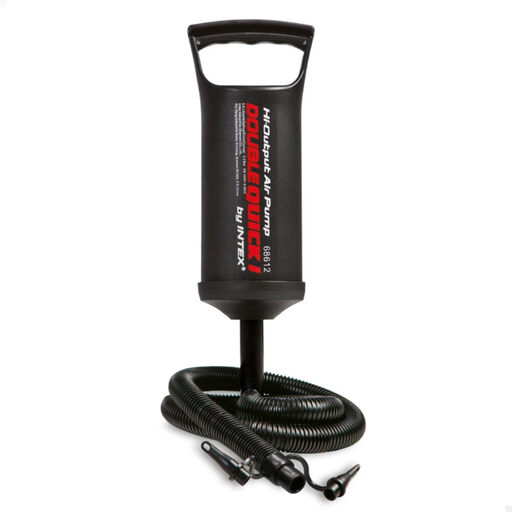
Why this product fits the profile: This hand pump is suitable for occasional use at home, when camping, and for air mattresses and inflatable boats. It doesn’t rely on a mains socket, battery pack or disposable batteries.
The delivery includes a flexible hose and three valve adapters. The stated air volume of 0.9 L per stroke applies to both the up and down movement.
29 cm height, 415 g weight, 0.9 L air volume per stroke and three adapters. According to the product information, it is TÜV-tested.
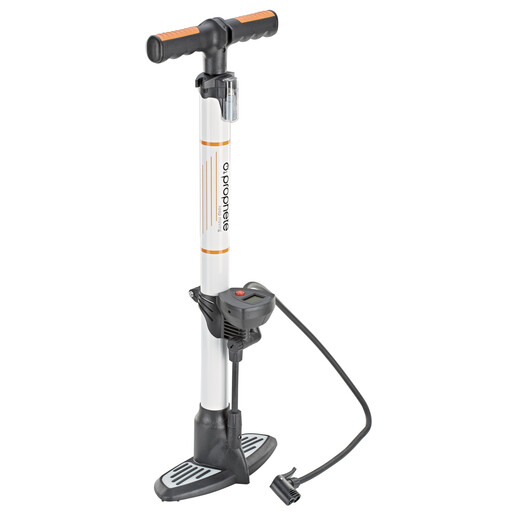
Why this product fits the profile: This floor pump is aimed at cyclists who regularly check their tyre pressure and use different valve types.
According to the product description, the dual head is designed for Presta, Schrader and Dunlop valves. This reduces the need for separate valve attachments.
Aluminium housing, 7 bar (100 PSI) maximum pressure and a digital gauge with BAR, PSI, KPA and KG/CM² display.
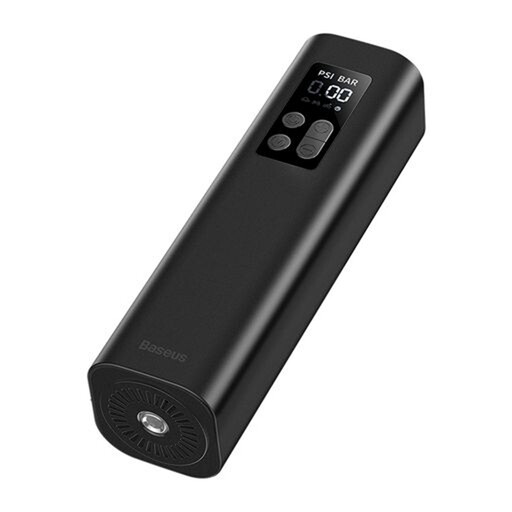
Why this product fits the profile: A compact format can be useful for travel, in the car or in camping luggage when storage space is limited.
Before buying, users should check the specific details on the product page regarding pressure, charging method, runtime and included adapters.
Compact design; technical details and scope of delivery should be checked before ordering.
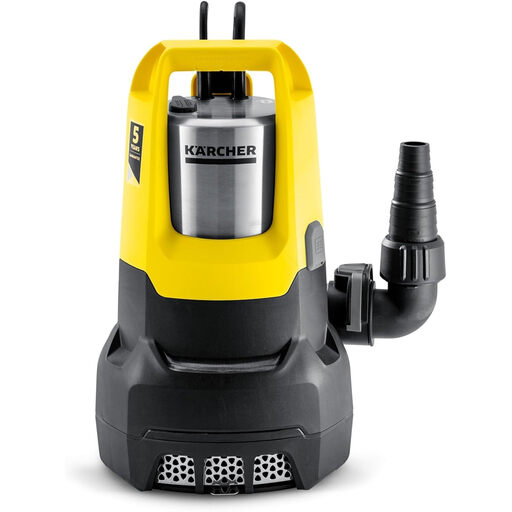
Why this product fits the profile: For gardeners and households needing to drain water, a submersible dirty water pump is the right product type – not an air pump.
The clear distinction between air and water applications prevents the wrong purchase. The permitted particle size and immersion depth must suit the location where it will be used.
Flow rate up to 22,000 l/h, maximum immersion depth of 7 m and handles dirty water particles up to 30 mm according to the product information.
We’ve put together a complete, regularly updated list of products that fully meet these strict selection criteria and the safety regulations in force in the EU.
For car tyres, a tyre pump with sufficient maximum pressure and a pressure gauge that’s easy to read is a sensible choice. A cordless electric air pump can be handy on the road. Before buying, check the connection, pressure range, power supply and automatic shut-off.
The lifespan depends on the design, how often it’s used, how it’s stored and the load it’s put under. A hand pump should be kept dry and protected from excessive heat. Electric models need clear air intakes and, with prolonged use, may require cooling breaks. Worn hoses, leaking adapters or damaged cables are reasons not to continue using the device.
With a mains-operated pump, the electricity consumption depends on the power rating and how long it’s used for. Battery and battery-operated models also incur charging or battery costs. For occasional inflating, the running costs are usually modest; with frequent use, the power supply should be considered when comparing products.