
Lieferung heute & morgen

Qualitätsgarantie

Willkommens-Angebote freischalten: KOSTENLOSE Lieferung | Bis zu 80 % RABATT | Kostenlose 30-Tage-JoyPlus-Testphase
App herunterladen
The quality of our indoor air affects our daily well-being, especially when allergies, pets, or urban pollution are part of the equation. Whether it's pollen in the spring, year-round dust, or pet dander, many airborne particles can diminish your quality of life. A suitable air purifier can help reduce the concentration of these particles in enclosed spaces.
This guide is designed to help you navigate your options. We will explain the most important technical features and present a selection of models to provide an objective basis for your decision.
Selecting the right device depends on your individual needs and the conditions of your living spaces. Three criteria are particularly important: filter technology, recommended room size, and operating noise level.
The core component of any air purifier is its filtration system. An air purifier with a HEPA filter is the preferred choice for many users. HEPA stands for "High-Efficiency Particulate Air." Filters that meet this standard are capable of removing a high percentage of very small particles from the air.
This is especially relevant for those looking for an air purifier for allergy sufferers. Such filters can help reduce the amount of allergens like pollen, dust mite droppings, mould spores, and pet dander in the air. A multi-stage filtration system, often consisting of a pre-filter for coarse particles, the HEPA filter, and an activated carbon filter for odours, offers comprehensive cleaning performance.
The effectiveness of an air purifier is often indicated by its Clean Air Delivery Rate (CADR). This value, usually expressed in cubic metres per hour (m?/h), describes how much clean air the device delivers per hour.
A simple rule of thumb is: the higher the CADR, the larger the room the device can effectively clean. Pay attention to the manufacturer's specifications for the recommended room size in square metres (m?). A unit designed for the size of your room can circulate the air multiple times per hour, ensuring consistently high air quality. This is particularly important for an air purifier in the bedroom or in large living areas.
No one wants to be disturbed by a loud appliance during the day or while sleeping. The noise level of an air purifier is measured in decibels (dB). A quiet air purifier is therefore a crucial factor, especially for use in a bedroom or office.
Many models feature a special sleep mode, where the fan runs at its lowest speed and the indicator lights are dimmed or turned off. Values around 25 dB in sleep mode are considered very quiet, comparable to a soft whisper. Compare the decibel ratings for the different fan speeds to find a device that meets your requirements for a quiet environment.
Here is a selection of models that cater to different needs—from large rooms and combined functions to smart controls.
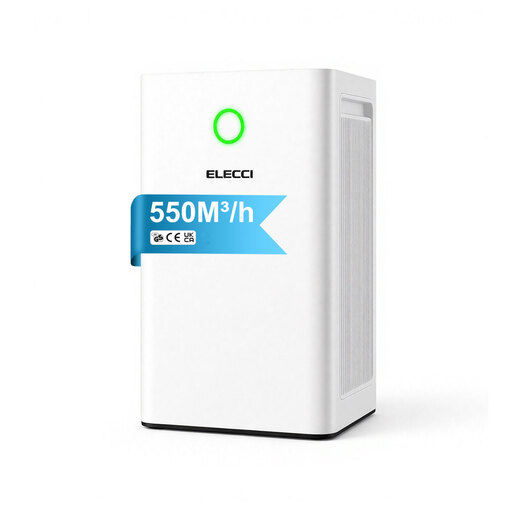
Why this model stands out The ELECCI air purifier is designed for high performance in large areas. With a high CADR of 550 m?/h, it is suitable for rooms up to 120 m? and can efficiently circulate air in large living rooms or open-plan offices.
Pros
Who is it for? This model is an excellent choice for people with large living spaces or open floor plans who need powerful air purification. It also serves well as an air purifier for dust and pollen in spacious areas.
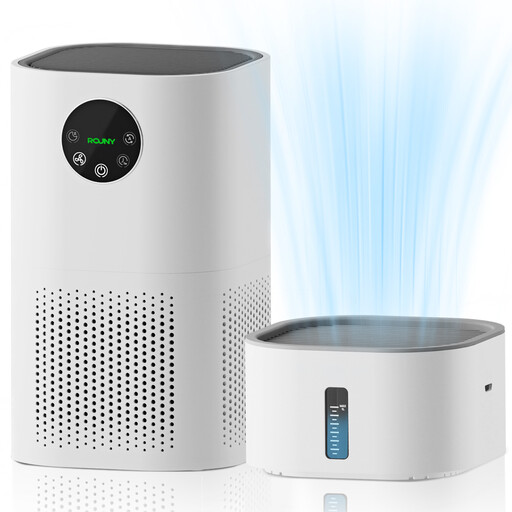
Why this model stands out The ROUNY combines two functions in one device: air purification and humidification. This can be particularly useful during the winter months when dry air from heating systems can irritate the mucous membranes.
Pros
Who is it for? Ideal for users who want to not only purify the air but also regulate humidity in rooms from 20 to 50 m?. The combination makes it a practical solution for bedrooms or home offices.
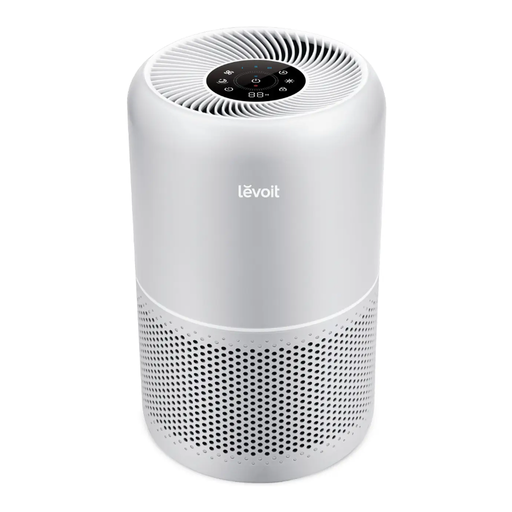
Why this model stands out The Levoit Core 300S Pro stands out for its smart features and precise sensor technology. Control via app and voice command, along with an auto mode, offers a high degree of convenience.
Pros
Who is it for? This model is a great fit for tech-savvy users who value automation and remote control. It is also a good option for pet owners thanks to its specialised filtration system.
Haven't found the right model for your needs yet? There is a wide variety of devices with different specifications and for various budgets. Discover more models in our Cleaning Filters category to compare a broader selection.
The lifespan of a filter depends heavily on the duration of use and the local air quality. Most manufacturers recommend replacing the HEPA and activated carbon filters every 6 to 12 months. Many modern devices have a filter replacement indicator that reminds you when a change is due. On some models, the pre-filter is washable and should be cleaned regularly.
Yes, an air purifier with a HEPA filter is designed to filter microscopic particles from the air. This includes household dust, pollen, mould spores, and pet dander. Through the continuous circulation of indoor air, such a device can help reduce the concentration of these particles indoors.
For optimal performance, the air purifier should be placed on a flat, stable surface. Maintain a distance of at least 30–50 cm from walls, furniture, or curtains to allow air to circulate freely. Do not place the device in a corner or behind large pieces of furniture, as this would block the air intake and outlet and reduce its efficiency.