
Lieferung heute & morgen

Qualitätsgarantie

Willkommens-Angebote freischalten: KOSTENLOSE Lieferung | Bis zu 80 % RABATT | Kostenlose 30-Tage-JoyPlus-Testphase
App herunterladen
The quality of your indoor air has a direct impact on your well-being at home. Whether from pollen, household dust, pet dander, or urban pollution, many particles can compromise the air you breathe. An air purifier with a HEPA filter is a technical solution designed to reduce the concentration of these particles in enclosed spaces.
This article serves as a guide. It explains the most important criteria for selecting the right device and introduces various models with their specific features to help you make an informed decision.
Selecting the right model depends on your individual needs. Three key factors should be considered when making your decision: room size, filter technology, and operating noise level.
The most important metric for an air purifier's performance is the Clean Air Delivery Rate (CADR). This value, measured in cubic meters per hour (m?/h), indicates how much clean air the device can deliver per hour. To effectively improve the air quality in a room, the air should be completely circulated several times per hour.
Modern air purifiers typically use multi-stage filtration systems. The combination of a HEPA filter and an activated carbon filter has proven to be particularly effective.
The continuous operation of an air purifier should not disrupt your daily life. The noise level, measured in decibels (dB), is therefore a crucial criterion.
Based on the criteria mentioned, we have compiled a selection of devices that cater to different needs.
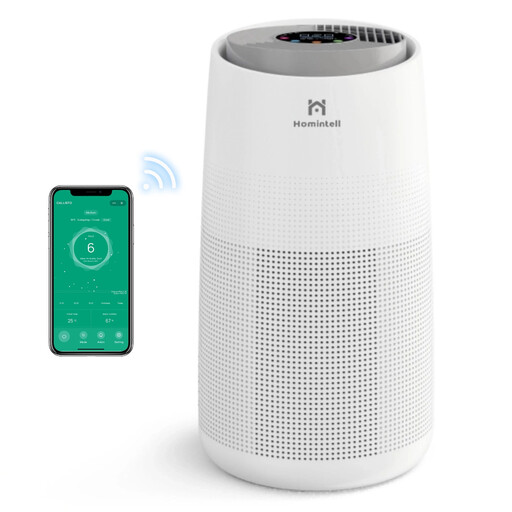
Why it stands out: This model from Homintell combines solid purification performance with modern smart home features. With a CADR of 300 m?/h, it is designed for medium-sized rooms and offers a high degree of everyday flexibility through its app control.
Pros:
Who it's for: This model is a great choice for tech-savvy users looking for a powerful air purifier for living rooms or bedrooms up to 36 m? who value smart control.
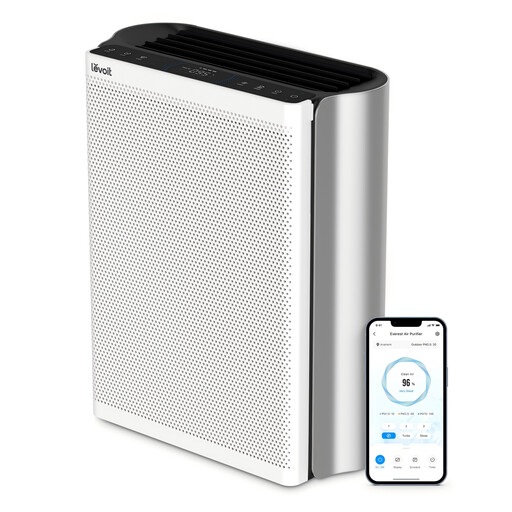
Why it stands out: The Levoit EverestAir is designed for purifying very large areas. Its advanced laser sensor, which detects particles of different sizes (PM1.0, PM2.5, PM10), provides detailed real-time data on air quality.
Pros:
Who it's for: Ideal for people with large, open-plan living areas or lofts. This model is also compelling for allergy sufferers who want detailed monitoring of particulate matter levels.
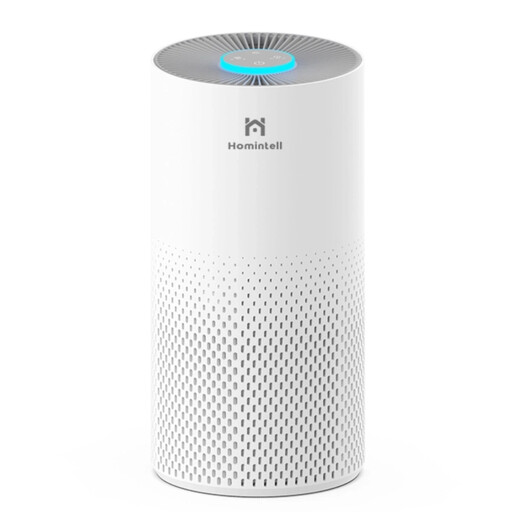
Why it stands out: This compact device from Homintell is a straightforward solution for smaller rooms. It focuses on the essential functions of air purification and is very accessible thanks to its simple touch controls.
Pros:
Who it's for: This model is suitable for users looking for an effective and easy-to-use solution for their bedroom, children's room, or a small office.
The models presented here already cover a wide range of requirements. However, if you haven't found the right device for your needs yet, you can find more options in our comprehensive Air Purifiers category.
1. How often do you need to change the HEPA filter in an air purifier? The lifespan of a HEPA filter depends heavily on the duration of use and the level of air pollution in its environment. Most manufacturers recommend a replacement every 6 to 12 months. Many modern devices feature a filter replacement indicator that automatically reminds you when a change is necessary.
2. Does an air purifier with a HEPA filter help with allergies? An air purifier with a HEPA filter is designed to remove allergens like pollen, dust, and pet dander from the indoor air. By reducing these particles in the air, the burden on allergy sufferers can be lessened indoors. However, this is not a medical device.
3. What is the difference between a HEPA filter and an activated carbon filter? Both filter types have different functions. A HEPA filter is a mechanical filter that captures solid particles like dust, pollen, and bacteria from the air. An activated carbon filter, on the other hand, works at a molecular level, binding gaseous substances, odours, and chemical compounds through adsorption. A combination of both filters provides comprehensive air purification.