
Lieferung heute & morgen

Qualitätsgarantie

Willkommens-Angebote freischalten: KOSTENLOSE Lieferung | Bis zu 80 % RABATT | Kostenlose 30-Tage-JoyPlus-Testphase
App herunterladen
Published on: 2026-07-09 By: Joybuy Product Recommendation Officer
Whether it's pollen in the spring, year-round dust, or pet odours, the quality of your indoor air significantly impacts your well-being at home. An air purifier is a device designed to filter particles and gases from the air. However, with the vast array of models and technologies on the market, making the right choice can be complex.
This article serves as an objective guide. It explains the essential criteria to consider when selecting an air purifier and presents a selection of models with different specialisations. Our goal is to provide you with the information you need to make an informed decision.
Three key factors determine a device's suitability for your specific needs: room size, filter technology, and operating features.
An air purifier's performance is often indicated by its Clean Air Delivery Rate (CADR). This value describes how much clean air the device delivers per minute. A higher CADR means faster air purification. It is advisable to choose a model with a recommended room size that matches your space. For open-plan living areas or air purifiers for large rooms, devices with a correspondingly high CADR are necessary to ensure effective air circulation.
Most modern air purifiers use multi-stage filtration systems. The core components often include:
A quiet air purifier is especially beneficial in bedrooms or offices. The noise level is measured in decibels (dB). Models with a dedicated sleep mode operate at a very low fan speed and often turn off the display lighting as well.
A smart air purifier offers added convenience. Through app connectivity, you can create schedules, switch operating modes, and monitor air quality in real time. Some devices feature sensors that measure the particle concentration in the air and automatically adjust the fan speed accordingly.
Based on the criteria mentioned, we have compiled a selection of devices that cover different use cases.
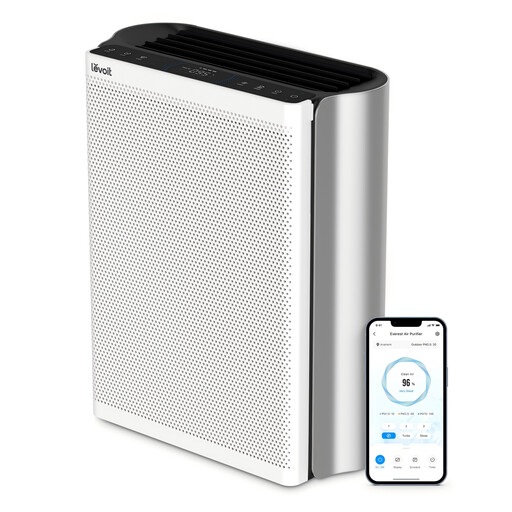
Levoit EverestAir Smart Air Purifier
Why it stands out: The Levoit EverestAir is designed for air purification in very large rooms. Its 3-channel laser sensor detects particles of different sizes (PM1.0, PM2.5, PM10) and displays the data in real time. A unique feature is its adjustable air outlet, which allows for targeted distribution of purified air.
Pros:
Who is it for? This model is ideal for users with large, open-plan living areas, lofts, or offices who are looking for a powerful and data-driven air purification solution.
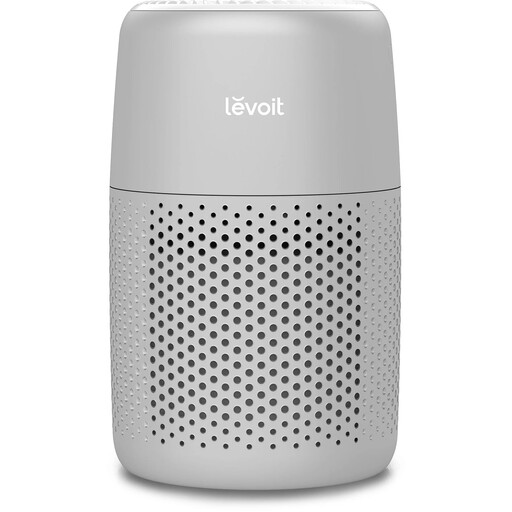
Levoit Air Purifier LAP-C161-AEUR Core Mini Pro HEPA
Why it stands out: The Core Mini Pro combines effective 3-stage filtration with a very compact design. Its small footprint makes it ideal for use on desks or in small bedrooms. The additional aromatherapy function allows you to infuse the purified air with essential oils.
Pros:
Who is it for? Perfect for individuals seeking a space-saving solution for smaller rooms like bedrooms, home offices, or kitchens, and who value quiet operation.
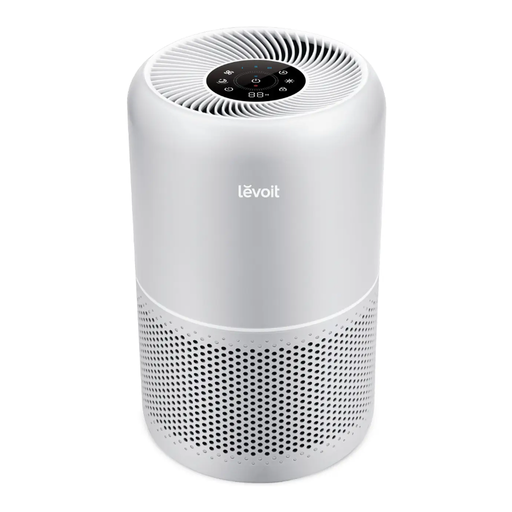
Levoit Air Purifier HEPA Filter for Allergies
Why it stands out: The Core 300S Pro is a smart air purifier that combines functionality with automation. Its laser sensor measures PM2.5 concentration and automatically adjusts performance in Auto Mode. Control via the app and voice assistants (Alexa, Google Assistant) allows it to integrate seamlessly into a modern home.
Pros:
Who is it for? This model is aimed at tech-savvy users, pet owners, and allergy sufferers who want an automated and remotely controllable solution for medium-sized living rooms or bedrooms.
The models presented here cover common use cases. However, the market offers an even wider variety of devices that differ in performance, design, and features.
Explore our full range of devices with a HEPA filter to find the perfect solution for your needs.
A filter's lifespan depends heavily on the duration of use and the level of air pollution in its environment. As a general rule, manufacturers recommend replacing the HEPA and activated carbon filters every 6 to 12 months. Many smart models will indicate when a filter change is due via a display on the unit or a notification in the app. The pre-filter, if washable, should be cleaned regularly (e.g., every 2–4 weeks).
An air purifier for allergies equipped with a true HEPA filter is engineered to remove airborne allergens such as pollen, dust mites, pet dander, and mould spores from the indoor air. By reducing the concentration of these particles, the device can help to lessen the allergen load indoors. This is not a medical device and is not intended to cure any health conditions.
For optimal performance, an air purifier should be placed on a flat, stable surface. It is important to maintain a clearance of at least 30–50 cm from walls, furniture, or curtains to allow air to circulate freely. Placing it in corners or under furniture is not recommended as this will impede airflow.