
Lieferung heute & morgen

Qualitätsgarantie
App herunterladen
Kategorien
Indoor air quality is affected by a wide range of particles and gases. These include household dust, pollen, pet hair, smoke particles, and volatile organic compounds (VOCs), which can off-gas from furniture or cleaning products. An air purifier is a device designed to filter these airborne particles and gases from the ambient air. This guide analyses the technical parameters relevant for selecting a suitable model for your specific application.
The effectiveness of an air purifier depends on several technical specifications and features. An informed decision is based on matching these specifications with the individual requirements of the space and its users.
The core component of any air purifier is its filtration system. Most modern devices use multi-stage filtration.
The CADR (Clean Air Delivery Rate) is a standardised metric that indicates how much clean air a device delivers per hour. It is measured in cubic metres per hour (m³/h). To determine the appropriate CADR for a room, the following guideline can be used: The CADR value should be at least two to three times the room's volume (room area in m² × room height in m) to ensure adequate air circulation. A device with a high CADR is designed for large rooms, whereas a model with lower performance may be sufficient for a bedroom.
The noise level of an air purifier is specified in decibels (dB). A quiet air purifier is particularly important for use in the bedroom. Many models feature a special night or sleep mode, in which the fan speed and thus the noise level are reduced to a minimum (often below 25 dB). For comparison, a whisper is about 30 dB.
Modern air purifiers increasingly offer features that enhance user convenience. This includes smart home integration via Wi-Fi, enabling control through an app or voice assistants (e.g., Alexa, Google Assistant). Integrated sensors (e.g., for PM2.5 particulate matter) can measure air quality in real time and automatically adjust the fan speed in auto mode.
Based on an analysis of technical specifications and feature sets, we present three models designed for different user profiles.
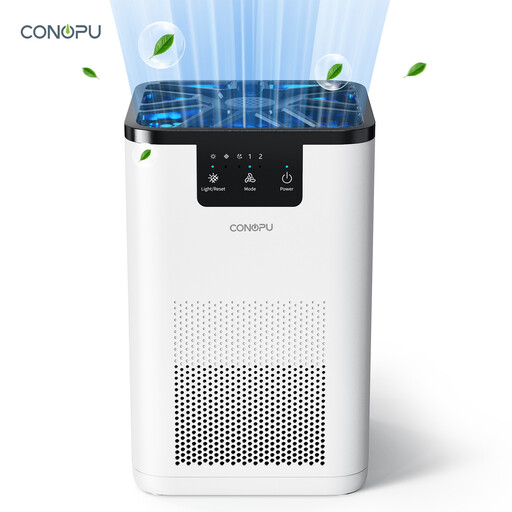
Why we recommend this product: This model stands out for its compact design and low energy consumption. With a CADR of 70 m³/h, it is designed for smaller rooms like bedrooms or home offices up to approx. 10 m², where it can circulate the air twice per hour, according to the manufacturer. A standout feature in this class is the integrated aromatherapy slot for water-soluble essential oils.
Pros:
Who it's for: Users looking for a basic, energy-efficient air purification solution for small, single rooms who also appreciate the added aromatherapy function.
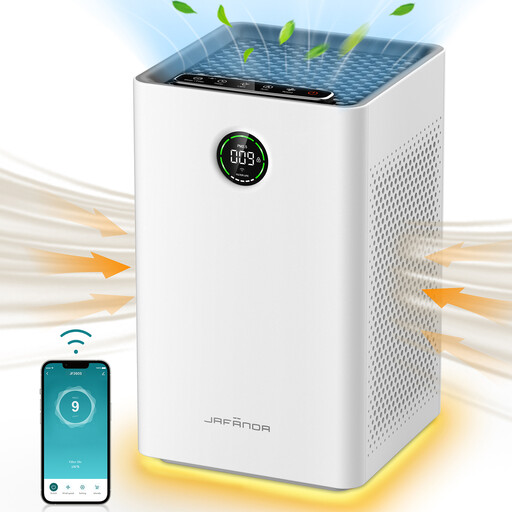
Why we recommend this product: The Jafända JF260S offers an excellent balance of performance, smart functionality, and quiet operation. With a CADR of 260 m³/h, it is suitable for medium to large living spaces. Integration into smart home systems and an auto mode based on a PM2.5 sensor offer a high degree of user convenience.
Pros:
Who it's for: Tech-savvy users and families looking for an effective solution for medium to large rooms who value automation, remote control, and real-time feedback on air quality.
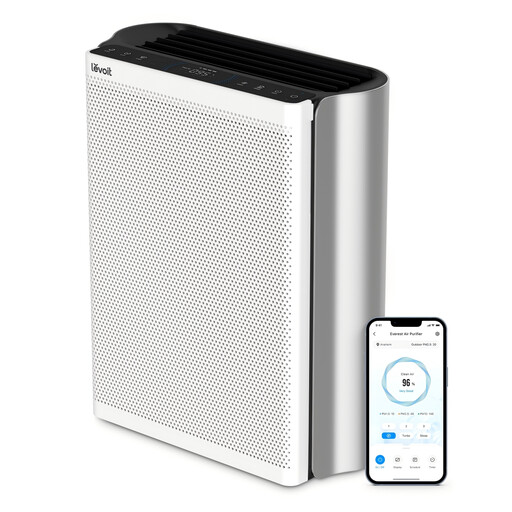
Why we recommend this product: The Levoit EverestAir is designed for very large rooms and features highly advanced sensor technology. Its three-channel laser dust sensor separately detects particles in the PM1.0, PM2.5, and PM10 size classes, enabling a detailed analysis of air quality. Its high cleaning performance and washable pre-filter make it a strong option for demanding applications.
Pros:
Who it's for: Individuals with very large or open-plan living areas who require maximum cleaning performance and detailed, data-driven air quality monitoring.
The models presented here cover specific use cases. If you are looking for devices with different specifications or suitable replacement filters, you can find a wider selection in our HEPA Air Purifier Filters category.
1. How often does the HEPA filter in an air purifier need to be replaced? The lifespan of a HEPA filter depends heavily on the duration of use and the level of air pollution in its environment. Most manufacturers recommend a replacement every 6 to 12 months. Many devices feature a filter replacement indicator that notifies the user in a timely manner.
2. Does an air purifier help with pet hair and allergies? An air purifier with a multi-stage filtration system can reduce the concentration of allergens in the air. The pre-filter captures large particles like pet hair. The subsequent HEPA filter is capable of removing finer particles such as pet dander, pollen, and dust mite allergens from the air. An activated carbon filter can also help combat odours.