The quality of indoor air is influenced by various factors, including fine particulate matter, pollen, pet hair, and Volatile Organic Compounds (VOCs). An air purifier is a technical device designed to reduce the concentration of these particles and gases in enclosed spaces. Selecting a suitable model depends on specific technical parameters and the user's individual needs.
Buying Guide: What to Look for in an Air Purifier
The effectiveness of an air purifier is determined by objective metrics. The following criteria are relevant for making an informed decision.
1. CADR (Clean Air Delivery Rate)
The CADR is one of the most important performance metrics. It indicates how much clean air a unit delivers per hour, measured in cubic metres per hour (m³/h). A simple formula can be used to determine the appropriate CADR for a room:
Room Volume (Length × Width × Height in m) × Recommended Air Changes Per Hour = Required CADR
An air change rate of 3 to 5 is recommended for effective purification. This means the entire volume of air in the room should be completely filtered three to five times per hour. A unit with a higher CADR cleans the air more quickly or is suitable for larger rooms.
2. Filter Technology: HEPA and Activated Carbon
The filter combination determines which types of pollutants can be removed.
- HEPA Filter: A HEPA air purifier (High-Efficiency Particulate Air) is the gold standard for removing particulates. An H13 filter, as found in many modern devices, can, according to the standard, filter up to 99.95% of all airborne particles between 0.1 and 0.3 micrometres in size. This includes pollen, dust mites, mould spores, and fine dust. This makes it a key component for an air purifier for allergy sufferers and for dust reduction.
- Activated Carbon Filter: This filter type binds gaseous pollutants, odours, and Volatile Organic Compounds (VOCs) through adsorption. It is particularly relevant for neutralising cooking fumes, cigarette smoke, or pet odours. An air purifier for pet hair therefore benefits significantly from a combined system.
- Pre-filter: A pre-filter captures large particles like hair and larger dust. This protects the subsequent filters and extends their lifespan.
3. Operating Noise (Volume)
The volume, measured in decibels (dB), is a crucial factor for user comfort, especially in bedrooms or offices. A quiet air purifier should have a level below 30 dB in sleep mode, which is roughly equivalent to the sound of a whisper. Models with an auto mode adjust the fan speed according to the air quality and only run at higher, louder levels when necessary.
4. Smart Features and Sensors
A smart air purifier offers added convenience and efficiency.
- Air Quality Sensors: PM2.5 sensors measure the concentration of fine particulate matter in real time, enabling an auto mode that adjusts the purification performance as needed.
- App Control: An air purifier with app control allows for remote operation via a smartphone. Functions like timer settings, mode changes, or monitoring air quality and filter status are thus possible from anywhere.
- Additional Features: Some models offer UV-C light for sterilisation or ionisers. The effectiveness and necessity of these features depend on the specific use case.
Our Top Picks for 2026
Based on the technical criteria mentioned above, we present a few models with different specifications.
Homintell Smart Air Purifier, 200m³/h CADR
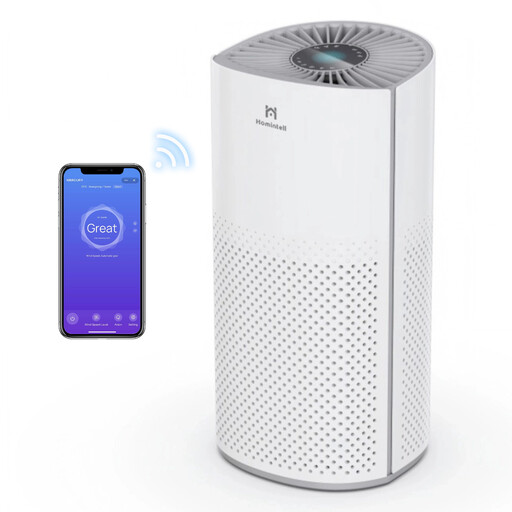
- Specification Analysis: This model is designed for smaller rooms and offers a solid set of basic features. The combination of an H13 HEPA and activated carbon filter addresses both particulates and odours. The integration of Wi-Fi control and a PM2.5 sensor positions it as a modern, entry-level device.
- Technical Specifications:
- CADR: 200 m³/h
- Filter: 3-in-1 system (Pre-filter, H13 HEPA, Activated Carbon)
- Noise Level: As low as 20 dB in sleep mode
- Control: Touch panel and Wi-Fi app control
- Sensors: PM2.5 sensor with colour-coded indicator
- Best for: Users with rooms up to 25 m², such as bedrooms or small offices, who are looking for a smart and quiet solution.
Homintell Smart Air Purifier, 300m³/h CADR
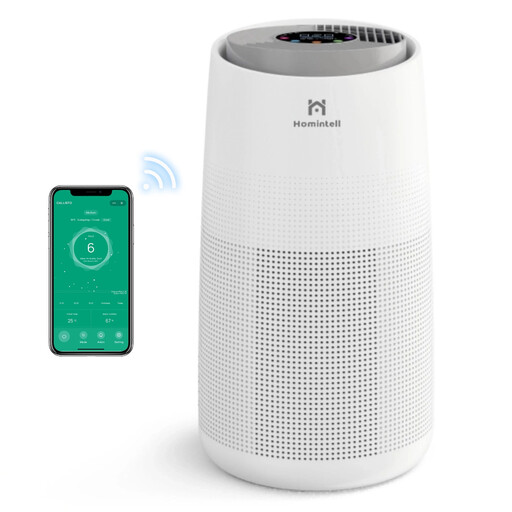
- Specification Analysis: With a higher CADR of 300 m³/h, this unit is suitable for medium-sized living spaces. It retains the core features of the smaller model, such as the three-stage filter system and app control, while adding useful features like a child lock and a display for temperature and humidity.
- Technical Specifications:
- CADR: 300 m³/h
- Filter: 3-in-1 system (Pre-filter, H13 HEPA, Activated Carbon)
- Noise Level: As low as 26 dB in sleep mode
- Additional Features: Child lock, 8-hour timer, temperature and humidity display
- Sensors: Dust sensor with colour-coded indicator
- Best for: Families or users with rooms up to 36 m² who need higher purification performance and additional convenience features.
Dreame Pet Air Purifier
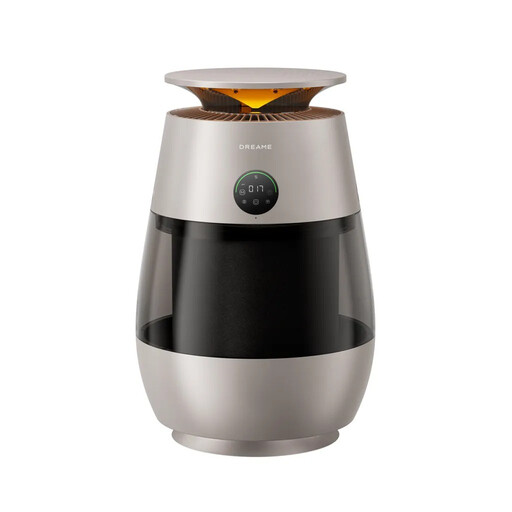
- Specification Analysis: This model is specifically tailored to the needs of pet owners. The five-stage purification technology and the 360° system for capturing pet hair are distinguishing features. The transparent hair collection bin and pet-specific design features like the bite-resistant cable and anti-tip protection underscore this specialisation.
- Technical Specifications:
- CADR (Particulates): 254 CFM (approx. 431 m³/h)
- Filter: Five-stage purification system
- Special Features: Transparent hair collection bin, Pet Mode, interactive laser pointer function
- Noise Level: From 31.9 dB(A) in standby mode
- Design: Anti-tip protection, bite-resistant cable, safety lock
- Best for: Pet owners seeking a specialised solution for eliminating pet hair and odours in rooms from 30 to 55 m².
More Options and Accessories
The models presented cover specific use cases. For a wider selection of devices tailored to different room sizes and requirements, you can find more Climate Control Appliances in our main category.
Frequently Asked Questions (FAQ)
1. How often do you need to change the filter in an air purifier? A filter's lifespan depends on the duration of use and the level of air pollution. Many modern devices, like the Homintell models featured, have a filter replacement indicator that illuminates after a certain number of operating hours (e.g., 2200 hours). As a general guideline, the HEPA and activated carbon filters should be replaced every 6 to 12 months. The pre-filter is often washable and should be cleaned regularly.
2. Do air purifiers really help with dust and allergies? An air purifier with a HEPA filter is technically designed to remove particles like house dust, pollen, pet dander, and mould spores from the air. By reducing the concentration of these allergens in the indoor air, it can lessen the burden on individuals with corresponding sensitivities. Its effectiveness depends on correctly sizing the unit (CADR) for the room and performing regular filter maintenance.
3. Where is the best place to position an air purifier? For optimal air circulation, the air purifier should be placed freely in the room, with sufficient distance (approx. 30-50 cm) from walls and furniture. The air intake and outlet must not be blocked. A central position is sensible in living rooms, while in a bedroom, it should ideally be placed so that the purified air flows towards the sleeping area.
Authored by: Joybuy Product Recommendation Officer

