When choosing an air purifier for airborne dust, start by considering the actual size and layout of your living space, along with the stated particle-cleaning performance. Then check whether the fan speed needed is comfortable for everyday use and whether suitable replacement filters are available. An air purifier can reduce particles in the air, but it won’t remove the need to control sources of dust, clean settled dust from surfaces or ventilate the room.
Who could benefit from an air purifier?
People with a large, open-plan living room
Choose a purifier based on the actual size and layout of your room, rather than relying solely on a marketed maximum coverage area. The US Environmental Protection Agency (EPA) describes filtration as a supplement to source control and ventilation.
Households with lots of airborne dust
An air purifier can filter particles from the air that passes through it, but it won’t deal with sources of dust or dust settled on furniture and floors. The German Environment Agency also highlights the need to replace filters regularly.
People who run their purifier for long periods each day
If you use your purifier frequently, you’ll need to consider its air-cleaning performance, a noise level suited to everyday life at home and the correct replacement filter for your model. Remember to factor regular filter changes into your maintenance plan.
What should you look for when buying?
Measure the area you actually want to clean and compare the particle-cleaning performance with how you plan to use the purifier. The US Environmental Protection Agency (EPA) considers filtration a supplement to source control and ventilation; the German Environment Agency highlights the need to replace filters regularly.
| Criterion |
What to look for |
Who should pay particular attention? |
| Performance for your room |
Measure the floor area and, where relevant, the ceiling height. Check the particle CADR and the fan speed it applies to. Don’t compare advertised maximum coverage areas directly unless they’re based on the same calculation method. |
If my living room is large or open-plan, I want to know whether the purifier can handle the area I actually use, rather than relying on a maximum coverage figure. Around 36% of consumers prioritise particle-cleaning performance for the room. |
| Filtering dust particles |
Check whether the purifier has a particle filter and a stated particle-cleaning performance. Consider dust on surfaces and any extra features separately from the aim of filtering the air. |
If my main aim is to reduce airborne dust, particle filtration matters more to me than extra features. Around 29% of consumers prioritise filtering dust particles. |
| Noise levels at home |
Check the noise level and air-cleaning performance at the fan speed you actually plan to use. A maximum-performance noise rating doesn’t necessarily tell you how the purifier will sound on a quieter setting. |
If I want to run the purifier while chatting or watching TV, I need a setting I can comfortably use in the room. Around 21% of consumers prioritise quiet operation at home. |
| Filters and running costs |
Check the exact replacement filter for your model, the filter-change guidance and how you plan to use the purifier. Electricity costs depend on the power consumption at the setting you use, how long it runs and your personal tariff. |
If I plan to use the purifier regularly, I want to understand maintenance and running costs beforehand. Around 14% of consumers prioritise ongoing costs. |
Avoid common buying mistakes
-
Assuming an advertised coverage area guarantees performance in your living room
The layout of your room and the fan speed affect how well a purifier works in practice. Manufacturers’ maximum coverage figures may not be based on the same conditions.
Work out the area you want to clean, then check the particle-cleaning performance and noise level at the setting you plan to use day to day.
-
Assuming less dust in the air means dust-free furniture
An air purifier filters air as it passes through, but it won’t remove sources of dust or dust that has already settled. The US Environmental Protection Agency (EPA) describes filtration as a supplement to source control and ventilation.
Use filtration alongside your usual cleaning routine and steps to control avoidable sources of dust.
-
Overlooking replacement filters when choosing a purifier
The German Environment Agency highlights the need to replace filters regularly. Levoit lists a compatible replacement filter for the Levoit Core 600S.
Before buying, check the exact filter model number, replacement guidance and ongoing costs for the way you plan to use the purifier.
Regular filter changes and electricity use remain ongoing running costs.
Brands to consider
Levoit
The Core 600S is described as a particle-filtering purifier with app control, and a replacement filter is listed for this model.
- Levoit gives the Core 600S a maximum coverage area of 147 m².
- This coverage figure comes from the manufacturer and doesn’t prove how well the purifier will work in a particular living room. A compatible replacement filter adds ongoing costs.
Philips
The Philips AC3033/10 from the 3000i series combines app control with a manufacturer-rated particle CADR of 520 m³/h.
- Philips gives this model a CADR of 520 m³/h.
- The manufacturer’s rating doesn’t show what performance you’ll get on a quieter fan setting in your living room.
Xiaomi
According to Xiaomi, the Xiaomi Smart Air Purifier 4 Pro combines particle CADR, a display and automatic mode.
- Xiaomi gives it a particle CADR of up to 500 m³/h and an effective coverage area of 35–60 m².
- These are manufacturer figures for this model, not directly comparable measurements to other stated coverage areas. If you want to avoid negative ionisation, check whether the feature can be controlled and which version of the purifier you’re buying.
Dyson
Dyson describes the Purifier Cool Formaldehyde TP09 as having a particle filter, a fan function and additional formaldehyde treatment.
- The extra features may be useful if you want a fan function or treatment for certain gases as well as particle filtration.
- The stated maximum airflow isn’t a particle CADR, so it can’t be directly compared with the CADR figures given for other purifiers when assessing suitability for a particular large living room.
Air purifiers at Joybuy
This selection from Joybuy covers air purifiers for airborne particles. For large or open-plan living spaces, always consider coverage figures alongside the relevant fan speed or air changes per hour.
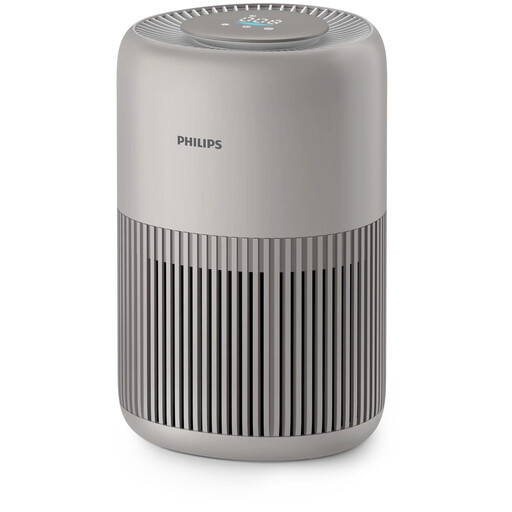 Image unavailable
Philips AC0921/14 air purifier
Worth considering if the stated coverage area suits your living space and you want to take operating noise into account.
Stated figures: up to 65 m², 49 dB and 21 W.
View at Joybuy
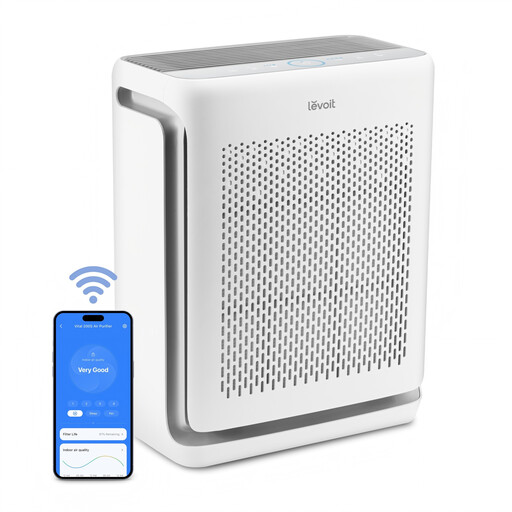 Image unavailable
Levoit Vital 200S Pro Smart Air Purifier
An option if a washable pre-filter suits your maintenance preferences and the stated coverage is sufficient for your room.
The product title mentions a washable pre-filter. The product information recommends replacing the HEPA filter every 6–8 months or when prompted by the purifier.
View at Joybuy
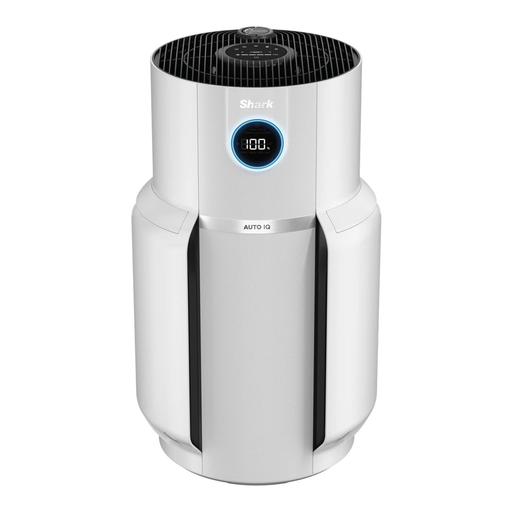 Image unavailable
Shark NeverChange Max HP300EU
Could be worth considering if the stated coverage suits the air-change rate you want in your living room.
The coverage figure varies with the air-change rate: 130 m² at 1 air change per hour and 28 m² at 4.8 air changes per hour.
View at Joybuy
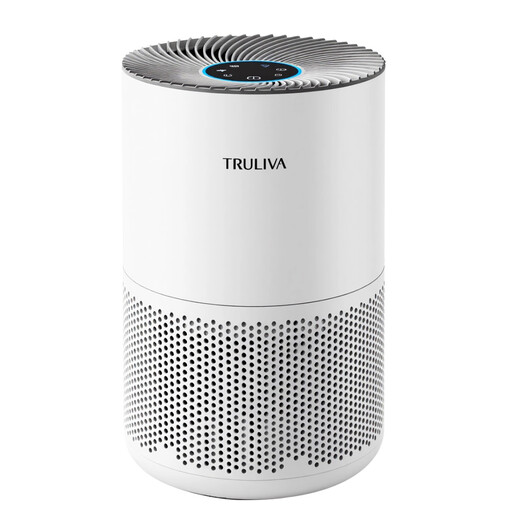 Image unavailable
TRULIVA air purifier, H13 HEPA filter
Worth considering if the stated particle-cleaning performance suits your room and how you plan to use the purifier.
The product title gives a CADR of 260 m³/h and an H13 HEPA filter. Check separately whether the coverage area is suitable for your needs.
View at Joybuy
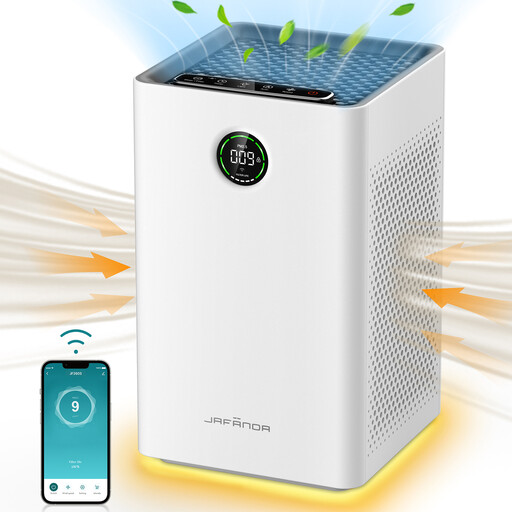 Image unavailable
Jafända air purifier, H13 filter
An option if the coverage figure for your desired air-change rate suits your room.
The stated coverage is 1190 ft² at 1, 595 ft² at 2 and 238 ft² at 5 air changes per hour. The product title also gives a noise level of 23 dB in sleep mode.
View at Joybuy
Frequently asked questions
Does the air purifier need to cover the whole home or just the living room?
A portable air purifier is designed for one room or a specific area. So, when choosing one, focus on the living space you actually want to clean, taking any connected open-plan areas into account. The US Environmental Protection Agency (EPA) describes filtration as a supplement to source control and ventilation.
Where should I put the purifier, and does it replace ventilation?
Follow the instructions for your specific model when positioning it, and make sure the air inlet and outlet aren’t obstructed. Filtration supplements source control and ventilation, but it doesn’t remove every air pollutant. The German Environment Agency’s guidance on classrooms isn’t a sizing recommendation for private living rooms.
When should I change the filter, and how much does it cost to run?
Follow the filter-change recommendations for your specific model and check which replacement filter is compatible before buying. Levoit lists a dedicated replacement filter for the Levoit Core 600S. Electricity costs depend on the purifier’s actual power consumption, how many hours it runs each day and your tariff.
Should I choose a purifier with ionisation or ozone for dust?
An ozone function isn’t needed to filter airborne particles. The US Environmental Protection Agency (EPA) notes that certain ionising devices can produce ozone under certain conditions. Check the technology used in a specific model and whether the feature can be controlled; this doesn’t mean that all ionisers are categorically prohibited in Germany.


