Students with dust in the air
If you want to reduce airborne particles in your living and study space, make sure the stated airflow capacity is suited to the size of your room.


For a student room, consider a particle-filter air purifier with an airflow capacity suited to the size of the room and a fan setting you can use while studying or sleeping. Check that the right replacement filter is available, and factor in the ongoing costs. An air purifier can complement ventilation and dusting surfaces, but it cannot replace either. The German Environment Agency makes the same point.
If you want to reduce airborne particles in your living and study space, make sure the stated airflow capacity is suited to the size of your room.
Choose a fan setting you can genuinely use at night or while concentrating on work. A noise rating without details of the corresponding fan setting tells you little about the balance between noise and airflow.
An air purifier can help reduce airborne particles. It does not replace measures to tackle sources of dust or cleaning your bedding and textiles.
Assess room coverage, the fan setting you can use in everyday life and the filter requirements separately. This makes it easier to judge whether the purifier suits your living, study and sleep routine.
| What matters to you | What to look for when buying | Who is this particularly important to? |
|---|---|---|
| Airflow capacity and room size | Compare your actual room size with the model’s stated coverage and particle CADR in m³/h. Check what air-change rate the coverage figure is based on. | I want the airflow capacity to suit the size of my room, rather than relying on a large coverage figure alone. Around 31% of consumers put room coverage first. |
| Quiet operation for studying and sleeping | Where possible, compare noise and airflow figures for the same fan setting. A quiet mode does not mean that the purifier reaches its maximum CADR on that setting. | If I’m going to run the purifier while studying or sleeping, the noise level on the setting I need must be comfortable. Around 25% of consumers prioritise quiet operation. |
| Replacement filters and ongoing costs | Check the exact filter name, compatibility, replacement guidance and current price of the replacement filter. | I want to know which replacement filter my model needs and how often it should be changed before I buy. Around 25% of consumers prioritise compatible filters and ongoing costs. |
| Allergy-related expectations | Think of a particle filter as a possible extra, not a way to remove allergens that have already settled or as a treatment. If you suspect a dust mite allergy, the German Environment Agency recommends getting it confirmed by a specialist. | If a possible dust mite allergy is why I’m buying, I want to know what an air purifier can and cannot do for airborne particles. Around 19% of consumers prioritise this allergy-related consideration. |
A coverage figure based on one air change per hour cannot be directly compared with a room-size figure based on a different air-change rate.
Compare particle CADR, room size and the calculation method used for each figure, rather than looking at the square metres alone.
Maximum airflow and especially quiet operation may refer to different fan settings.
Look for noise and airflow figures for the setting you actually want to use.
Replacement filters are model-specific and should be changed in line with the manufacturer’s guidance. The German Environment Agency also recommends changing filters regularly.
Make a note of the full model and filter names, then compare replacement guidance and filter costs over the same period of use.
Regular filter changes are part of the ongoing cost of using an air purifier, so factor them in when choosing a model.
The US Environmental Protection Agency notes that certain ionisers can produce ozone. The German Environment Agency advises against deliberately treating indoor air with ozone. This does not mean that every purifier with an extra feature releases harmful levels of ozone.
If your main aim is to reduce airborne dust, check the documented particle filtration and assess electronic extras separately.
FÖRNUFTIG is a particle-filter air purifier designed for smaller rooms.
The Smart Air Purifier 4 Compact combines a compact design with automatic operation and a stated particle airflow capacity.
The Air 2000 and the connected Air 4000i are different models, with different stated airflow capacities.
The Core 300S offers automatic and app control, as well as a stated particle airflow capacity.
The Blue Pure 511i Max is a model for living and sleeping spaces tested by CHIP.
The models below are air purifiers for airborne particles. For a student room, compare each model’s stated coverage and the fan setting you actually plan to use with the size of your room.
 No image available
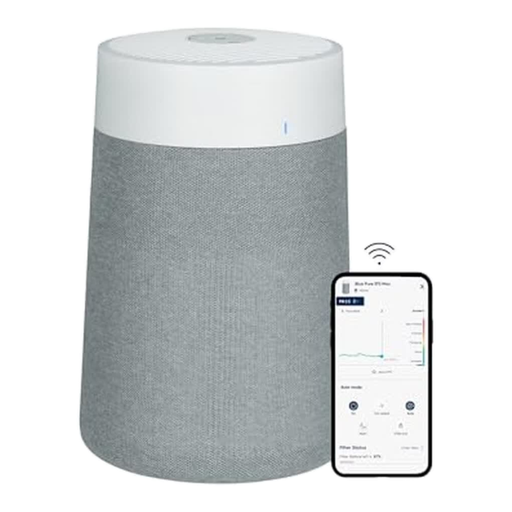
It may suit a living or study space if you assess its stated airflow capacity separately from its performance on the low setting.
The product description states a CADR of 212 m³/h and coverage of up to 43 m². The low setting is rated at 19 dB, and the main filter should be changed every 6–9 months.
 No image available
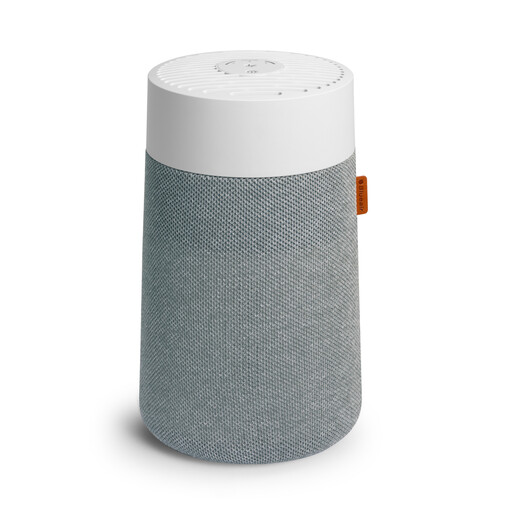
Its compact design may be a good fit if you have limited space. Check that its stated room coverage is right for your room.
The product description states a CADR of 117 m³/h, coverage of up to 20 m² and dimensions of 29 × 17,3 × 17,3 cm. The model has two fan settings, and the filter should be changed every 6–9 months.
 No image available
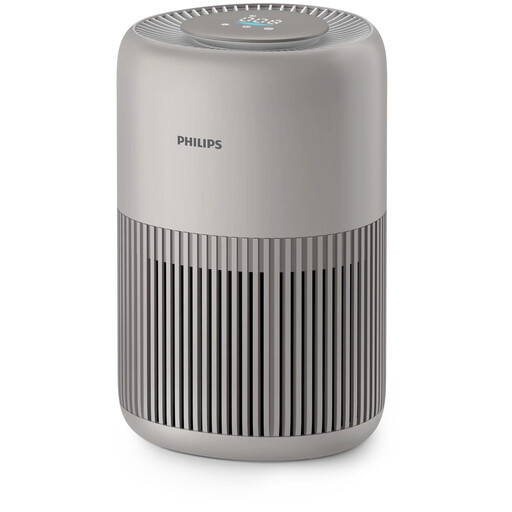
Night Mode may be useful when running the purifier in a bedroom. Check its noise rating against the setting you actually plan to use.
The product description states a CADR of 250 m³/h and 99,97 % filtration efficiency for PM2.5. Night Mode is rated at 20,5 dB and dims the lights. Philips FY0900 is listed as the replacement filter, which is due to be changed after 12 months.
 No image available
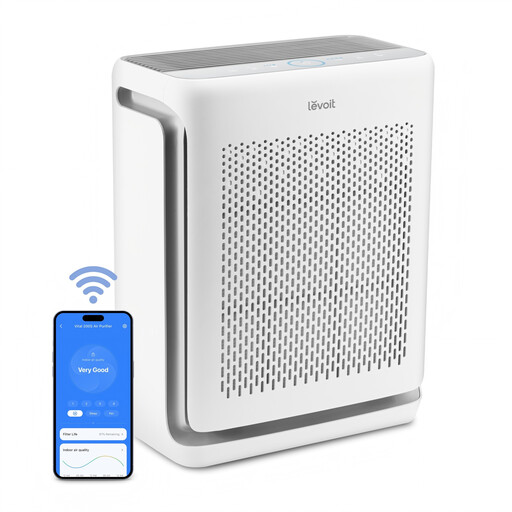
App control and sleep mode may be useful in a room you use regularly. When choosing where to put it, allow for the stated clearance around the purifier.
The product description states a CADR of 416 m³/h and coverage of 88 m² at two air changes per hour. It also states 99,97 % filtration efficiency for particles measuring 0,1–0,3 µm and describes a washable pre-filter. It recommends leaving at least 3 feet between the purifier and walls or furniture.
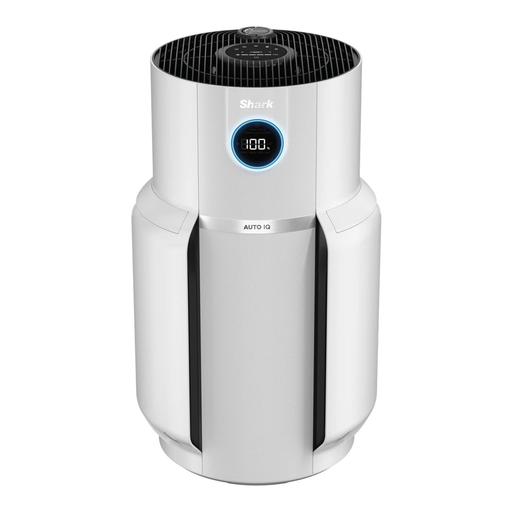 No image available
Before deciding whether it is right for your room, compare the coverage figure with the air-change rate it is based on.
The product description states coverage of 28 m² at 4,8 air changes per hour and 130 m² at one air change per hour. It describes four-stage filtration and states that the filter can last for up to five years.
No. Filtration can complement ventilation and measures to tackle sources of dust, but it does not remove every pollutant from the air. An air purifier also won’t clean dusty surfaces for you.
Follow the placement instructions for your model and keep the air inlet and outlet clear. IKEA says FÖRNUFTIG can be freestanding or wall-mounted; this does not automatically apply to other purifiers.
Not necessarily. IKEA specifically states that the FÖRNUFTIG particle filter is replaceable only. For other models, follow the relevant care instructions.
No. Statutory rights generally apply against the seller, while a guarantee is an additional voluntary promise subject to its own terms. If there is a fault, you can contact the seller first with the model details and proof of purchase. The German consumer advice centre explains the difference.
CE marking is required only when the relevant EU rules apply to the product; it is not an independent test of its cleaning performance. The German Federal Network Agency lists the product identification, manufacturer details and German-language instructions among the points to check. According to the German Environment Agency, a used air purifier should not go in household waste.