What should you look for when choosing one?
First, compare the CADR with the area you actually use and the air exchange in your conservatory. The US Environmental Protection Agency recommends choosing a cleaning capacity suited to the room size.
| What matters to you? |
What to check before buying |
Who is this important for? |
| Airborne pet allergens |
Compare the particle filter, accessible pre-filter and a CADR suited to the area. |
If my main aim is to reduce airborne pet allergens in the conservatory I use, I’ll still need to clean contaminated surfaces. Around 36% of consumers put allergen filtration first. |
| Performance in a conservatory |
Consider the room size, open connections and window use; check the CADR and noise figures at the setting you need. |
In a large conservatory, or one connected to other areas, I need a cleaning capacity suited to how I use the space. Around 29% of consumers prioritise room coverage. |
| Location and indoor climate |
Check the permitted temperature and humidity, and the placement instructions in the manual; keep air vents clear. |
If my conservatory gets very warm or conditions at the intended location vary, the appliance must be suitable for use there according to its manual. Around 21% of consumers prioritise suitability for the intended location. |
| Filter care and ongoing costs |
Check that replacement filters are made for the exact model, and compare replacement guidance and ongoing costs. |
It’s important to me that I can identify the right replacement filter, so I can plan care and replacement for the specific appliance. Around 14% of consumers prioritise predictable filter costs and maintenance. |
Air purifiers at Joybuy
This selection includes air purifiers with details about particle filters, and in some cases, pet allergens as target particles. Compare each stated CADR with your conservatory and check the operating conditions for the specific model.
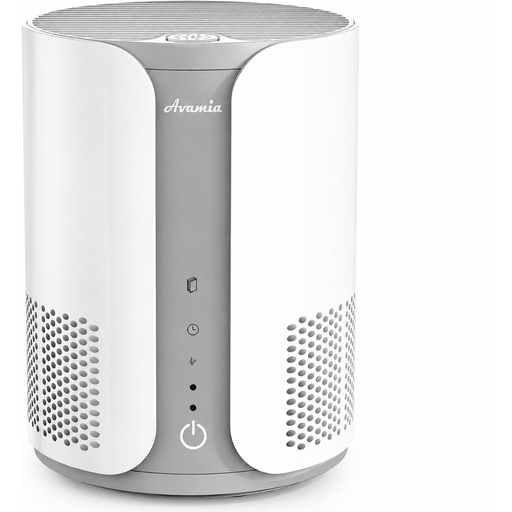 No image available
BKJ-5 air purifier with HEPA H13 filter
The product description lists pet hair and pet allergens as target particles.
Features include an H13 filter, 360° airflow and a filter replacement indicator.
View at Joybuy
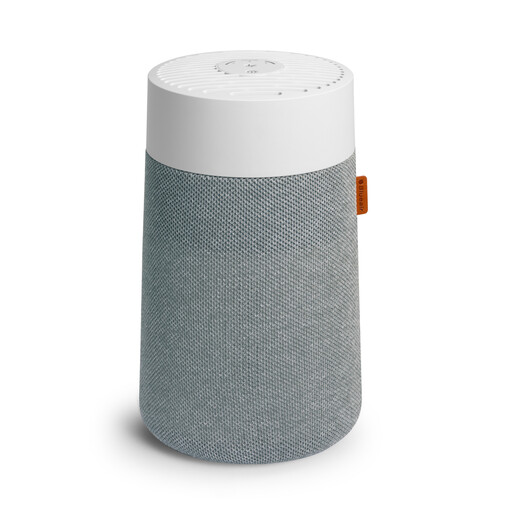 No image available
Blueair Blue Pure Mini Max
The product description lists pet allergens as target particles and gives coverage of up to 20 m². This figure may not apply to larger or open-plan areas.
The listed CADR is 117 m³/h, with a filter replacement interval of 6 to 9 months.
View at Joybuy
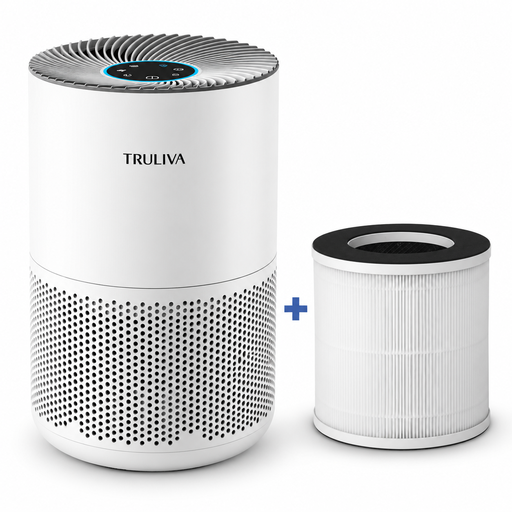 No image available
TRULIVA air purifier, 260 m³/h CADR, with an additional H13 replacement filter
The product description lists pet allergens as target particles and mentions an additional H13 replacement filter in the title.
The listed CADR is 260 m³/h, and the purifier has a 24-hour timer.
View at Joybuy
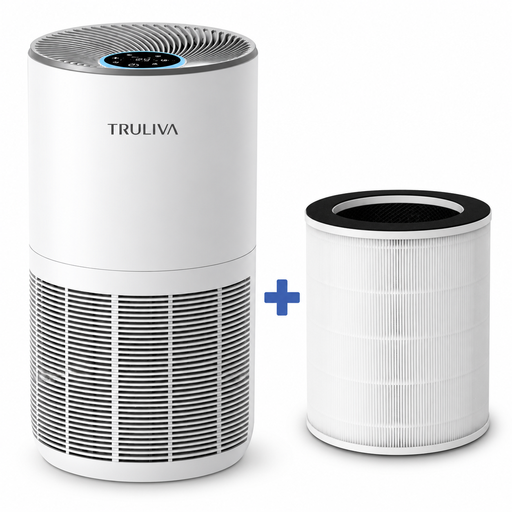 No image available
TRULIVA air purifier, 450 m³/h CADR, with an additional H13 replacement filter
The product description lists pet allergens as target particles. Compare the stated CADR with the area you actually use.
Features include a CADR of 450 m³/h, an H13 HEPA filter, 360° airflow and a 24-hour timer.
View at Joybuy
 No image available
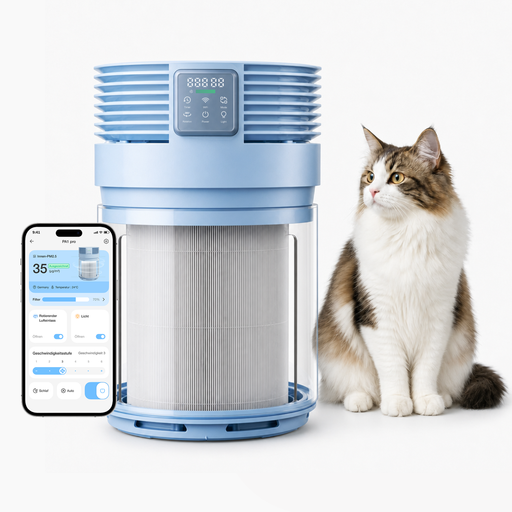
Lefant PA1 air purifier
The product description lists pet hair and pet allergens as target particles. The activated carbon filter provides an additional filtration stage for households that also want to address odours.
Features include a pre-filter, an H13 HEPA filter, an activated carbon layer and an automatic mode.
View at Joybuy
Frequently asked questions
Will an air purifier remove all pet allergens from a conservatory?
No. An air purifier can capture airborne particles, but it won’t automatically remove allergens from furniture or floors that are already contaminated. If you have a pet allergy, reducing allergen exposure and cleaning surfaces remain important.
Should I run the air purifier with the windows open?
If air is being exchanged continuously, don’t assume that a coverage figure advertised for a closed room will apply. The US Environmental Protection Agency describes portable air purifiers for a room or area; ventilation and filtration are different but complementary measures.
How should I care for the filter?
Follow the cleaning and replacement instructions for the exact model. The US Environmental Protection Agency notes that overloaded filters may work less effectively, so check that you can identify the correct replacement filter too.
What ongoing costs and servicing should I check before buying?
Allow for compatible replacement filters and the power consumption during your planned use. Levoit lists a replacement filter for the Core 400S, while Philips lists the FY3430/30 for selected 3000i models; these filters aren’t interchangeable between models.
Which EU requirements might apply to an electrical appliance?
The EU Low Voltage Directive applies to electrical equipment with a rated voltage of between 50 and 1,000 V AC or between 75 and 1,500 V DC. EUR-Lex sets out the requirements within the scope of the directive, including conformity and safety information. Whether it applies to a particular version depends, among other things, on its rated voltage; a CE marking does not prove a particular level of allergen filtration.


