Shared spaces with visible lint
If you want to filter airborne lint, you should also tackle its source and clean any affected surfaces. The German Environment Agency considers air purifiers a complementary measure.


A suitably sized particle filter can help capture airborne lint, but it won’t deal with the source or remove lint that has already settled. The German Environment Agency describes air purifiers as a complement to tackling the source, while the US Environmental Protection Agency recommends matching the particle CADR to the size of the room or area. Also check whether the fan speed you need is acceptable in a shared living space, and whether suitable replacement filters are available.
If you want to filter airborne lint, you should also tackle its source and clean any affected surfaces. The German Environment Agency considers air purifiers a complementary measure.
The particle-cleaning performance should suit the size of the area you actually share. The US Environmental Protection Agency recommends choosing a CADR suited to the room or area in question.
If you plan to run the purifier while spending time together, assess its noise and airflow at the fan speed you intend to use, and factor in filter replacement.
For airborne lint, the maximum performance rating isn’t the only thing that matters: the room size, a fan speed that works in everyday use and filter maintenance all need to be considered together.
| What matters | What to check before buying | Who should consider this? |
|---|---|---|
| Airborne lint | Check for a particle filter and an accessible pre-filter; also clean the source and surfaces. | If I want to reduce airborne lint without overlooking its source or lint that has settled, this is my priority. Around 33% of consumers put lint control first. |
| Room coverage | Match the particle CADR in m³/h to the size of the area you use, and take the appropriate operating speed into account. | If you want to clean a larger shared space, you need performance suited to its floor area, rather than relying solely on the advertised room size. Around 27% of consumers prioritise room coverage. |
| Everyday noise levels | Compare the noise ratings in dB(A) for the fan speed you plan to use. | If we’re having a conversation in the room, the speed intended for everyday use should be acceptable; a quiet mode on paper isn’t enough. Around 20% of consumers prioritise quiet operation. |
| Filter maintenance | Check the exact replacement filter code and the model-specific replacement guidance. | If you’re responsible for keeping the purifier running in a shared space, remember to consider the availability of suitable replacement filters and the upkeep involved. Around 20% of consumers prioritise manageable filter maintenance. |
A maximum room-size rating doesn’t prove that the purifier will perform well in your shared space at a fan speed you’re happy to use.
First, work out the size of the area you actually want to clean. Then compare the specific model’s particle CADR and the performance figures for the operating speed you intend to use.
An air purifier treats the air in the room, not lint on textiles or surfaces. A visible source may continue to shed lint.
Clean the source and affected surfaces, and use a particle filter as an additional measure if needed.
Noise and performance ratings may relate to different fan speeds. Philips gives a noise range of 15–50 dB(A) for the AC1715/11.
Check the noise and airflow at the speed you actually plan to use in your living space.
An overloaded filter won’t work well. The German Environment Agency generally advises against targeted ozone treatment of indoor air.
Check the exact filter code and the model’s replacement guidance. Don’t plan to use targeted ozone treatment for this particle problem.
Philips gives different particle CADR ratings for the AC3033/10 and AC1715/11, as a guide to their suitability for different room sizes.
The WINIX ZERO Pro is one example of a purifier with a CADR of 470 m³/h, as stated by WINIX Europe.
The Pure Air Nanocaptur PU3040F0 is a multi-stage model with a CADR of 300 m³/h, as stated by Rowenta Germany.
The Joybuy models below are presented as particle-filter air purifiers for larger living spaces. Compare the CADR with the actual room size, and check which fan speed is practical for everyday use in a shared space.
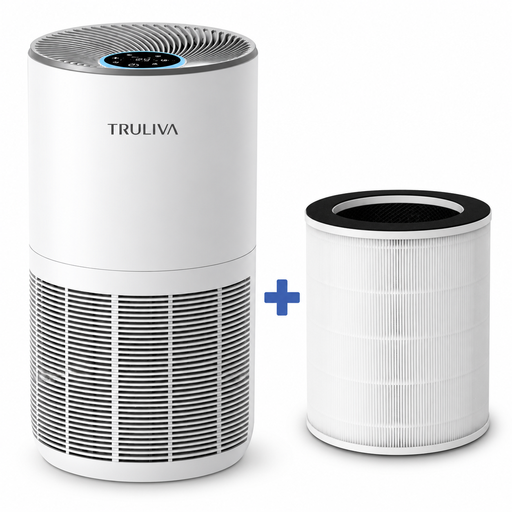 No image available
A choice to consider if you’re looking for a stated particle-cleaning performance suited to a larger living space. The product name lists a CADR of 450 m³/h, H13 True HEPA, three filtration stages and an additional replacement filter.
Like other air purifiers, this model treats the air in the room, not lint that has already settled; tackle its source and the affected surfaces separately.
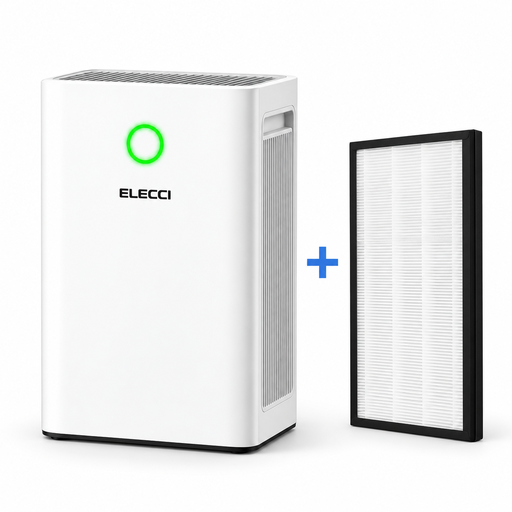 No image available
A choice to consider if you’re comparing stated CADR ratings and filter maintenance. The product name lists a CADR of 550 m³/h, a washable pre-filter, an additional HEPA replacement filter and a Sleep mode at 24 dB.
The stated coverage of up to 48 m² in the product name should be checked against the size of the area you actually share. Settled lint and its source need to be dealt with separately.
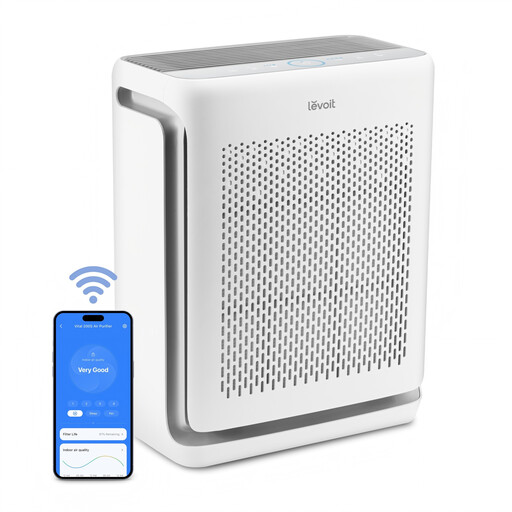 No image available
A choice to consider if a washable pre-filter matters to you. The product name also lists an Animal Mode.
The name alone doesn’t tell you which fan speed is suitable for your living space. Assess the performance rating for the actual room size; settled lint and its source need to be dealt with separately.
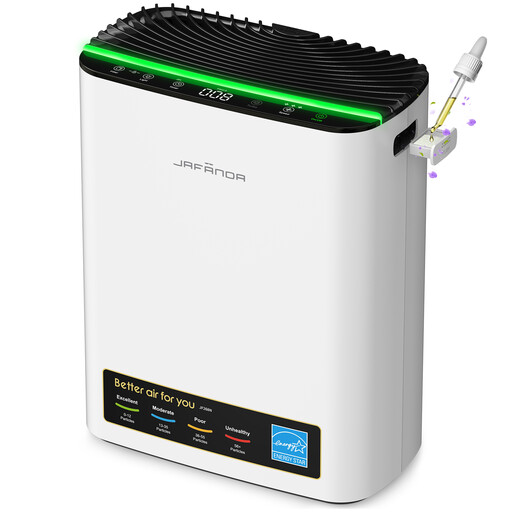 No image available
A choice to consider if a Sleep mode and True HEPA filter matter to you. The product name lists a Sleep mode at 20 dB and coverage of up to 1226 ft².
Check the stated room size against the conditions for the quoted performance and the size of your space. An air purifier won’t remove lint that has already settled.
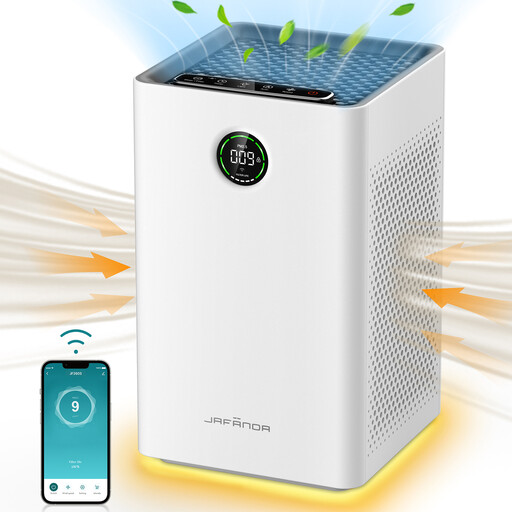 No image available
A choice to consider if you’re comparing stated particle-cleaning performance and several fan speeds. The product name lists a CADR of 260 m³/h, H13 True HEPA, five fan speeds and a Sleep mode at 23 dB.
The product name gives coverage of up to 1190 ft²; check the conditions for this room-size rating and whether it suits your shared space. Deal with settled lint and its sources separately.
No. An air purifier is designed to clean the air in a room. Remove settled lint and tackle any visible source separately; a particle filter can complement these steps by capturing airborne particles.
Plan for the area you actually want to clean, and keep the airflow paths clear in line with the instructions for your specific model. Assess performance at a fan speed that’s acceptable while the room is in use; placement and airflow distribution affect how well it works in the space.
Follow the instructions and filter code for your particular model. The US Environmental Protection Agency notes that dirty, overloaded filters don’t work well. For the AC1715/11, Philips recommends replacing the filter after one year and lists FY1700 as the suitable accessory.
CE marking is required only for products covered by relevant harmonised EU rules that require it. The EU’s ‘Your Europe’ information explains this requirement; within its remit, Germany’s Federal Network Agency lists marking and manufacturer information among the points to check. CE marking doesn’t confirm how well a device filters lint.
For reducing airborne lint, targeted ozone treatment isn’t a sound alternative to a particle filter. The German Environment Agency generally advises against treating indoor air with ozone. This isn’t a blanket statement about the legal status of every device with an electronic extra feature.