
Lieferung heute & morgen

Qualitätsgarantie

Willkommens-Angebote freischalten: KOSTENLOSE Lieferung | Bis zu 80 % RABATT | Kostenlose 30-Tage-JoyPlus-Testphase
App herunterladen
By the Joybuy Product Recommendation Officer
For people with allergies, the air inside their own homes can be a constant challenge. Pollen, dust mites, pet dander, and other airborne particles can trigger symptoms and impact your well-being. An air purifier can help reduce the concentration of these allergens in your indoor air.
This article serves as a guide. It explains the key features to look for when choosing a device and presents a selection of models with various functions to help you make an informed decision.
Choosing the right device depends on your individual needs and the specifics of your room. Three key criteria will help guide your decision.
The filter is the most critical component of an air purifier. For allergy sufferers, models with a multi-stage filtration system are especially important.
The CADR (Clean Air Delivery Rate) indicates how much clean air a unit delivers per hour. The value is measured in cubic metres per hour (m?/h). To find the right performance for your space, the device's CADR should match the room size. A general recommendation is that the air in the room should be completely circulated two to four times per hour.
For an air purifier in the bedroom, for example, a device with a CADR sufficient for the room's size is important to effectively reduce allergen levels during the night.
Modern air purifiers offer a range of features that enhance user convenience.
Here is a selection of devices that stand out for their specific features and functions.
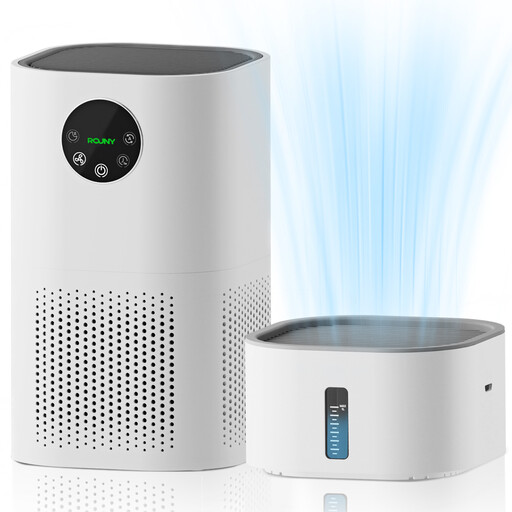
Why it stands out: This device combines air purification and humidification in one compact unit. It's a practical solution for rooms with dry air, especially during the heating season.
Pros:
Who is it for? This model is a great choice for users who want to not only reduce allergens but also regulate humidity in rooms from 20 to 50 m?, such as bedrooms or living rooms.
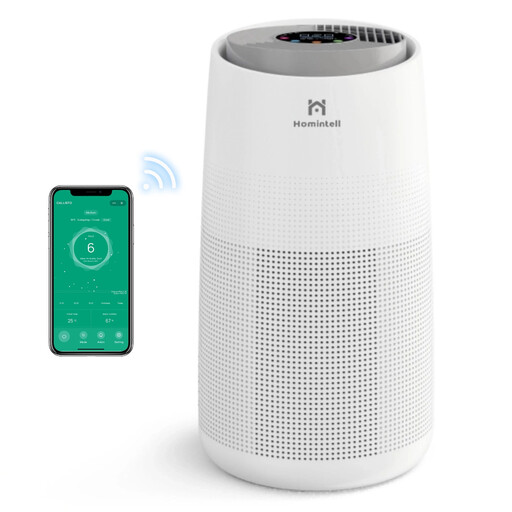
Why it stands out: The Homintell air purifier is notable for its high CADR of 300 m?/h and its smart features, including Wi-Fi control and integrated UV sterilisation.
Pros:
Who is it for? Ideal for tech-savvy users looking for powerful purification for mid-sized rooms who appreciate the convenience of app control.
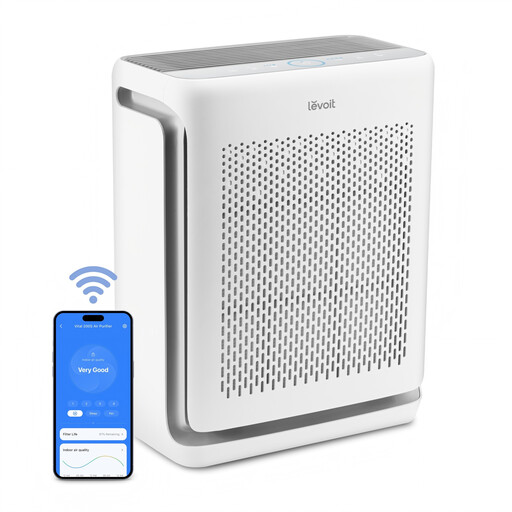
Why it stands out: This model was designed with pet owners in mind. Its special Pet Mode and washable pre-filter make it an effective solution for pet hair and odours. The high CADR also makes it suitable for large rooms.
Pros:
Who is it for? An excellent choice for households with pets or for anyone needing powerful air purification for large living rooms or bedrooms.
Haven't found the right model for your needs yet? There is a wide variety of devices with different specifications and for various room sizes.
Explore more options in our comprehensive Air Purifiers category.
1. How often do you need to change the filter in an air purifier? A filter's lifespan depends on usage duration and air quality. HEPA and activated carbon filters typically need to be replaced every 6 to 12 months. Many modern devices have a filter change indicator to remind you. Pre-filters are often washable and should be cleaned every 2 to 4 weeks, depending on how dirty they get.
2. Does an air purifier really help with pet hair? Yes, an air purifier can significantly reduce the amount of pet hair and dander in the air. Models with an effective pre-filter capture larger hairs, while the HEPA filter removes smaller particles like dander (which are often the actual allergens). An activated carbon filter also helps to neutralise pet odours.
3. Can I run an air purifier all night? Yes, most air purifiers are designed for continuous operation. For use in the bedroom, a model with a dedicated sleep mode is recommended. In this mode, the device operates at the lowest fan speed and is exceptionally quiet, so it won't disturb your sleep. Additionally, the display lights are often dimmed or turned off completely.