
Lieferung heute & morgen

Qualitätsgarantie

Willkommens-Angebote freischalten: KOSTENLOSE Lieferung | Bis zu 80 % RABATT | Kostenlose 30-Tage-JoyPlus-Testphase
App herunterladen
For people with allergies, the air inside their own homes can become a source of irritation. Pollen, dust, pet dander, and other particles float invisibly in the air and can trigger symptoms like sneezing, itchy eyes, or breathing difficulties. An air purifier can help reduce the concentration of these allergens and improve air quality.
This article serves as a buying guide. It explains the most important technical features and presents a selection of devices to make your decision easier when purchasing an air purifier.
The selection of models is vast. To find a suitable device, three criteria are especially important: filter technology, performance, and operating noise level.
The heart of any air purifier is its filter system. For allergy sufferers, two types of filters are particularly relevant:
A combination filter that unites both technologies offers a comprehensive solution for improving indoor air quality.
The CADR (Clean Air Delivery Rate) indicates how much clean air a device delivers per hour. The value is measured in cubic metres per hour (m?/h). A higher CADR means faster and more effective air purification.
To determine the appropriate CADR for your room, you can use a simple formula: Multiply the room volume (length × width × height in metres) by the desired number of air changes per hour. For allergy sufferers, a rate of 3 to 5 is recommended.
Example: For a 25 m? bedroom with a ceiling height of 2.5 m (room volume: 62.5 m?), a CADR of at least 187.5 m?/h (62.5 m? × 3) would be advisable.
No one wants to be disturbed by a loud appliance while sleeping or working. The noise level of air purifiers is specified in decibels (dB). Look for models that offer a special sleep mode. A quiet air purifier for the bedroom should have a noise level below 30 dB in this mode, which is roughly equivalent to a whisper.
Based on the criteria mentioned, we have compiled a selection of devices suitable for allergy sufferers and health-conscious households.
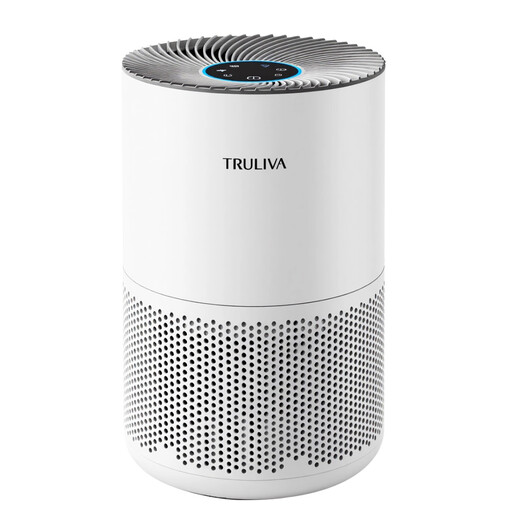
Why this model stands out: The TRULIVA KJ260 combines solid purification performance with practical features for daily use. With a CADR of 260 m?/h, it is designed for medium-sized rooms. The 3-in-1 filter system with an H13 HEPA filter aims to remove allergens, fine dust, and other pollutants. A special feature is the washable filter, which can reduce maintenance costs.
Benefits:
Who is this device for? This model is a great choice for users looking for a powerful yet quiet air purifier for their bedroom or living room, who also value easy maintenance.
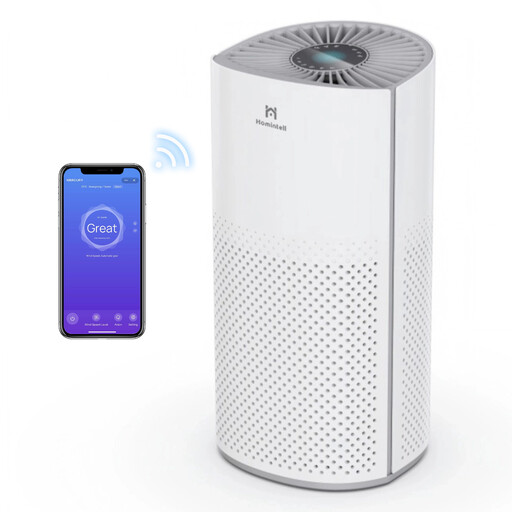
Why this model stands out: The Homintell Mercury stands out for its smart features and compact design. With a CADR of 200 m?/h, it is designed for rooms up to 25 m?. It features a PM2.5 sensor that measures air quality in real-time and adjusts the fan speed accordingly in automatic mode. Control via Wi-Fi and an app offers additional convenience.
Benefits:
Who is this device for? Ideal for tech-savvy users looking for a compact air purifier for dust and pollen for small to medium-sized rooms, who appreciate the convenience of app control.
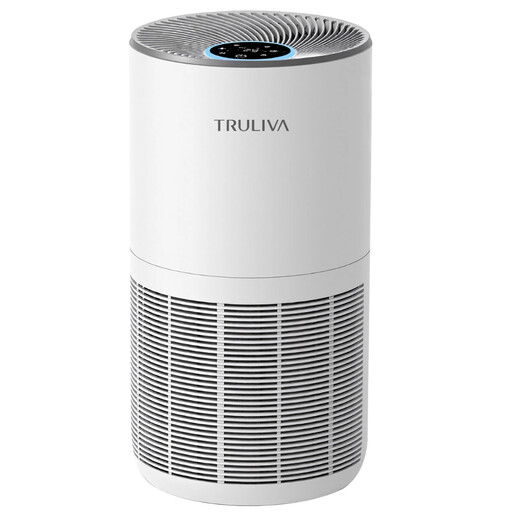
Why this model stands out: With a very high CADR of 450 m?/h, the TRULIVA KJ450 is designed for large rooms up to 55 m?. Its 360° air intake system ensures rapid and even distribution of purified air throughout the room. The three-stage filter system with an H13 HEPA filter is designed to remove a wide range of particles and odours, making it an effective air filter for pet hair and other allergens.
Benefits:
Who is this device for? This model is an excellent choice for households with large, open-plan living spaces, for pet owners, or for anyone needing maximally fast and powerful air purification.
The models presented provide a good overview of the available features. If you are looking for devices with specific sensors or for different room sizes, it's worth taking a look at our extended range.
Discover more sensor-equipped purifiers and find the perfect model for your needs.
The lifespan of a HEPA filter depends on the duration of use and the level of air pollution. On average, a replacement is recommended every 6 to 12 months. Many modern devices have a filter replacement indicator that automatically reminds you. Always follow the manufacturer's instructions.
Yes. A multi-stage filter system is particularly effective here. The pre-filter captures coarse particles like pet hair and lint. The subsequent HEPA filter takes care of smaller particles like dander (pet allergens), while the activated carbon filter can reduce unpleasant pet odours.
Yes, devices with a dedicated sleep mode are designed for this purpose. In this mode, the fan operates at the lowest speed to minimise the noise level. Often, the lights on the device are also dimmed or turned off completely to ensure an undisturbed night's sleep.