
Lieferung heute & morgen

Qualitätsgarantie

Willkommens-Angebote freischalten: KOSTENLOSE Lieferung | Bis zu 80 % RABATT | Kostenlose 30-Tage-JoyPlus-Testphase
App herunterladen
As a Joybuy Product Recommendation Officer, I regularly analyse product information to help you make an informed purchasing decision. In large living or office spaces, air quality can be quickly compromised by dust, pollen, or other particles. This article serves as a guide to selecting a suitable air purifier for large rooms, presenting various models based on their technical specifications and features.
Before making a decision, several technical specifications and features are particularly important. These will help you objectively evaluate a device's performance.
The Clean Air Delivery Rate (CADR) is one of the most important metrics. It indicates how much clean air a unit delivers per hour, measured in cubic metres per hour (m?/h). To determine the appropriate CADR for your room, you can use a simple formula: multiply the room's volume (length × width × height in metres) by the desired number of air changes per hour (ACH). For allergy sufferers, 4 to 5 air changes per hour are often recommended. A device is suitable for a room if its CADR value meets or exceeds this result.
A multi-stage filtration system is crucial for effective air purification.
Modern air purifiers offer features that simplify daily use.
Here is a selection of devices whose specifications make them suitable for use in larger spaces.
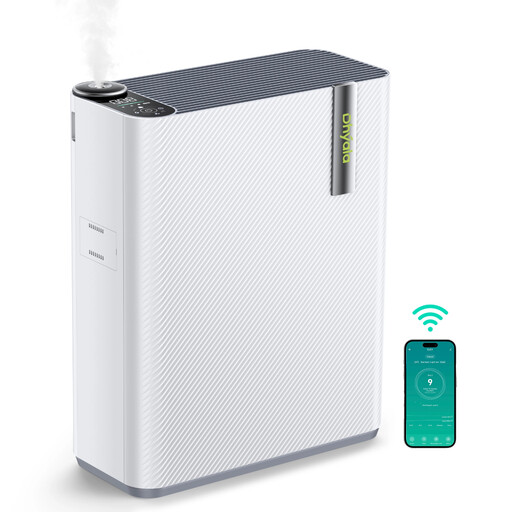
What sets it apart: This model is designed for very large areas with a CADR of 450 m?/h. According to the manufacturer, it can circulate the air in rooms up to 80 m? twice per hour. It offers flexible control via an app or voice commands, and the integrated PM2.5 sensor displays the air quality numerically.
Pros:
Who is it for? This model is a great option for users with very large living rooms, lofts, or open-plan offices who require high air circulation and smart control options.
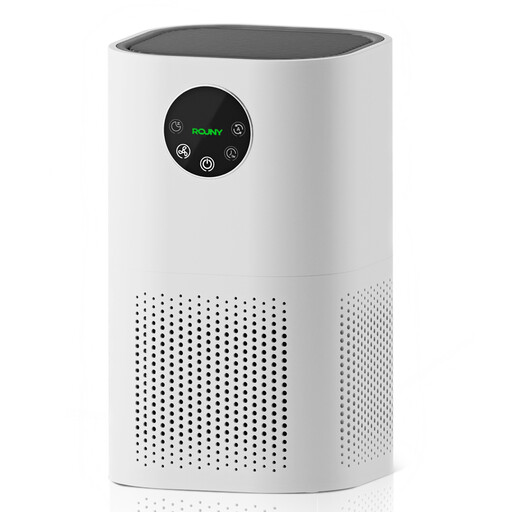
What sets it apart: The ROUNY Air Purifier delivers solid performance for medium to large rooms from 20 to 50 m? with a CADR of 150 m?/h. It combines an H13 HEPA filter with a simple control concept. Air quality is visualised via a three-colour LED indicator (green, yellow, red).
Pros:
Who is it for? This device is suitable for users looking for a reliable air purifier for large bedrooms or medium-sized living rooms who value simple operation without app connectivity.
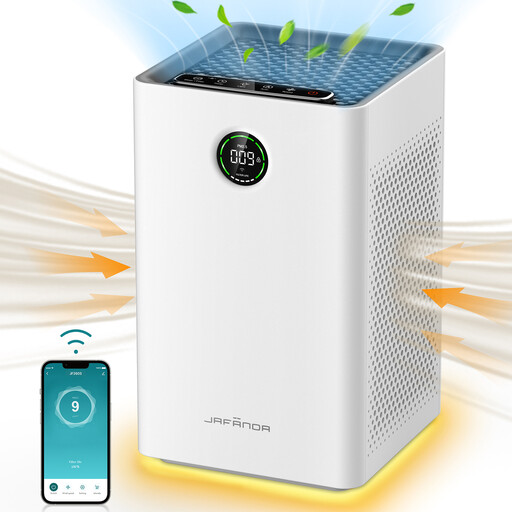
What sets it apart: The Jaf?nda Air Purifier combines good purification performance (CADR: 260 m?/h) with comprehensive smart home features. It can be controlled via Alexa, Google Assistant, or its companion app. The integrated PM2.5 sensor enables an auto mode that adjusts performance based on current air pollution.
Pros:
Who is it for? Ideal for tech-savvy users who are looking for an air purifier for medium to large rooms and value seamless integration into their smart home and detailed air quality monitoring.
The models presented here cover a range of different needs. If you haven't found the right device for your specific use case, or if you'd like to compare models for other room sizes, you can find a broader overview in our Air Filters category.
1. How often does the HEPA filter need to be replaced? A filter's lifespan depends heavily on usage duration and the air quality of its environment. Generally, a replacement is recommended every 6 to 12 months. Many modern devices, including those featured here, have a filter replacement indicator that automatically reminds you.
2. Do air purifiers help with allergies? Air purifiers with a HEPA filter are designed to filter very small particles from the indoor air. This includes common allergens like pollen, dust mites, mould spores, and pet dander. By reducing these particles in the air, they can help lessen the burden for allergy sufferers indoors.
3. What is the difference between an air purifier and a humidifier? An air purifier filters particles and pollutants from the air to improve its quality. A humidifier, on the other hand, adds water to the air to increase humidity, which can be particularly useful during winter months with dry, heated air. They are two different devices with distinct functions.