Hobby room users sensitive to allergens
You mainly want to reduce airborne particles containing pet allergens, and don’t expect a device to treat an allergy.


Start by choosing a particle-filter air purifier with a stated particle CADR that suits the size of your hobby room and a fan speed you can comfortably use day to day. It only filters air that passes through the unit: the Allergy Information Service at Helmholtz Munich lists cleaning as a separate measure for dealing with settled allergens, while the US Environmental Protection Agency (EPA) distinguishes between particle and gas filtration. Ventilation and controlling potential sources of emissions are therefore still important in their own right.
You mainly want to reduce airborne particles containing pet allergens, and don’t expect a device to treat an allergy.
You need an air output suited to the size of your room and a suitable spot for the unit. The advertised maximum room size isn’t enough to make your choice on its own.
You spend longer periods in the room concentrating on tasks, so you need to weigh the air output against the fan noise at the speed you’ll actually use.
First decide whether airborne pet allergens are your main concern, or whether you also want to tackle everyday smells in your hobby room. Then compare the room coverage, usable fan speed and filter replacement requirements with your room and how you plan to use the purifier.
| Priority | What to check | Especially important if |
|---|---|---|
| Airborne pet allergens | Check the particle filter and particle CADR; plan to clean surfaces separately. | If I want to reduce airborne pet allergens in my hobby room, I look for a suitable particle filter and make sure to clean affected surfaces. Around 31% of consumers put allergen reduction first. |
| Suitable room coverage | Compare the room’s floor area and ceiling height with the particle CADR and the assumptions used for the stated room size. | If I have a small or awkwardly shaped hobby room, I want a unit with an air output that suits the room and where I can place it. Around 25% of consumers prioritise suitable room coverage. |
| Noise while working | Check which fan speed each noise rating applies to; don’t assume the quietest setting delivers the maximum CADR. | If I run the unit while concentrating on work, I want to use a practical setting without the fan noise becoming a distraction. Around 19% of consumers prioritise quiet operation. |
| Pet smells and hobby-related emissions | Assess particle and gas filters separately; if your hobby may produce fumes, plan to control the source and ventilate the room. | If everyday pet smells bother me as well as pet particles, I look at what each filter is designed to do and treat hobby fumes as a separate issue. Around 13% of consumers put pet smells first. |
| Filter replacement and running costs | Check the exact replacement filter code for the model, replacement guidance and power consumption. | For ongoing use, I want to plan ahead for compatible replacement filters and electricity costs. Around 12% of consumers prioritise predictable ongoing costs. |
Room size claims may be based on different air changes per hour. Levoit uses different assumptions for the Core 300S, so the stated floor area alone isn’t enough for a like-for-like comparison.
Compare the particle CADR and check which air change rate the stated room size is based on.
Separate figures for minimum noise and CADR don’t show that both are achieved at the same fan speed.
Check the settings for the specific model and choose a speed you can actually use while working on your hobby.
Particle and gas filtration do different jobs. A particle CADR doesn’t tell you how well a unit removes gases.
First identify the source of the pollutant. If your hobby could produce emissions, don’t rely on choosing a device instead of controlling the source and ventilating the room.
A similarly named filter is an accessory, not the appliance itself. Choosing the wrong filter code can also lead to a costly mistake.
Before buying, check the product type, full model name and filter code.
The 1000i AC1715/11 is a useful point of comparison if you want to check the particle CADR, noise range and filter code for a specific model.
The Core 300S is a useful point of comparison for compact units with a particle filter and app control.
The Smart Air Purifier 4 is a useful point of comparison if you’re looking for a higher stated particle CADR and a specific replacement filter series.
This selection includes air purifiers whose product names mention particle filters or pet particles. Some models also list activated carbon filters or a pet mode.
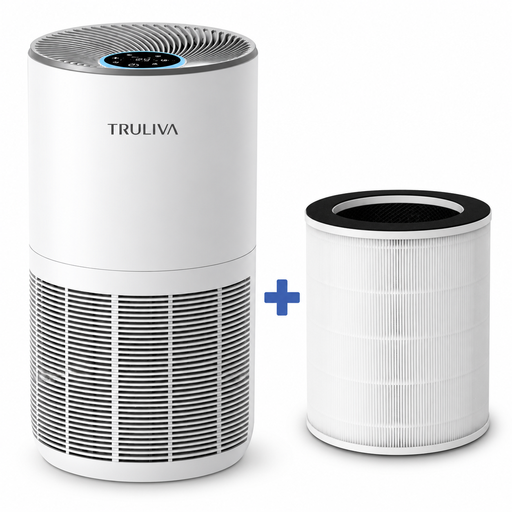 No image available
The product title mentions pet particles and smells, so compare the stated air output with the size of your hobby room.
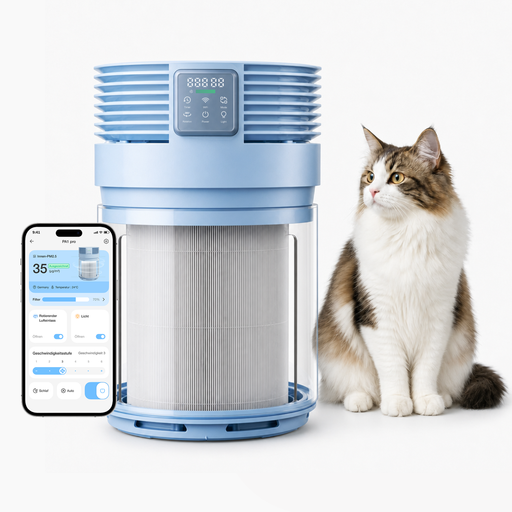 No image available
The product title mentions pet hair and lists HEPA and activated carbon filters. Check whether the filters are suited to your needs.
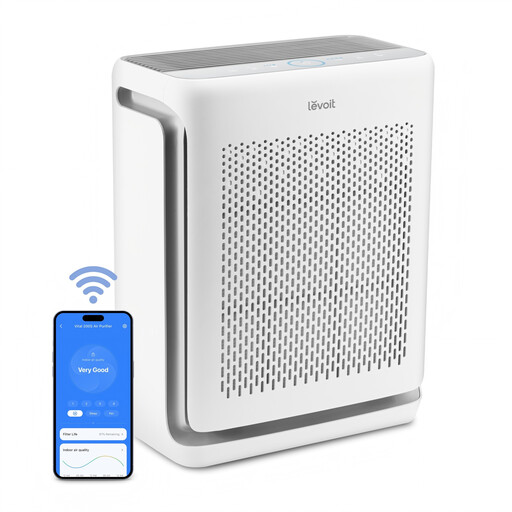 No image available
The product title mentions a pet mode. Check that the room size and fan speed you can use suit your planned needs.
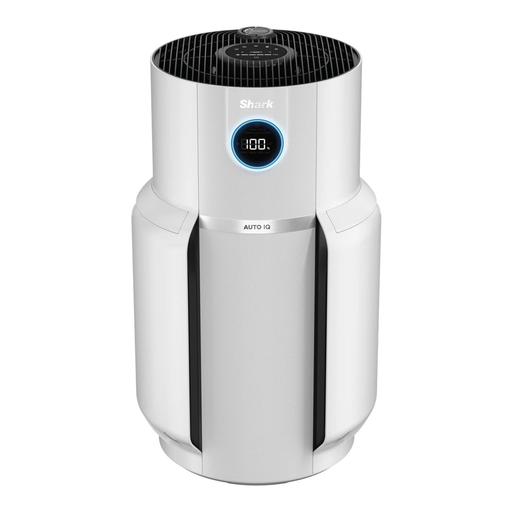 No image available
The product title lists a HEPA filter and a room size. Before comparing it with other models, check which air change rate the figure is based on.
 No image available
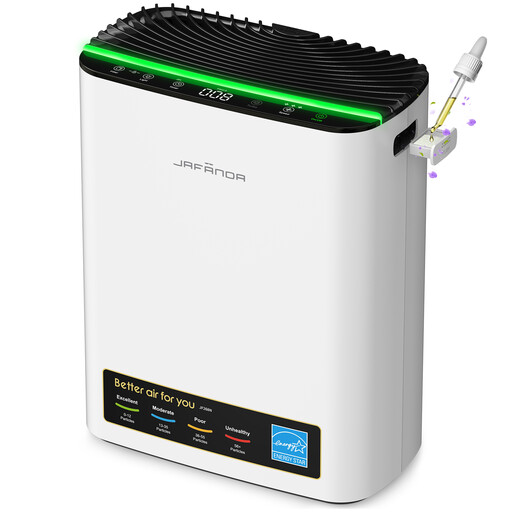
The product title mentions pet allergens and smells. Check the stated room size alongside the air output suited to your hobby room.
No, not directly: a room air purifier only filters air that passes through it. The Allergy Information Service at Helmholtz Munich lists cleaning as a separate measure for surfaces contaminated with allergens; the purifier can complement these measures.
Keep the air inlets and outlets clear, following the instructions for your specific unit, and choose replacement filters using the full model and filter codes. Philips lists the FY1700 filter for the AC1715/11 and recommends replacing it after one year; Xiaomi recommends replacing the model-specific filter for the Smart Air Purifier 4 every six to twelve months.
Yes. Air filtration doesn’t replace ventilation or controlling the source of emissions. The US Environmental Protection Agency (EPA) distinguishes between filters for particles and those for gases, so a particle CADR doesn’t prove that a unit will adequately remove fumes from a particular hobby activity.
Check the relevant EU requirements for the specific unit and make sure the necessary documentation is available. The German Federal Network Agency lists CE marking and the required safety and operating instructions in German, among other things. CE marking doesn’t prove that the filter’s performance has been independently measured.
No. The US Environmental Protection Agency (EPA) advises against using air purifiers that deliberately produce ozone in occupied rooms. This US safety guidance doesn’t mean there is a blanket sales ban in Germany.