
Lieferung heute & morgen

Qualitätsgarantie

Willkommens-Angebote freischalten: KOSTENLOSE Lieferung | Bis zu 80 % RABATT | Kostenlose 30-Tage-JoyPlus-Testphase
App herunterladen
Whether for an unexpected overnight guest, your next camping trip, or a move where your proper bed has yet to arrive—a flexible sleeping solution is a practical asset in many situations. A modern airbed offers a comfortable and space-saving alternative to a conventional mattress. However, the selection is vast, and the differences are in the details. This guide will help you navigate your options, explain key buying criteria, and present a selection of different models to make your decision easier.
To find the right model for your needs, you should consider a few technical features. These criteria will help you better assess the functionality and durability of an inflatable mattress.
The durability of an airbed largely depends on the material used and its internal structure. Most models are made of polyvinyl chloride (PVC), a robust and water-resistant plastic. Some manufacturers use advanced materials, such as Tritech, which consists of three layers and promises greater tensile strength and shape retention.
The internal construction is crucial for sleeping comfort. Basic models have simple air chambers. Higher-quality versions use special coil or beam constructions (e.g., Wave Beam), which distribute weight more evenly and reduce sagging. This provides a more stable and level sleeping surface, closer to that of a conventional mattress.
The inflation method is a key convenience feature. There are two basic types:
The dimensions are crucial for the intended use. A 2-person airbed offers enough space for couples, while a single bed is sufficient for one person or for use in smaller tents.
The height of the airbed affects comfort. Taller models (over 40 cm) make getting in and out of bed easier and feel more like a real bed. They also provide better insulation from ground cold, which is particularly advantageous when camping. Lower models, on the other hand, are lighter and can be stored more compactly, making them a great choice for a camping air mattress or a travel bed for adults with limited luggage.
Based on the criteria mentioned, we have compiled a selection of models suitable for various applications.
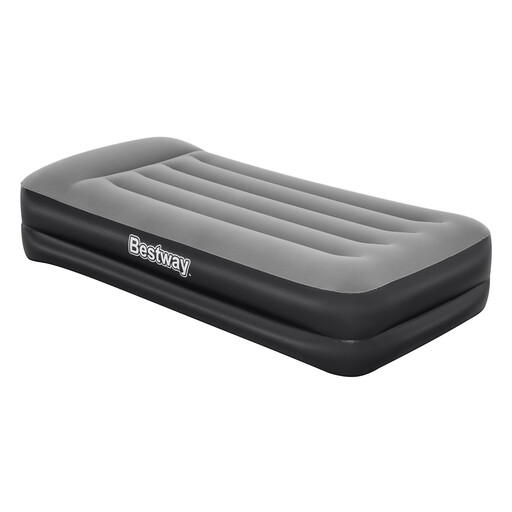
Why it stands out: This model is notable for its exceptionally fast and straightforward setup. According to the manufacturer, the integrated AC pump fully inflates the bed in just three minutes, making it an extremely practical solution for spontaneous overnight guests.
Advantages:
Who is it for? Ideal for households that regularly need a comfortable and quickly assembled guest bed for one person.
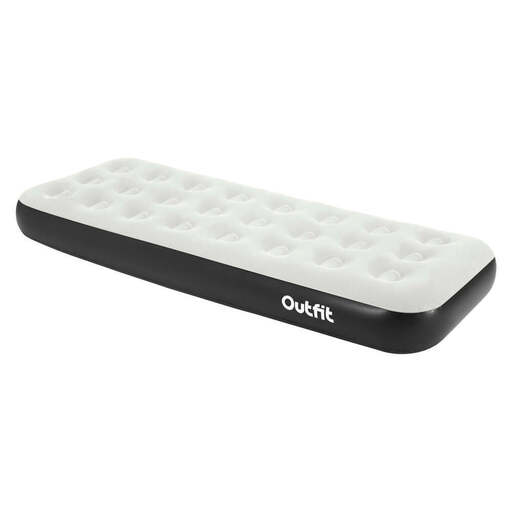
Why it stands out: This airbed is a straightforward all-rounder for indoor and outdoor use. Its low weight and compact packed size make it a practical companion for on-the-go.
Advantages:
Who is it for? A great choice for festival-goers, campers, and anyone looking for a simple, space-saving, and budget-friendly sleeping option for one person.
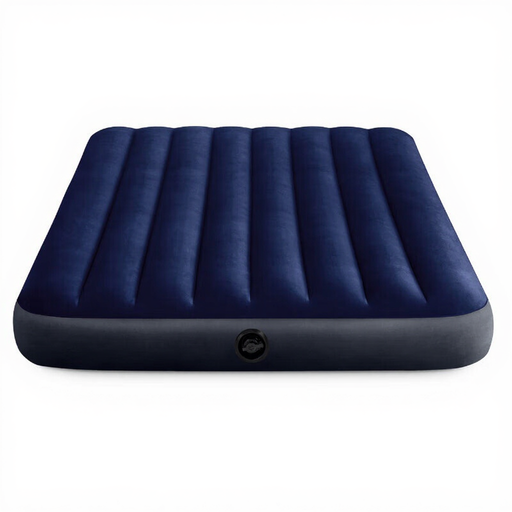
Why it stands out: This 2-person airbed offers an exceptionally stable and level sleeping surface thanks to its Wave Beam construction. The velvety, flocked surface provides extra comfort and prevents bedding from slipping.
Advantages:
Who is it for? Perfect for couples who don't want to sacrifice comfort while camping, or as a spacious guest bed for two at home.
Haven't found the right model for your specific needs yet? The market offers a wide variety of other options, from ultralight mattresses for trekking tours to extra-high and luxurious double beds.
Explore our full range of mattresses and find your perfect sleeping solution.
To maximise the lifespan of your airbed, ensure it is completely clean and dry before storing. Fold it loosely rather than creasing it sharply, and keep it in the provided bag in a cool, dry place. Avoid storing it near sharp objects or heat sources.
Although high-quality airbeds are designed for robust use, they are primarily intended for temporary use. Daily use can lead to faster material fatigue than with a conventional mattress, as the internal structure is not designed for years of continuous support.
A minor loss of air is normal, especially during the first few uses, as the PVC material stretches slightly. Temperature fluctuations can also cause the air inside to contract, making the bed feel softer. However, a significant loss of pressure overnight indicates a leak. Models with special materials like Tritech are designed to minimise this effect.