
Lieferung heute & morgen

Qualitätsgarantie

Willkommens-Angebote freischalten: KOSTENLOSE Lieferung | Bis zu 80 % RABATT | Kostenlose 30-Tage-JoyPlus-Testphase
App herunterladen
An airbed is easy to put away and ready to use in no time when you need it. However, inflatable mattresses vary considerably in height, weight capacity, pump type and sleeping area. If you focus only on the price or a soft surface, you could end up with an inconvenient pump, too little space or a design that doesn’t suit your needs.
This buying guide from the Joybuy Product Recommendation Officer explains which details to check before buying an airbed, and which models may suit a guest room, camping, festivals or temporary use at home.
An airbed measuring 191 cm long will suit many adults, but may feel a little short for taller people. Width matters too: a single airbed is often around 76 to 99 cm wide, while a double airbed is approximately 137 to 152 cm wide.
Before ordering, consider not only the sleeping area but also the space around the bed. In a guest room or small tent, a few centimetres can make a practical difference.
An airbed with a pump may have an integrated electric pump, a USB pump, a foot pump or a separate hand pump. These options aren’t interchangeable:
The stated inflation time is a guide. It depends on factors including the power source, pump performance and how firm you want the bed to be.
A raised airbed measuring 30 to 46 cm high is easier to get in and out of. This can be useful for a guest bed at home. For camping or festivals, however, a taller bed often takes up more room when packed and weighs more.
A low airbed measuring 25 cm high is usually easier to transport. So rather than making a blanket judgement, think about how you plan to use it.
Check the dimensions in the order length × width × height. A common size for one person is 191 × 99 cm. For two people, 191 × 137 cm or 203 × 152 cm offers more space.
Maximum weight capacity is just as important. Depending on the size, the models listed have a maximum weight capacity of 136 kg for single models or 272 kg for double models. These limits must not be exceeded. Remember to take users’ weight into account, along with any luggage.
Several Intex airbeds feature Dura-Beam or Fiber-Tech construction, in which numerous polyester fibres support the internal structure. The Wave-Beam structure is designed to provide a more even sleeping surface. These details describe the construction, but don’t guarantee a particular level of sleep quality.
A flocked surface feels more like fabric and can help stop bedding from slipping easily. The sides and base are often made from PVC or vinyl. Before using your airbed outdoors, make sure the ground is clear of stones, twigs and other sharp objects.
A 2-in-1 valve with a wide opening can make inflation and deflation easier. Before buying, also check whether a pump is included. After use, the mattress should be completely dry, folded loosely and stored away from direct sunlight, heat and damp.
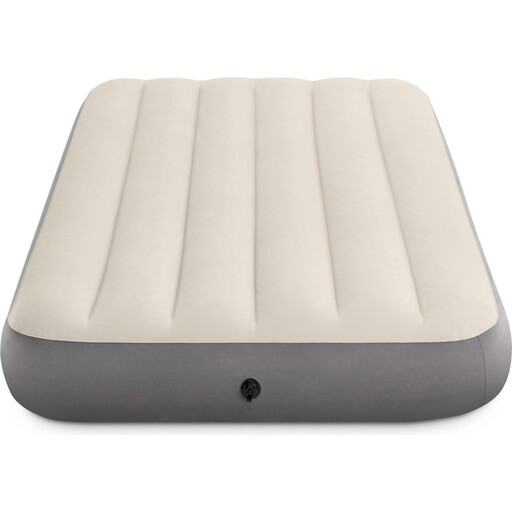
Why this product suits this profile: Measuring 191 × 99 × 25 cm, this single bed is designed for one person and is suitable for guests, camping or festivals. A separate pump is required.
The product details clearly state the dimensions, 136 kg weight capacity and type of separate pump required.
Fiber-Tech construction, flocked surface and a 2-in-1 valve with a wide opening.
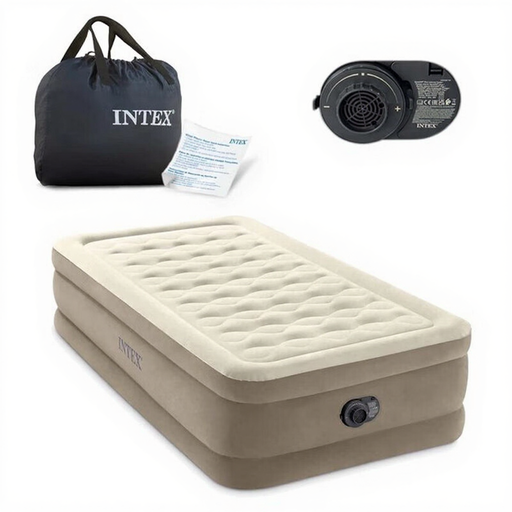
Why this product suits this profile: At 46 cm high, this single airbed is designed for use at home and as a guest bed.
The integrated 220–240 V pump means you won’t need to buy an additional pump to set it up.
46 cm height, flocked surface, Fiber-Tech internal construction and a carry bag.
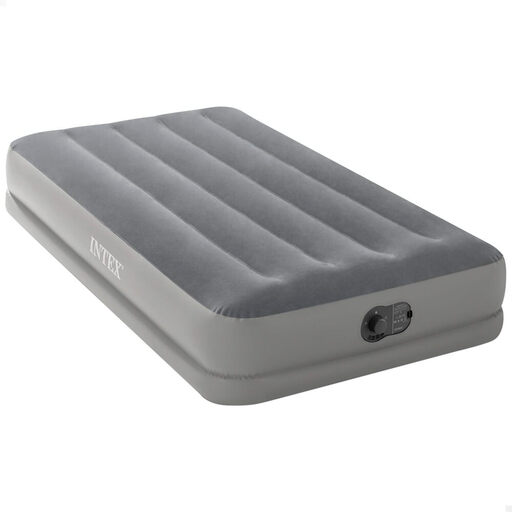
Why this product suits this profile: This single airbed is 30 cm high and comes with a USB pump, making it suitable for travel, festivals and flexible use without a standard mains socket.
The product details clearly state that it needs a suitable 5 V USB power source; a conventional pump can also be used.
191 × 99 × 30 cm, maximum weight capacity of 136 kg and an integrated FastFill USB pump.
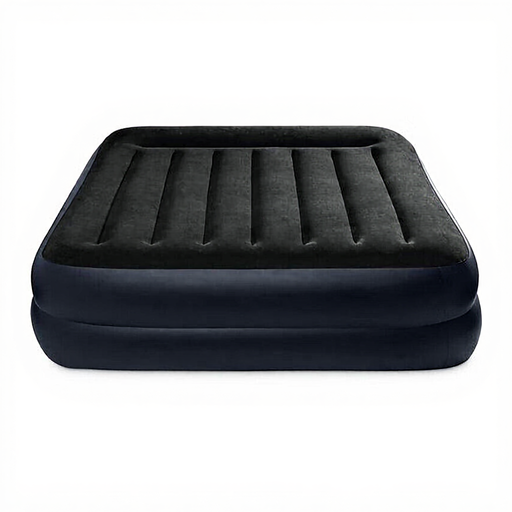
Why this product suits this profile: Measuring 203 × 152 × 42 cm, this double bed has room for two people. Its raised design makes it suitable for use in the home.
The product details specify the dimensions, maximum weight capacity of 272 kg and integrated electric pump.
42 cm height, integrated 220–240 V pump, Fiber-Tech construction and a carry bag.
Place the airbed on a clean, level surface. When camping, a suitable groundsheet helps protect it from friction and sharp objects. Don’t inflate the mattress beyond the recommended firmness. Jumping, standing or walking on the airbed can put strain on the seams and valves.
The material may stretch slightly after first use. If this happens, you can carefully add a little more air. There’s no single lifespan that applies to every airbed, as frequency of use, ground conditions, weight and storage all play a part. Repair patches can fix small areas of damage, but don’t replace regular checks before each use.
We’ve put together a complete, regularly updated list of products that meet these strict selection criteria and fully comply with the safety regulations in force in the EU.
It depends on the type of pump and the size of the airbed. According to the product details, the models listed take around two to seven minutes to inflate. A USB pump needs a power source that can provide enough power. A hand or foot pump doesn’t rely on mains electricity, but may take longer.
You can leave it inflated for temporary use, provided it’s positioned correctly and isn’t overloaded. If you won’t be using it for a while, it’s best to deflate it completely, dry it and store it somewhere dry. Direct sunlight, heat and damp can damage the material.
An electric pump usually runs for only a few minutes. Its electricity consumption depends on its power rating and how long it takes to inflate the bed. If you use it often, a model with a USB pump and power bank, or a manual foot pump, can be an alternative to using a mains socket.