
当日/次日达

品质保障

开启新人专享福利: 全场免邮 | 低至 2 折 | 免费试用 30 天 JoyPlus 会员
下载 Joybuy
Coffee beans and ground coffee are sensitive to air, moisture, light and heat. Sealing an airtight coffee canister can therefore be a sensible way to store coffee every day. However, not every container with a tightly fitting lid delivers what its product description promises.
Before buying, it is worth checking the actual dimensions, the material and the design of the closure. This helps prevent your coffee storage canister from being too small, absorbing unpleasant smells or becoming impractical in everyday kitchen use after a short time.
The term alone says little about how practical a product is in everyday use. What matters is whether it has a lid with a seal, screw mechanism, clasp or vacuum function. A loosely fitting metal lid may keep out dust, but it may reduce air exchange less effectively than a closure with a silicone ring.
With a coffee canister for beans, you should also consider how often the container will be opened. A complicated closure can be impractical for daily use, whereas an easy-to-operate lid can be closed again more quickly.
A canister with an attractive appearance may be too small for your actual needs. The capacity stated in millilitres describes the volume, not automatically the weight of the coffee beans. Beans and ground coffee require different amounts of space depending on their grind size and shape.
So check the following:
A coffee canister with a humidity indicator can make changes inside the container visible. However, according to the product information for the MHW-3BOMBER model, the indicator is primarily intended as a guide rather than a highly precise measuring instrument. A vacuum function also cannot replace dry, dark and preferably cool storage.
Additional features are useful when they fit your routine. If you only store coffee for a few days, you may not need a complex mechanism. For frequent users or those who switch between different coffee varieties, a clearly designed canister with an indicator, compartments or measuring spoon may be more practical.
A coffee storage canister made from stainless steel or coated metal is generally resistant to light and can be positioned in a space-saving way. According to the product details, the body of the Premier-Housewares container is made from stainless steel and has a red or purple enamel finish. It should be cleaned with warm soapy water or a damp cloth; according to the manufacturer, the models are not dishwasher-safe.
A coffee storage jar, on the other hand, gives you a direct view of the contents. The Bialetti GLASS COFFEE JAR W/MOKA TOP is made from glass, stainless steel and plastic and, according to its product description, is designed to hold approximately 250 grams of ground coffee or coffee beans. Glass should ideally not be exposed to direct sunlight for prolonged periods, as light can affect storage conditions.
Plastic containers are lightweight and resistant to knocks. Buyers should check that they are approved for food use and have an odour-neutral interior. For coffee, it is also important that the material does not absorb outside aromas.
The external dimensions must suit the intended location. A compact container is suitable for a small coffee station in the office, while households with several varieties may prefer multiple smaller canisters. According to the product data, the Premier-Housewares single container measures approximately 13 centimetres in height and 10 centimetres in both depth and width.
A three-piece set with a light pink enamel finish contains canisters with a capacity of 750 millilitres each. The labels “Tea”, “Coffee” and “Sugar” make it easier to identify the contents. This type of set is particularly practical when several dry ingredients need to be stored in a uniform way.
Coffee oils can build up on the inner wall, lid and seal. For this reason, look for an opening that can be reached and cleaned thoroughly. With sealing rings, check whether they can be removed and cleaned separately.
The following points are also important:
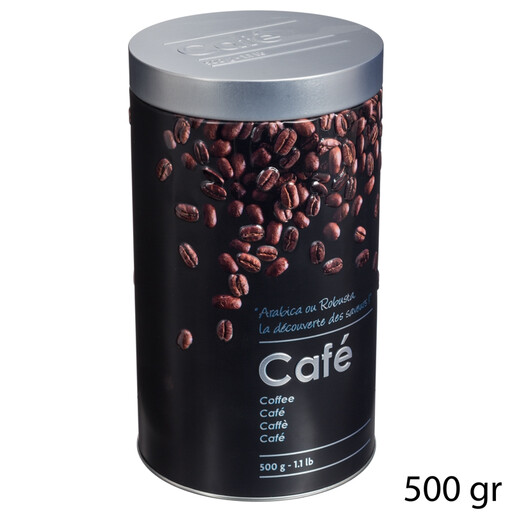
Why this product suits the profile: This compact metal box is ideal for users looking for a simple coffee storage tin with a classic shape for the worktop or shelf.
The product description specifies an airtight design and a secure lid. The stated dimensions of approximately 10.8 x 18.8 cm make it easier to plan where it will fit.
Lightweight metal body with a stated weight of 0.166 kg; black design and elongated shape.
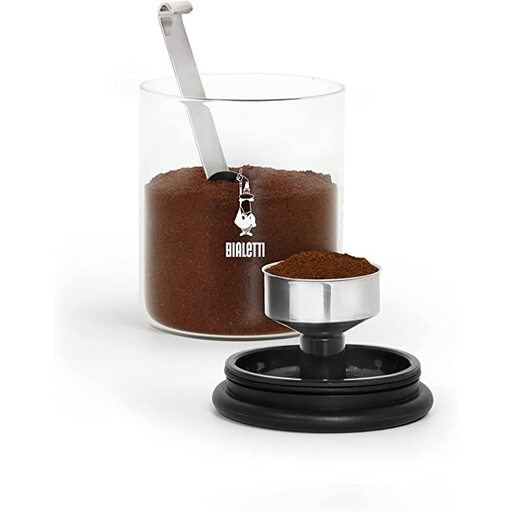
Why this product suits the profile: This glass container is suitable for coffee lovers who want to see the fill level and portion out beans using the included stainless-steel measuring spoon.
The stated capacity of approximately 250 grams provides a clear guide. Nevertheless, you should check before buying whether this quantity suits your personal consumption.
Glass, stainless-steel and plastic construction; lid with funnel function and separate coffee measuring spoon.
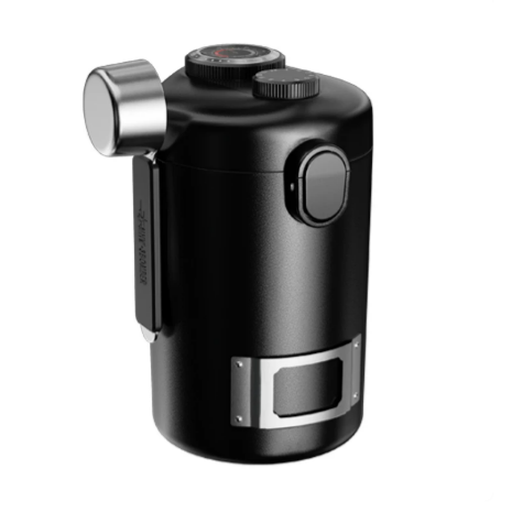
Why this product suits the profile: According to the product details, this container offers home baristas and frequent users a double-layer structure and an integrated humidity indicator.
The indicator provides guidance on changes in humidity. The manufacturer points out that it is not intended to serve as a precision measuring instrument.
Food-safe materials according to the product description; silicone seal, humidity indicator and double-layer construction.
We have put together a complete, regularly updated list of products that fully meet these strict selection criteria and the safety regulations applicable in the EU.
This depends on the density and shape of the beans. A capacity stated solely in millilitres cannot always be converted directly into grams. If you want to transfer an entire 500-gram pack, choose a larger capacity and allow some spare room. For smaller amounts, several compact canisters may be more practical.
Both materials have different properties. Glass shows the contents and fill level, but should be protected from direct light. Metal is opaque, making it suitable for darker storage. More important than the material alone are a suitable lid, an intact seal and the ability to clean the container thoroughly.
A coffee canister cannot extend shelf life indefinitely. Coffee should be kept dry and protected from heat, and consumed as soon as reasonably possible after opening the original packaging. Open the container only briefly, then close it carefully again. If you notice an unusual smell, moisture or visible changes, do not continue to use the contents.