
Lieferung heute & morgen

Qualitätsgarantie

Willkommens-Angebote freischalten: KOSTENLOSE Lieferung | Bis zu 80 % RABATT | Kostenlose 30-Tage-JoyPlus-Testphase
App herunterladen
Sealing an airtight coffee canister sounds straightforward at first. In practice, however, the design alone does not determine whether coffee beans or ground coffee are properly stored for everyday use. For bean-to-cup machines, portafilter machines and filter coffee, the seal, material, capacity and frequency of use all play an important role.
Many households choose a coffee storage tin based on its appearance and overlook important technical details. These three common pitfalls can lead to unnecessary expense:
An airtight coffee container should close as evenly as possible. Look for a clearly visible silicone or plastic gasket, a sturdy lid and a closure that can be operated smoothly without jamming. With a vacuum coffee canister, air is not merely trapped by the lid seal; it is actively removed from the container.
A vacuum seal is practical when storing larger quantities of coffee beans and you do not open the canister several times a day. However, it cannot replace sensible portion planning: every time you open the container, fresh air enters again.
An stainless-steel coffee canister is generally opaque, making it suitable for storage on open shelves or worktops. Polished surfaces are easy to wipe clean, but they can make fingerprints more noticeable.
Glass, on the other hand, allows you to see the contents at a glance. With a glass coffee tin, check whether it will be kept in a dark place or has an opaque cover. Glass is flavour-neutral and often dishwasher-safe; wooden lids and gaskets, however, frequently need to be cared for separately.
The capacity should match your actual consumption. For smaller households, containers holding around 0.75 to 0.85 l may be sufficient. If you regularly buy 500 g of coffee beans, check the manufacturer’s stated fill capacity. Millilitres cannot be converted directly into grams because beans take up different amounts of space depending on their roast, size and density.
Practical points to check:
For storing coffee beans, it is also important to fill the container with dry beans or grounds. A canister reduces contact with air, moisture, light and unwanted odours, but it cannot automatically prevent every change to the flavour.

Why this product suits this profile: The three-piece set keeps tea, coffee and sugar organised together on the worktop. Its compact dimensions of H13 x D9 x W9 cm are suitable for smaller kitchens and coffee stations.
The labelled containers help prevent mix-ups. The lid sits on a ridged rim; hand-washing with warm soapy water is recommended for cleaning.
Set of 3, water- and scratch-resistant enamel according to the product information, plus clear labelling for tea, coffee and sugar.
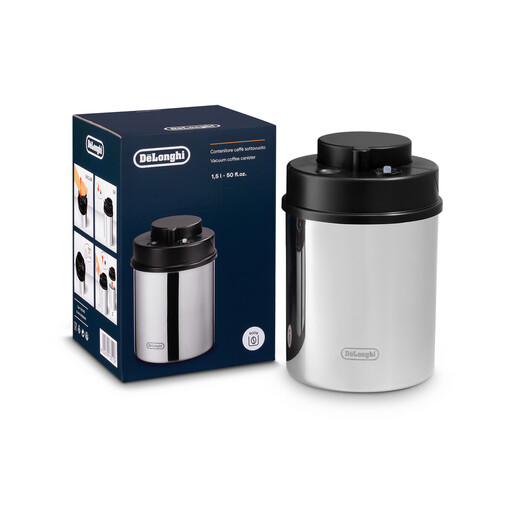
Why this product suits this profile: The manual vacuum function is designed for users who want to store their coffee in an organised way and keep track of when the container was opened using the integrated date indicator.
The seal is activated by pressing the large vacuum button and released using a separate button. This makes the function easy to understand in everyday use rather than merely being a label on the packaging.
1300 ml capacity, designed according to the product information to hold up to 500 g of coffee beans; polished stainless-steel body and stated freshness duration of up to 15 days.
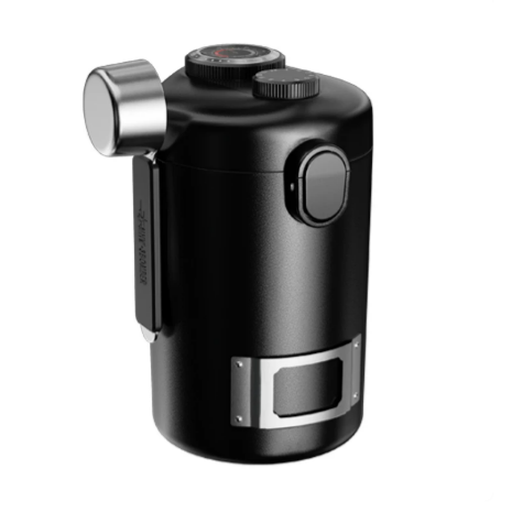
Why this product suits this profile: This canister is designed for coffee stations, offices and users who want to store tea and dry foods alongside beans or ground coffee.
The manufacturer points out that the integrated hygrometer is intended only as a guide. It should therefore not be regarded as a precision measuring instrument.
Double-wall or two-stage storage, silicone gasket and integrated humidity indicator according to the product description.
We have put together a complete, regularly updated list of products that fully meet these strict selection criteria and the safety regulations applicable in the EU.
Beans should ideally be placed in their original quantity or divided into suitable portions. Do not leave the canister permanently next to the hob, oven or window. Heat and direct sunlight are not ideal for dry foods.
With a vacuum coffee canister, it is advisable to reactivate the seal after every use, provided this is recommended by the manufacturer. The gasket should be kept clean and dry. If the container smells of another food, that aroma may transfer to the coffee.
Labelled coffee bean containers are useful for households with several varieties. If you also store sugar and tea, you can choose a tea, coffee and sugar tin set. For ground coffee, a smaller tin is often more practical, as it leaves as little empty space as possible after opening.
This depends on the roast, initial freshness, temperature, light, quantity stored and how often the container is opened. An airtight canister slows contact with air and moisture, but does not guarantee a fixed shelf life. Also check the roast date and aim to use opened packs in a planned manner wherever possible.
Both materials offer practical benefits. Glass lets you check the contents at a glance and is often easy to clean. Stainless steel is opaque, making it suitable for open kitchen shelves. The seal, lid design and ease of cleaning are also crucial.
For short-term storage, a well-sealing storage container may be sufficient. However, an airtight closure is beneficial when storing beans or ground coffee for longer, as it reduces the exchange of air and moisture. A vacuum canister is particularly useful if you do not use larger quantities within a few days.