
当日/次日达

品质保障

开启新人专享福利: 全场免邮 | 低至 2 折 | 免费试用 30 天 JoyPlus 会员
下载 Joybuy
Airtight food storage containers should protect food, keep everything organised and make transporting liquids mess-free. In practice, however, you often only find out after buying whether a container really suits your daily routine. For families, working people, students and meal-prep users, capacity and price are not the only important factors. The closure, material and suitability for the fridge, freezer, microwave and dishwasher matter too.
A lid that simply sits firmly on the container is not automatically airtight or watertight. What matters is a continuous silicone seal and a closure that applies pressure at several points. Simple click-on lids can become leaky around the edges, particularly when used with soups, sauces or marinated food.
You should therefore look for specific details such as leak-proof, watertight, silicone seal or multi-sided closure. With a flip-top lid, you should also check that it locks fully into place.
Many food storage containers are suitable for use in the microwave, but only without the lid or with the valve open. A closed lid can pop open or become damaged because of the pressure created inside. A container should not automatically be placed in the oven or on a hob either.
When freezing food, there must be enough room for the contents to expand. If the container is filled to the brim, the lid or seal may be put under strain. Freezer-safe food containers should also not be exposed to sudden, extreme changes in temperature.
A large capacity is not useful for every purpose. For snacks, pieces of fruit or individual portions, 550 to 1,000 ml is often sufficient. For leftovers, salads and meal prep, around 1.5 to 2.5 litres is often more practical. Containers with a capacity of more than 3 litres are better suited to larger quantities, vegetables or prepared family portions.
The external dimensions matter too: stackable containers should fit into fridge compartments and kitchen cupboards. A transparent wall makes it easier to check the contents and reduces unnecessary opening.
A reliable closure usually consists of several locking points or a sturdy clip system. Silicone rings should be removable so that they can be cleaned thoroughly and checked for cracks. If you use containers frequently, it is worth checking whether replacement seals are available and reading the manufacturer’s care instructions.
Leak-proof food storage boxes with a continuous seal are particularly practical for liquid dishes. The lid should be fully closed before transport. When the contents are frozen, the closure should not be forced open.
Plastic food storage containers are often made from polypropylene, or PP for short. The products mentioned here are described as food-safe and BPA-free. BPA-free food storage containers are a preferred option for many households; nevertheless, you should always check the specific product labelling.
The term “BPA-free” alone says nothing about whether a container is suitable for heat, the freezer or the dishwasher. The usage instructions for the particular model are what matter. Plastic containers should no longer be used if they show visible cracks, deformation or damaged seals.
Dishwasher-safe food storage containers save time, provided the lids and seals are cleaned according to the manufacturer’s instructions. With many models, the top rack is recommended. For microwave use, the following products should generally be used with the lid removed or fully opened, and the specified temperature limits must be observed.
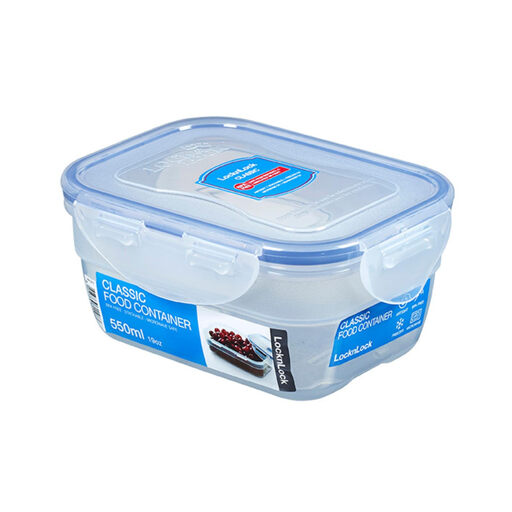
Why this product suits this profile: The capacity is ideal for snacks, side dishes and small portions. The rectangular shape fits neatly into a bag, fridge or food cupboard.
The product description specifies a four-sided closure with a double silicone seal, as well as suitability for the freezer, dishwasher and microwave without the lid.
550 ml capacity, BPA-free PP and a stackable design. The dimensions are 14.5 × 11.0 × 6.7 cm.
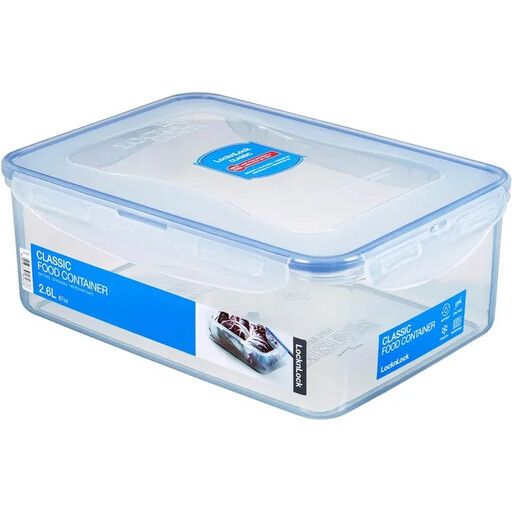
Why this product suits this profile: The larger format is designed for prepared meals, leftovers and transporting liquid dishes. An integrated handle makes it easier to carry.
The four-sided safety closure with a double silicone seal helps prevent leaks from the lid. For microwave use, remove the lid; use in the oven and with direct heat is not permitted.
2.6-litre capacity, transparent BPA-free PP container, handle, and stated suitability for the freezer, dishwasher and microwave without the lid.
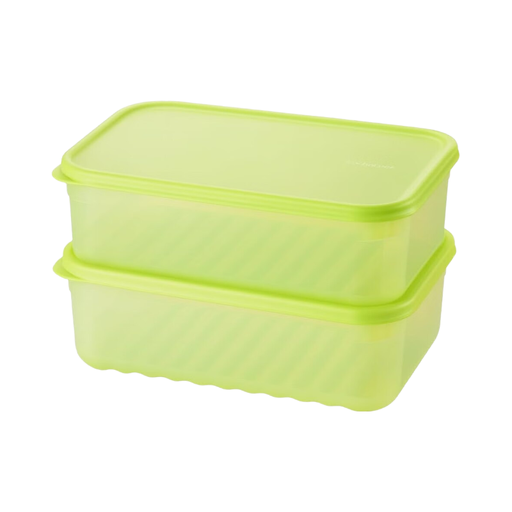
Why this product suits this profile: The two large containers are designed for fruit, vegetables, salads, ingredients and larger quantities of meal prep. An integrated draining insert separates food from liquid.
According to the product description, the containers are suitable for the fridge, freezer, dishwasher and microwave without the lid. The draining insert helps keep liquid away from the stored food.
2 containers, each holding 3.2 litres, measuring 29.2 × 20.6 × 9 cm, with an integrated function for separating food and liquid.
We have put together a complete, regularly updated list of products that fully meet these strict selection criteria and the safety regulations applicable in the EU.
That depends on the particular model. With many food storage containers, microwave use is only permitted without the lid or with the lid fully open. Details such as “up to 120°C” or a wattage limit must be observed. Suitability for the microwave does not mean that the container can be used in the oven or on the hob.
There is no single service life that applies in every case. It depends on use, cleaning, temperature changes and the condition of the seal. If the container becomes cracked or the lid no longer closes securely, it should be replaced. With frequently used LocknLock food storage containers, checking the closure regularly is particularly important.
Large containers are useful for family-sized portions, vegetables, salads and prepared ingredients. For individual snacks or small leftovers, however, they take up unnecessary space. For many households, a combination of small, medium and large stackable containers is more flexible than using one standard size.