
Lieferung heute & morgen

Qualitätsgarantie

Willkommens-Angebote freischalten: KOSTENLOSE Lieferung | Bis zu 80 % RABATT | Kostenlose 30-Tage-JoyPlus-Testphase
App herunterladen
Airtight food storage containers help keep food organised, contain odours and prevent liquids from leaking. But it’s often only after you’ve bought them that you find out whether the lids, materials and dimensions suit your household. So for families, working people, students and anyone who meal preps, capacity and price aren’t the only things that matter.
A lid can keep air out without being suitable for carrying soup or sauce. The key factors are the closure design, the seal and how securely it fits on all sides. If a container is described as leakproof, check whether it needs to be kept upright.
Many food storage containers that are suitable for the microwave can only be heated without the lid. Plastic lids may warp or cause steam pressure to build up inside the container. Oven suitability is a separate matter and must be stated explicitly. Glass containers also need protection from sudden changes in temperature.
A food storage container set with lots of different sizes can be useful, but it needs enough storage space. In smaller cupboards, stackable or nestable containers are usually more practical. Before you buy, check the internal dimensions of your fridge, freezer and kitchen cupboards.
Small food containers holding around 180 to 800 ml are often enough for leftovers, side dishes and snacks. For prepared meals or larger portions, 1 to 2 litres is a good size. A 4.8-litre container is better suited to larger quantities, such as salads, fruit or prepped ingredients.
Rectangular containers often make efficient use of shelf space, while round ones may suit particular fridge compartments. For meal prep, containers with the same footprint are useful when you want to line up several portions side by side.
Look for clear information about suitability for the microwave, freezer and dishwasher. For example, “dishwasher-safe” may mean that only the top rack is recommended. For plastic containers, the stated temperature limit is also important.
A four-sided locking system with a silicone seal can press the lid down evenly. For good hygiene, it’s useful if the seal can be removed, making it easier to clean any residue from the contact surfaces. Don’t continue using containers, lids or seals that are damaged, as they may no longer close reliably.
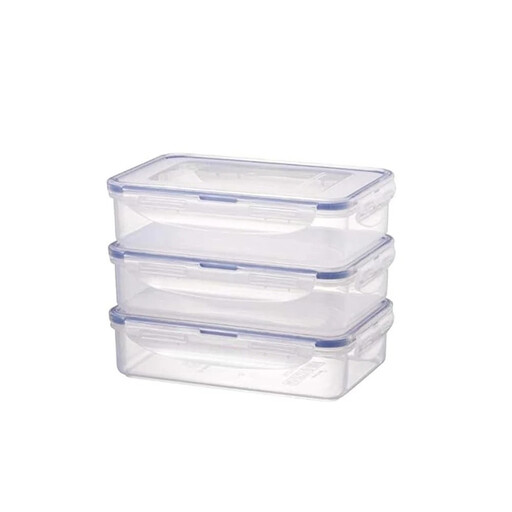
Why it’s a good fit: Three containers of the same size make it easy to store leftovers, snacks and prepped ingredients in the fridge.
The transparent design lets you see what’s inside. According to the product information, the lids are airtight and the containers are stackable.
Set of 3, each with an 800 ml capacity; transparent and stackable; stated by the supplier to be suitable for the freezer and dishwasher.
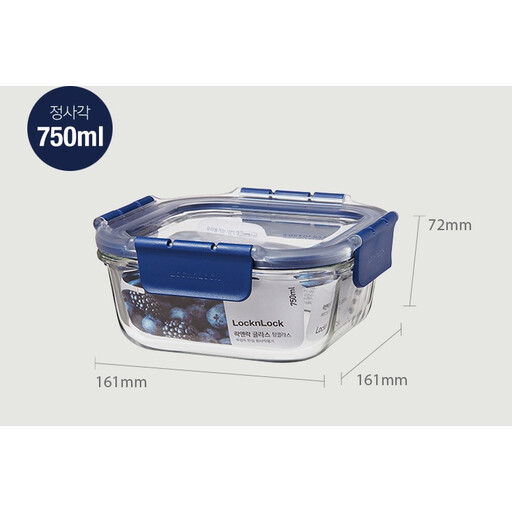
Why it’s a good fit: This heat-resistant glass container is a good choice if you want to store and heat food in the same container.
The product information clearly distinguishes between the container and the lid: remove the lid before using the container in the microwave, oven or air fryer.
750 ml capacity, glass container, four-sided locking system and silicone seal; stated by the supplier to be suitable for the freezer and dishwasher.
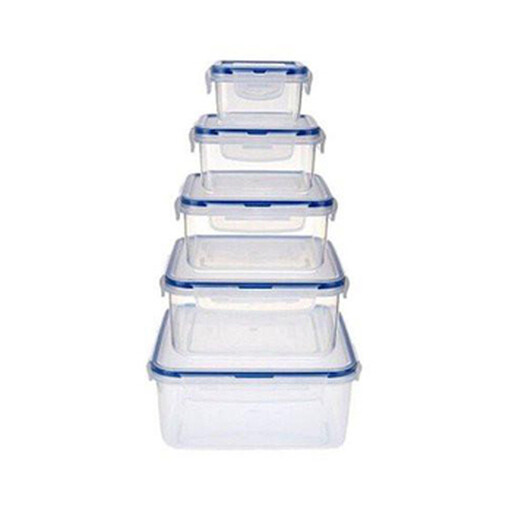
Why it’s a good fit: Five sizes, from 180 ml to 2.1 litres, cover everything from small ingredients and side dishes to larger portions.
The containers nest inside one another when not in use. The removable silicone ring helps you clean them thoroughly.
Made from BPA-free PP according to the product information; five graduated sizes; stackable and freezer-safe; suitable for microwave use with the lid loosened.
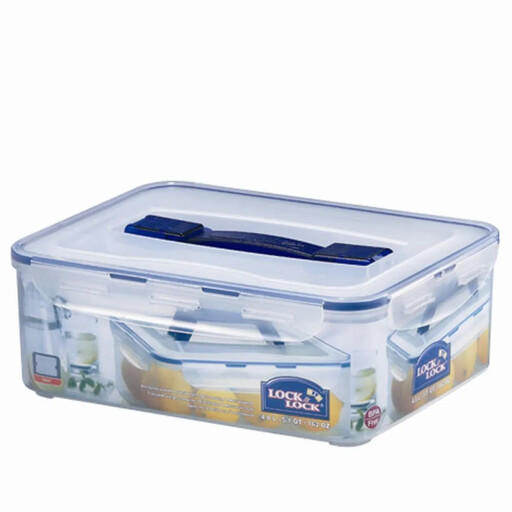
Why it’s a good fit: Its large capacity is ideal for family-sized portions, salads, fruit or bigger batch-prep sessions.
The four-sided locking system and silicone seal are designed to keep out air and prevent leaks. Remove the lid before using it in the microwave.
4.8-litre capacity, rectangular shape and stackable design; made from BPA-free PP according to the product information; suitable for the freezer and dishwasher.
We’ve put together a complete, regularly updated list of products that meet these strict selection criteria and fully comply with the safety regulations in force in the EU.
To keep your airtight food storage containers working reliably, follow a few simple routines:
For meal prep, several stackable containers of the same size, holding around 600 to 1,000 ml, are a practical choice. If you portion out different ingredients, a set with a range of capacities may suit you better. Check that the containers are clearly stated as suitable for the freezer, microwave and dishwasher.
How long food keeps depends on what it is, the temperature it’s stored at, hygiene and how full the container is. An airtight container doesn’t replace refrigeration or guarantee a specific storage time. Once leftovers have cooled, put them in the fridge promptly and check them before eating.
Plastic containers are usually lighter and more resistant to breakage, while glass is odour-resistant and may be suitable for certain heat sources. The right choice depends on how you’ll transport, heat and store your food, as well as how much space you have. Always check the manufacturer’s instructions for the specific product.