
Lieferung heute & morgen

Qualitätsgarantie

Willkommens-Angebote freischalten: KOSTENLOSE Lieferung | Bis zu 80 % RABATT | Kostenlose 30-Tage-JoyPlus-Testphase
App herunterladen
Transparent plastic storage boxes with lids make it easier to keep cupboards, shelves, cellars and kitchens organised. You can see what’s inside, while a lid keeps dust out and makes the boxes stackable. However, eye-catching product claims don’t automatically mean a product is right for you. The key factors are dimensions, material, closure and intended use.
A box with generous external dimensions may offer much less usable space inside because of rounded corners, the lid design and the wall thickness. Before buying, check:
Shallower models are usually best for clothes, while taller boxes are more suitable for toys and household items. An 80-litre box won’t necessarily fit under every bed or on every shelf.
Not every transparent plastic box is suitable for storing food. For dry food, check the material details, intended use and cleaning instructions. A clip-on or hinged lid can help keep out dust and moisture, but it doesn’t guarantee a permanently airtight seal.
For kitchen storage containers, it’s also important to check:
Containers described as not microwave-safe should only be used for their intended storage purpose.
Stackable storage boxes save space when the lids and bases are designed to fit together. However, the maximum load varies between models. Place heavy items at the bottom. When storing items in enclosed spaces for extended periods, avoid heat, direct sunlight and poor ventilation.
Reinforcing ribs, a non-slip base and a well-fitting lid can improve stability, but they don’t guarantee that a box won’t warp. Always stay within the weight limit specified by the supplier.
Polypropylene (PP) is commonly used for plastic storage boxes with lids. Some models are described as having 2.5 mm-thick walls, rounded edges and three-dimensional reinforcing ribs. These features can help the box keep its shape, but they don’t replace checking the permitted load.
For food containers, also look for specific information such as ‘BPA-free’, food-contact suitability and cleaning instructions. A decorative box made from polystyrene or PET isn’t automatically suitable for every type of food or every temperature.
A push-fit lid is often enough for clothes, stationery or toys. Clips, snap closures and seals are useful if you’ll be carrying the contents around or want to protect them from dust and moisture. Built-in handles make it easier to take boxes down from high shelves, but they often make the box wider.
Choose storage boxes with handles to suit the space you have available. Also check that the lid sits flat, even with the handle recesses.
Transparent boxes mean you won’t have to open several containers when looking for something. For small items, drawer organisers or a storage box set in different sizes may be a better choice. Boxes in a consistent size are easier to stack.
Useful options for different items:
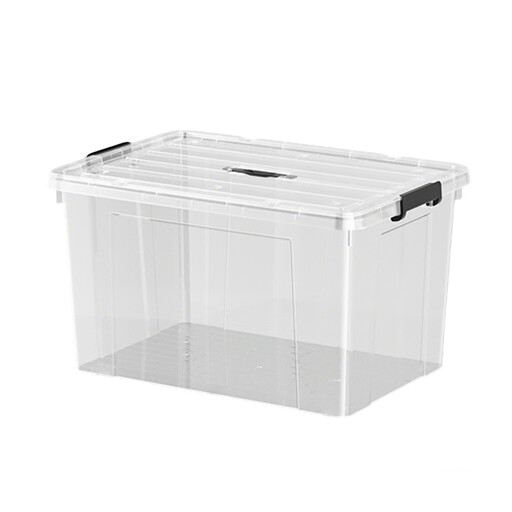
Why this product suits this profile: The four-piece set gives you matching boxes for clothes, toys, stationery or household items, making it easy to get your storage organised from the outset.
The stated dimensions of 42 × 30 × 17 cm and snap-on lid make it easier to plan your purchase than with a box that has no clear size details.
PP material, 2.5 mm wall thickness, built-in handles and a non-slip base, according to the product description.

Why this product suits this profile: The larger size is designed for seasonal clothes, bedding and bulkier household items, provided you have enough floor or shelf space.
The stated dimensions of 50.4 × 37.6 × 28.8 cm make it easier to check your shelves and cupboards before buying.
Pack of four, transparent PP material, snap-on lids, handles and a reinforced body, according to the product details.
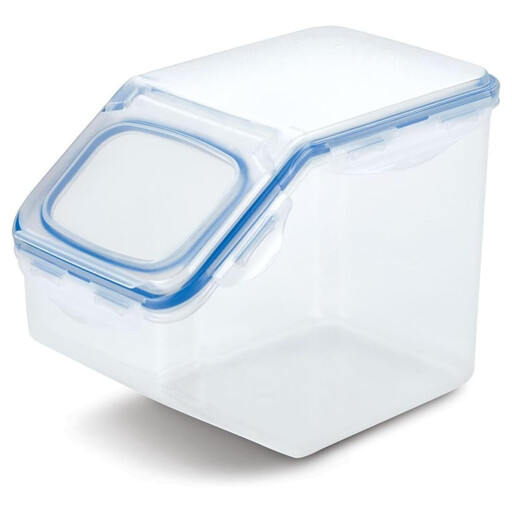
Why this product suits this profile: The 5-litre container is designed for dry food such as cereal, flour, sugar, rice or pet food, making it a handy way to keep your food supplies organised.
The product description specifically states that it is intended for dry food, and includes cleaning guidance and confirmation that it is not microwave-safe.
5-litre capacity, transparent PP container, hinged lid with safety locks and a double-chamber seal, according to the supplier.
We’ve put together a complete, regularly updated list of products that meet these strict selection criteria and fully comply with the safety regulations in force in the EU.
Clean plastic boxes according to the manufacturer’s instructions. A soft cloth and mild detergent help reduce the risk of scratches. Food containers should be completely dry before you fill them. For boxes used for clothes or toys, it’s also best to make sure the contents are dry before closing the lid.
Don’t continue using containers with damaged lids, cracks or significant warping. Direct heat, naked flames and prolonged exposure to strong sunlight can damage plastic. To help your box last longer, avoid stacking more weight on it than the stated limit.
It depends on the storage space you have and the categories of items you want to organise. For clothes, toys and household items, several boxes of the same size are often easier to organise than one very large container. In the kitchen, a smaller set of storage boxes for different dry foods may be more practical.
Only if the supplier explicitly states that the box has a seal and an airtight closure. A simple push-fit lid usually keeps out dust, but isn’t necessarily airtight. Check the specific product details if you’re storing flour, cereal or pet food.
Stay within the recommended load, put heavier boxes at the bottom and keep them away from direct heat. A level surface and well-fitting lids help keep a stack stable. If you’re storing boxes for a long time, make sure the room is dry and well ventilated.