
Lieferung heute & morgen

Qualitätsgarantie

Willkommens-Angebote freischalten: KOSTENLOSE Lieferung | Bis zu 80 % RABATT | Kostenlose 30-Tage-JoyPlus-Testphase
App herunterladen
An airtight glass food storage container is ideal for leftovers, dry foods, side dishes and prepared meals. Glass generally does not absorb odours or colours, and its transparent surface lets you check the contents at a glance. However, glass food containers vary considerably in terms of their closures, capacity, temperature resistance and space requirements.
If you focus only on attractive design or the word “airtight”, you may quickly become dissatisfied with your choice in everyday use. What matters is whether the glass container with lid is suitable for its intended purpose.
A lid with a silicone seal can close a container securely. For transport, you should also check whether the closure uses clips or a locking system on several sides. Even a correctly closed lid cannot prevent leaks if the seal is dirty, displaced or damaged.
For soups, sauces and liquid foods, a secure closure and regular cleaning of the seal are particularly important. A leakproof glass container should be closed evenly on all sides before transport.
Many containers are labelled as microwave-safe or ovenproof, but this often applies only to the glass body. Plastic lids and silicone seals must be removed before use in the oven and, in some cases, in the microwave too.
The relevant manufacturer’s instructions are binding. As a general rule, a lid with a click closure should not be placed in the oven unless this is expressly stated.
A heat-resistant glass container is not automatically protected against every sudden temperature change. Placing a container directly from the freezer into a hot oven can cause what is known as thermal shock. The same applies to the reverse change from very hot to very cold.
Allow the container to reach room temperature first and check it for cracks or chips before every use.
For small side dishes, dips or individual meal-prep ingredients, 380 to 500 millilitres is often sufficient. A capacity of around 700 to 750 millilitres provides more room for leftovers, sauces or a complete portion. For family meals and larger quantities, a container of more than one litre may be a sensible choice.
The shape also affects how the container can be used:
An airtight food storage container should have a close-fitting silicone seal. With clip or multi-sided closures, it is important that the lid sits evenly. Seals should be cleaned regularly and dried completely, as food residue can affect the effectiveness of the closure.
Several locking points are advantageous when carrying the container in a rucksack or work bag. For dry foods such as rice, muesli or flour, a simple, tightly fitting lid may also be sufficient.
Check the specific labelling for:
Borosilicate glass is used in several products because of its temperature resistance. However, the specific temperature limit comes from the manufacturer’s instructions and should not be generalised.
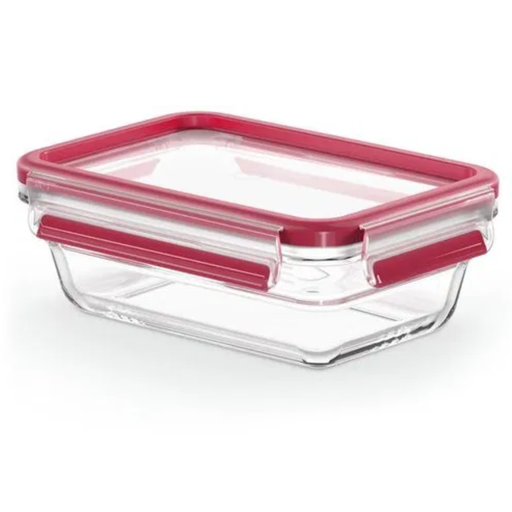
Why this product suits this profile: The rectangular format and 0.7-litre capacity are suitable for leftovers, sauces, dips and individual portions. According to the product details, the glass container is suitable for use in the fridge, freezer, microwave and dishwasher.
The clip-lock lid with silicone seal makes the closure easy to check. The visible glass surface makes it easier to inspect the contents.
0.7-litre capacity, rectangular shape, transparent design, plus dishwasher and microwave suitability according to the product description.
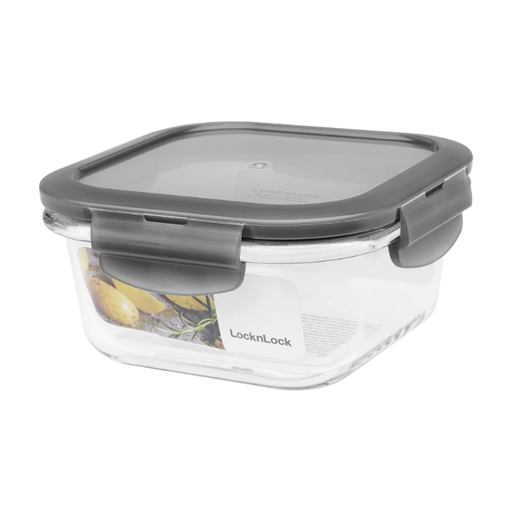
Why this product suits this profile: This square model uses borosilicate glass and, according to the product details, is ovenproof up to 400 °C. It is aimed at households looking to combine storage, reheating and baking in a single glass container.
The temperature limit is clearly stated. The lid is removed for use in the oven and microwave, helping to prevent a common misuse.
Borosilicate glass, square dimensions of 14 × 14 × 6.7 cm, airtight closure and stackable design according to the product description.
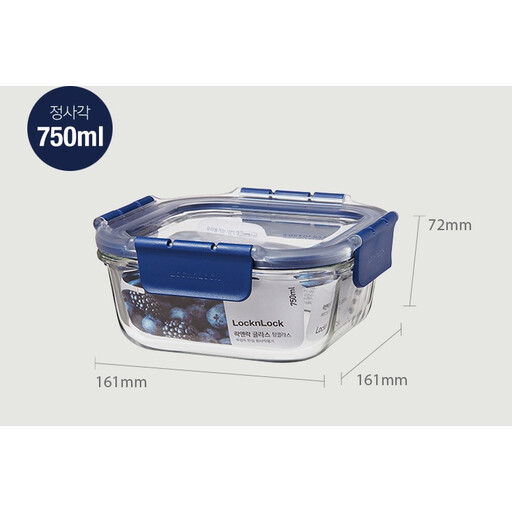
Why this product suits this profile: According to the product description, the deeper square format is suitable for soups, liquid dishes and larger meal-prep portions. The four-sided closure is designed for regular transport.
The instructions distinguish between use with and without the lid: the oven, microwave and air fryer are used without the lid. The freezer range is specified as up to −20 °C.
750 ml capacity, heat-resistant glass up to 400 °C according to the product details, four-sided closure, stackable shape and dishwasher-safe components.
We have put together a complete, regularly updated list of products that fully meet these strict selection criteria and the safety regulations applicable in the EU.
Wash a new glass food container with warm water and mild washing-up liquid before using it for the first time. Silicone seals should be removed where the manufacturer permits this. This makes it easier to remove residue from the seal grooves.
A few simple rules will help ensure a long service life:
That depends on the closure and seal. A close-fitting lid with a silicone ring and clips or locking points can provide airtight storage. The seal must be clean, correctly fitted and undamaged.
Some models are ovenproof, although this often applies only to the glass body and without the lid. Temperature limits such as 400 °C or 420 °C apply only according to the respective manufacturer’s instructions. A direct change from the freezer to a hot oven should be avoided because of the potential stresses this can place on the glass.
Yes, provided the capacity, shape and closure suit your meal plan. Around 380 to 500 millilitres is suitable for individual portions, while 700 to 750 millilitres offers more room for main dishes or liquid foods. Stackable food storage containers make it easier to organise your fridge and freezer.