
Lieferung heute & morgen

Qualitätsgarantie

Willkommens-Angebote freischalten: KOSTENLOSE Lieferung | Bis zu 80 % RABATT | Kostenlose 30-Tage-JoyPlus-Testphase
App herunterladen
Flour, rice, cereals, snacks and pet food all need to be stored in a dry, organised way. An airtight storage container can help protect the contents from moisture, unwanted odours and unnecessary spills. However, not every container is suitable for every purpose. Anyone who focuses solely on a large capacity or the label ‘airtight’ can easily overlook important details.
A loosely fitted lid offers only limited protection. For dry foods, a continuous seal, a secure closure and a close-fitting connection between the lid and container are more important. For products with hinged lids or several locking points, you should check whether they really do click fully into place.
The condition of the container also matters. A damaged lid, torn seal or warped rim can reduce its protective performance. Liquids should only be added if the manufacturer explicitly states that the container is suitable for them.
A 12-litre container is practical for larger quantities, but it needs sufficient space. Before buying, compare the length, width and height with the shelf or compartment where you intend to keep it. In deep kitchen cupboards, a tall container can be awkward to handle, while a square format may make better use of the available surface area.
For ingredients you use frequently, a smaller plastic food storage container may be more practical. It is easier to take out and quicker to clean.
With many food storage containers, only the plastic body can go in the dishwasher. Lids with seals, hinged mechanisms or locking clips may need to be cleaned separately. Microwave instructions should also be read carefully: some models may only be heated without the lid, while others are not microwave-safe at all.
Look for a clearly described closure design. Depending on the model, a four-sided locking closure, a hinged lid with a silicone seal or a twist-lock system may offer different handling. For everyday use, closures that are easy to reach are helpful. When storing flour, rice and sugar, the lid should be closed fully after every use.
The term ‘aroma-protected’ generally describes the design of the closure, but it is not a guarantee of unlimited freshness. Food should be added dry and clean, and stored according to the relevant storage instructions.
A BPA-free food storage container may be appealing to buyers who pay close attention to material specifications. For plastic containers, you should also check whether they are intended for food contact and what temperature limits apply. Polypropylene is specified for the LocknLock models listed here.
Stainless steel food storage containers are an alternative to plastic. They block out light and are suitable for many dry or prepared foods. As the contents cannot be seen, labelling may be necessary. Plastic lids or lids with locking mechanisms should be cleaned according to the manufacturer’s instructions.
Stackable storage containers are particularly practical for a pantry. Consistent formats create a well-organised storage system and reduce unused gaps. A transparent body makes it easier to check the fill level, while a measuring cup or pouring opening can make portioning easier.
For cereals and frequently used baking ingredients, 4 to 5 litres is often sufficient. Larger households or pet owners may wish to consider a capacity of 12 litres. For pet food, make sure the container is suitable for the quantity of food you want to store and the available space.
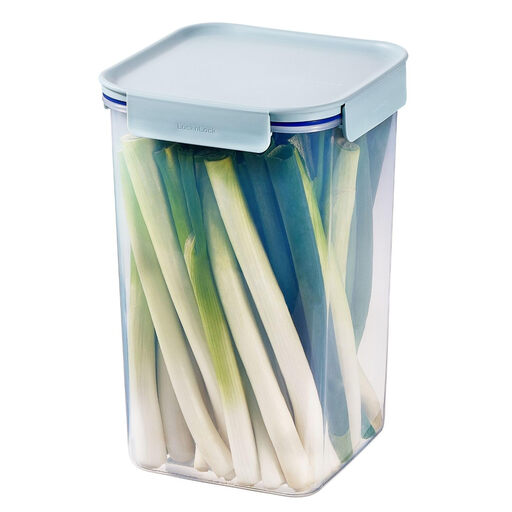
Why this product suits this profile: The square 4-litre format is ideal for households that want to store dry essentials such as flour or cereals neatly, without immediately opting for a large container.
According to the product specifications, this model has an airtight, leak-proof closure and a stackable design. It is not intended for microwave use, according to the listed information.
BPA-free plastic, a 4-litre capacity and stated suitability for the dishwasher and freezer.
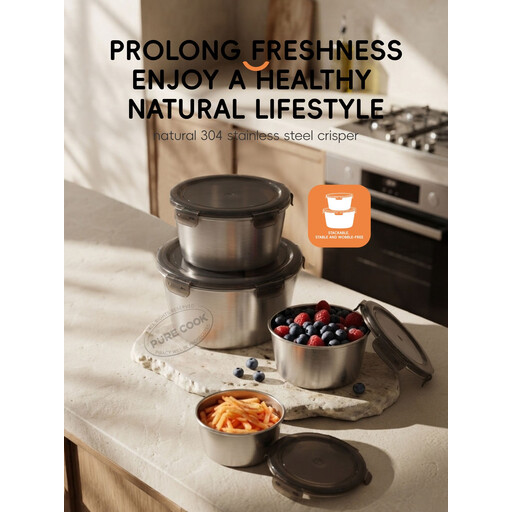
Why this product suits this profile: The 4-piece set made from 304 stainless steel is aimed at buyers who prefer several round containers for prepared meals, dry ingredients or snacks.
The stainless steel body blocks out light, so you are not reliant solely on transparent plastic. Before buying, check the properties of the PP lid and the closures.
304 stainless steel and four round containers with transparent PP lids and locking clips.
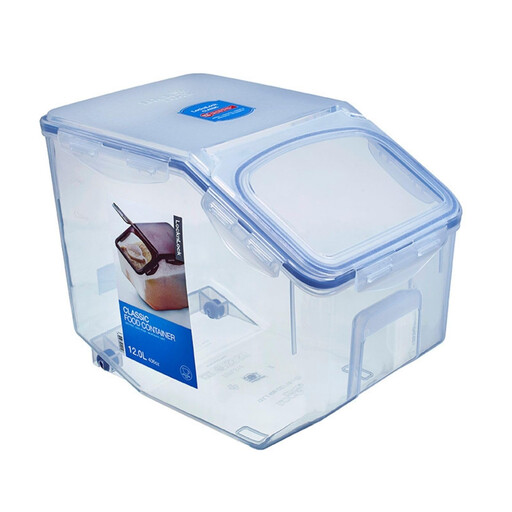
Why this product suits this profile: The large capacity is suitable for families, keen home cooks and pet owners who store larger quantities of flour, rice, cereals or pet food.
The transparent body makes it easier to check the fill level. The hinged lid with silicone seal and the included measuring cup support controlled dispensing.
12-litre capacity, stackable rectangular shape, BPA-free plastic and, according to the product specifications, dishwasher-, freezer- and microwave-safe without the lid.
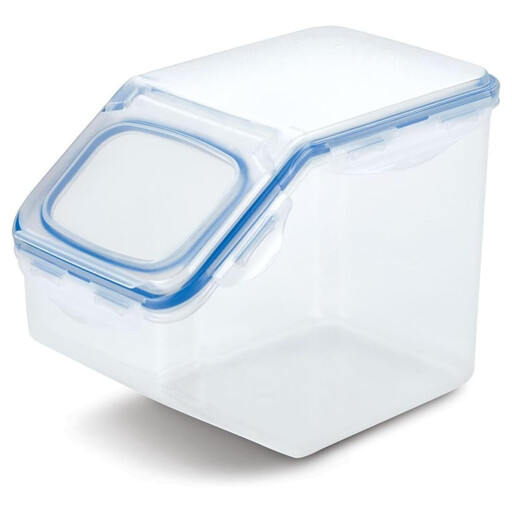
Why this product suits this profile: The 5-litre format combines a manageable size with a pouring function, making it suitable for cereals, sugar, coffee, pasta or smaller quantities of pet food.
The side safety catches and double-chamber seal reduce the risk of the lid not being closed fully. According to the product specifications, this model is not intended for microwave use.
5-litre capacity, transparent BPA-free polypropylene body and stated dishwasher suitability.
For dry baked goods such as biscuits, a traditional metal tin may be sufficient. The Storage Tin 160x95x205 Cookies is intended for dry snacks and, according to the product description, is not suitable for liquids, dishwashers or microwaves. A metal tin can also be used as a decorative biscuit or chocolate tin, but it should be cleaned dry and completely clean before filling.
If you store several types of food, it is better to choose a sealable airtight storage box with clear material and care instructions. Every container should ideally be labelled with its contents and filling date. This makes it easier to use older supplies first.
We have put together a complete, regularly updated list of products that fully meet these strict selection criteria and the safety regulations applicable in the EU.
The container and lid should be cleaned separately. First remove all crumbs, then rinse the parts with warm water and mild washing-up liquid. If the container is dishwasher-safe, this does not automatically apply to the seal or lid. All parts must be completely dry before you refill the container, as trapped moisture can affect flour, rice or cereals.
Their lifespan depends on the material, use and care. Visible cracks, brittle seals, deformation or closures that no longer click into place are signs that the container should be replaced. Abrasive cleaning products and significant temperature changes can put additional strain on plastic surfaces and closures. With a dishwasher-safe food storage container, follow the relevant temperature and placement instructions.
That depends on the quantity and packaging format. For regular baking, a container holding 4 to 5 litres may be practical. Larger households or anyone storing pet food may benefit from 12 litres. Alongside capacity, the external dimensions, opening size and ability to stack the container securely are also important.