
Lieferung heute & morgen

Qualitätsgarantie

Willkommens-Angebote freischalten: KOSTENLOSE Lieferung | Bis zu 80 % RABATT | Kostenlose 30-Tage-JoyPlus-Testphase
App herunterladen
Flour, rice, muesli, pasta and pet food should be stored neatly and protected from moisture. In practice, however, it quickly becomes clear that not every airtight storage container is suitable for every household. A container that is too small leads to lots of separate boxes, an unsuitable seal can be difficult to clean, and unclear size information may waste valuable space in the kitchen cupboard.
This buying guide explains which features of a kitchen storage container are genuinely important and which models suit different usage scenarios.
The description alone says little about how practical a container is for everyday use. What matters is a continuous seal, a secure closure and a lid that still closes properly after frequent use. With hinged lids, there should also be locking mechanisms or a clear audible click when they engage.
However, an airtight storage container will only reliably protect dry food from moisture if the contents are completely dry when added and the lid is closed cleanly and securely.
A large container may initially seem practical, but it is not suitable for every shelf. Before buying, check the internal height, width and depth of the cupboard, as well as the actual size of the packaging. A small format may be more suitable for spices or baking ingredients, while a storage box for flour and rice needs a larger capacity.
A transparent storage container makes it easier to check the contents, but it cannot replace a well-designed shape. Round containers are often more difficult to arrange in corners or cupboards. Rectangular, stackable storage containers generally make better use of the available space. Non-slip edges and a lid that will not be damaged by the weight of a container placed on top are important here.
Capacity is given in litres, but this alone does not indicate how much of a particular food will fit inside. Flour, rice, muesli and pet food vary in density and packaging size. These questions can help you choose:
A 1-Liter or 2-Liter container is suitable for smaller quantities and frequently used ingredients. For families, keen home cooks or pet owners, a 5-Liter container may be more practical. A 12-Liter model is primarily designed for larger supplies and accordingly requires more floor space.
When choosing plastic food containers, look for clear information about the material and its intended use. A BPA-free storage container may appeal to people who wish to avoid this substance when choosing their products. However, other points remain important: Is the container intended only for dry foods? Is it microwave-safe? Is the lid suitable for this use?
The information must always be considered on a product-specific basis. A plastic container may be suitable for dry foods without being intended for hot liquids, use in the oven or direct heat.
Dishwasher-safe storage containers make regular cleaning easier. However, this suitability often applies only to the container itself, while the lid, seal or measuring accessories need to be cleaned separately. All parts should be completely dry before being put away. Moisture around the closure can affect the storage of dry products.
It is worth taking a closer look at the seal design: Can it be removed? Are there grooves that are difficult to access? Can the lid be closed without applying excessive force? These details have a greater impact on long-term use than an especially eye-catching design.
The following products differ in capacity, design and intended use. The information on materials, dimensions and features corresponds to the respective product details.
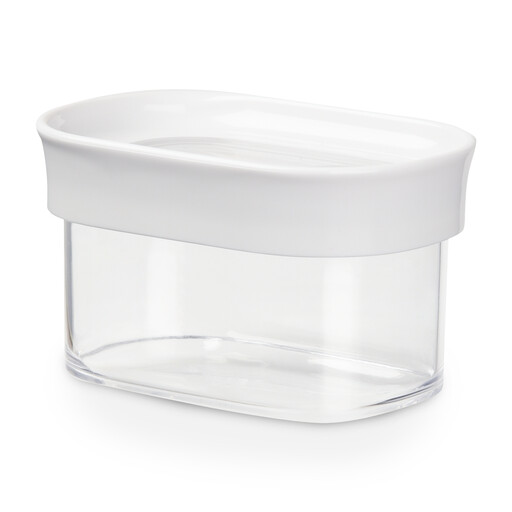
Why this product suits this profile: The compact format is suitable for smaller quantities, spices or individual baking ingredients, and takes up very little space in the kitchen cupboard.
The small capacity helps prevent buying containers that are unnecessarily large. The closure clicks audibly into place and, according to the product information, the container is dishwasher-safe.
Transparent rectangular format; stackable design with non-slip edges.
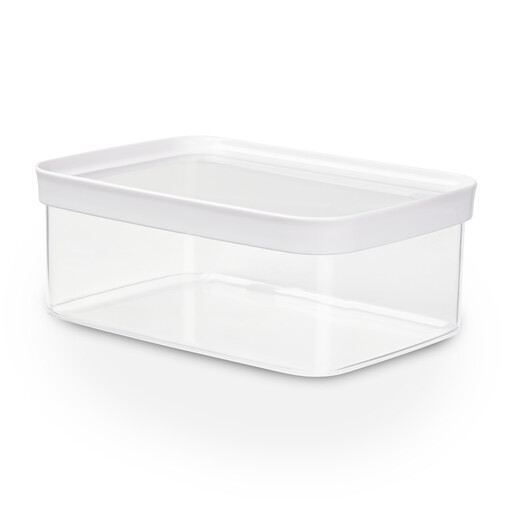
Why this product suits this profile: The rectangular format is designed for tidy food storage in the kitchen cupboard and is suitable for frequently used dry foods.
The transparent container makes it easier to check the fill level. The snap closure and seal are designed for dry foods and protection against moisture.
2 Liter capacity; stackable design with non-slip edges and dishwasher-safe material.
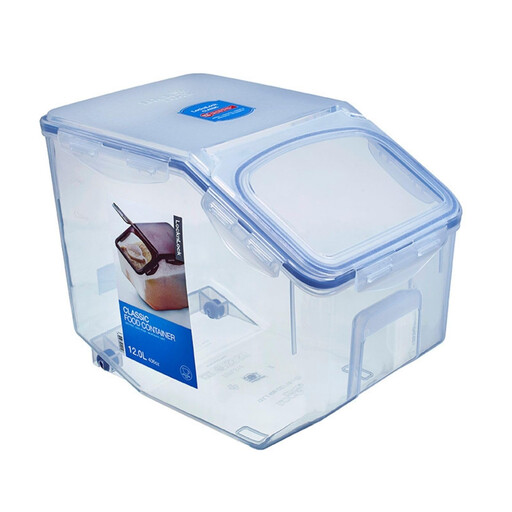
Why this product suits this profile: The large capacity is aimed at families, keen home bakers and pet owners who store larger quantities of flour, rice, cereals or pet food.
Before buying, compare the dimensions of 35 × 23 × 27 cm with the available storage space. The hinged lid with silicone seal and the included measuring cup help you dispense contents in a controlled way.
12 Liter capacity; BPA-free plastic according to the product description, dishwasher-safe and stackable.
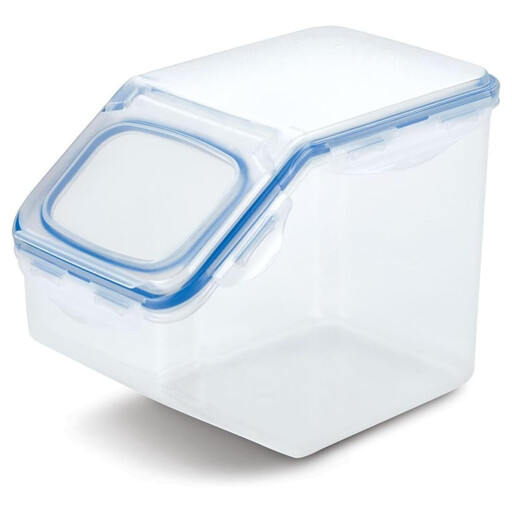
Why this product suits this profile: The medium-sized format is suitable for muesli, cereals, sugar, pasta, baking ingredients or smaller quantities of pet food, and is easier to handle than a large container.
Before filling, check that the contents are dry and that both side closures have engaged. According to the product description, the container is not suitable for use in the microwave.
5 Liter capacity; transparent BPA-free polypropylene plastic according to the product information, with a hinged lid and safety closures.
We have put together a complete, regularly updated list of products that fully meet these strict selection criteria and the safety regulations applicable in the EU.
Their lifespan depends on the material, use and cleaning routine. A container should be replaced if it develops cracks, becomes misshapen or has a damaged seal. A lid that no longer closes securely despite being handled correctly is also a sign of wear.
Many plastic food containers are intended for dry foods such as flour, rice, sugar or pasta. The specific manufacturer’s information is decisive. Hot liquids, direct heat or microwave use are only permitted if expressly approved.
The container and lid must be completely dry before filling. The food itself should also contain no residual moisture. Close the lid fully after each use. For frequently used muesli or cereal containers, regular checks of the seal and interior are also recommended.