
Lieferung heute & morgen

Qualitätsgarantie

Willkommens-Angebote freischalten: KOSTENLOSE Lieferung | Bis zu 80 % RABATT | Kostenlose 30-Tage-JoyPlus-Testphase
App herunterladen
Flour, sugar, rice, pasta, cereal and pet food need to be stored in a dry and organised way in the kitchen. Airtight storage containers can help reduce moisture, dust and contact with pests. However, not every model is suitable for every household. The key considerations are the closure, capacity, material and the actual amount of space available in your kitchen cupboard.
A lid can fit firmly without providing a lasting airtight seal. Look for a continuous seal, even contact pressure and a closure that can be fully secured. With a clip-top closure, an audible click is a useful indication that it is in the correct position – but it does not replace checking the seal.
A large capacity may initially sound practical. In narrow kitchen cupboards, however, tall or wide containers can be difficult to reach. There will also be a lot of air left inside when foods are used infrequently. It is better to choose a range of sizes that can be stacked within a consistent system.
Not every food storage container is suitable for the dishwasher, microwave or freezer. With plastic food storage containers in particular, pay attention to temperature information and material specifications. For dry foods, a container that is easy to clean and has no difficult-to-reach grooves is usually sufficient. Hot liquids should only be put into products that are expressly approved for this purpose.
Several components are relevant for food storage containers with airtight lids:
Before filling the container, the seal should be clean, dry and correctly fitted. If there are cracks, signs of brittleness or the lid remains loose, the container should no longer be used for food.
Compact containers are suitable for spices and small quantities. A capacity of around one Liter may be suitable for rice, pasta or smaller quantities of cereal. For families or those who regularly buy flour and pet food, larger flour and sugar containers or food storage containers with capacities of several Liters are a sensible choice.
Rectangular shapes often make better use of shelves than round containers, as they leave fewer gaps. Before buying, check:
Transparent food storage containers make it easier to check the fill level without opening the lid. This is practical for cereal, rice or pet food and can help you plan top-up purchases in good time.
For plastic containers, specific information such as food-safe, BPA-free or dishwasher-safe is relevant. “Dishwasher-safe” should ideally apply to both the container and the lid; some manufacturers recommend using the top rack only. Stainless steel containers block out light and may be useful for certain storage conditions, but they require the contents to be labelled.
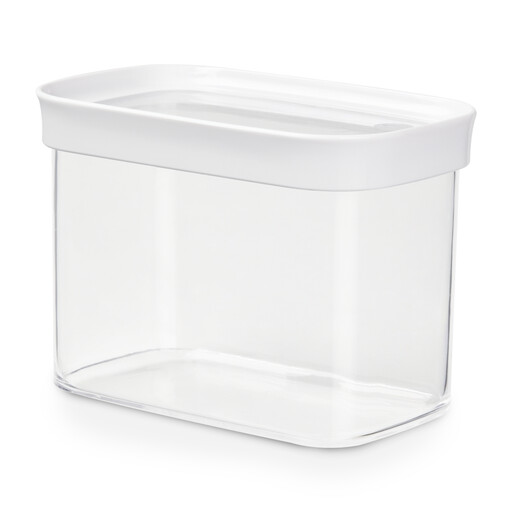
Why this product suits this profile: The capacity is suitable for smaller households and individual ingredients such as rice, pasta, porridge oats or sugar. The rectangular shape is designed for cupboard storage.
The transparent container keeps the contents visible. According to the product details, the lid has an audible snap closure and a seal.
1 Liter capacity, stackable edges and, according to the supplier, dishwasher-safe material.
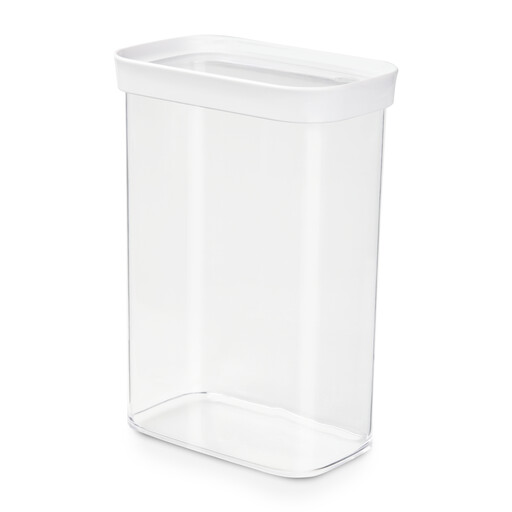
Why this product suits this profile: The medium size is suitable for regular kitchen supplies without filling the cupboard with very large containers. The integrated handle makes it easier to remove.
The product description mentions a seal, an audible snap closure and non-slip stacking edges. This makes the closure and stability easier to assess before buying.
2,2 Liter capacity, transparent design, recessed handle and stated dishwasher suitability.
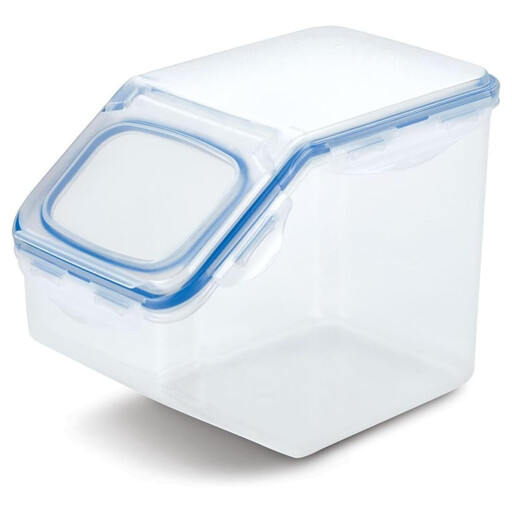
Why this product suits this profile: The large capacity is suitable for frequently used supplies such as cereal, flour, sugar, rice or pet food. The pour spout lid can make everyday use easier.
The container has safety closures and a double-chamber seal. According to the product details, the closure is described as semi-airtight; check that it is correctly fitted before storing food.
5 Liter capacity, BPA-free polypropylene, transparent design and, according to the supplier, dishwasher-safe.
Only fill containers with completely dry food. After cleaning, the container and lid must be thoroughly dried so that moisture cannot build up inside. Label the container with its contents and the date it was opened, particularly when storing large quantities.
Do not stack stackable food storage containers higher than the lid and base allow. Heavy containers should go at the bottom. Avoid direct sunlight and heat sources unless the manufacturer states otherwise. The relevant instructions for use take precedence when storing hot food, using a microwave or storing liquids.
We have put together a complete, regularly updated list of products that fully meet these strict selection criteria and the safety regulations applicable in the EU.
Their lifespan depends on the material, cleaning, use and storage conditions. Regularly check the seal and lid for cracks, deformation or a closure that is becoming less secure. Damaged parts should be replaced; if replacement parts are unavailable, buying a new container is the more practical solution.
This can only be assessed based on the manufacturer’s information. Look for statements such as “suitable for food” and specific details about the material. A container without the relevant approval should not be used for food. Temperature limits apply regardless of whether the container is transparent.
Choose the capacity according to how much you use and the space available in your cupboard. For frequently used supplies, a larger flour and sugar container may be a sensible choice. If consumption is low, smaller containers are easier to handle and can be dried thoroughly more quickly after cleaning. In both cases, the key is a lid that closes securely and dry storage conditions.