
Lieferung heute & morgen

Qualitätsgarantie

Willkommens-Angebote freischalten: KOSTENLOSE Lieferung | Bis zu 80 % RABATT | Kostenlose 30-Tage-JoyPlus-Testphase
App herunterladen
Storing food in an airtight glass storage container sounds straightforward at first. In practice, however, glass containers can vary considerably in terms of closures, temperature resistance, dimensions and cleaning. If you focus only on capacity or attractive design, you may end up buying a container that is not suitable for its intended purpose.
A lid can reduce the entry of air and moisture without reliably containing liquids. For soups, sauces and dressings, a silicone seal and mechanical closures are particularly important. A simple wooden lid, on the other hand, may be more suitable for dry foods such as rice, flour or coffee.
Many glass containers are designed for use in the oven or microwave, but the lid is not. With these models, the lid must be removed before heating. Claims such as “up to 400 °C” or “up to 420 °C” therefore refer to the glass container under the conditions specified by the manufacturer, not automatically to the entire product.
A 3-litre container can be practical for family-sized portions, but it needs sufficient height and shelf space in the fridge. For individual meals, compact glass meal-prep containers holding around 380 to 950 ml are often more suitable. Shape matters too: square and rectangular stackable glass containers generally make more efficient use of shelves than round storage jars.
For dry provisions, a simple cover is often sufficient, provided the container is filled when clean and dry. An airtight glass container with a silicone seal and clips is more versatile, particularly for leftovers, moist foods and transport. Look for:
A glass container with a lid should be completely dry before it is sealed when storing dry foods. Residual moisture can affect the shelf life of flour, muesli or spices.
Depending on the manufacturer’s specifications, a heat-resistant glass container may be suitable for the fridge, freezer, microwave, oven or air fryer. The exact limits vary. Examples from our selection include:
Avoid moving a container directly from extreme cold to intense heat. A frozen glass container should first be allowed to reach room temperature unless the instructions for use specify otherwise. Never place glass on a hob or over an open flame. Containers that are damaged, chipped or cracked should no longer be used.
A kitchen storage jar should suit both the food and the available storage space:
Also check the external dimensions. Dishwasher-safe glass containers make everyday use easier, although wooden or bamboo lids may need to be washed by hand. Seals and clips should be removable or at least fully accessible, so that residue cannot collect in gaps.
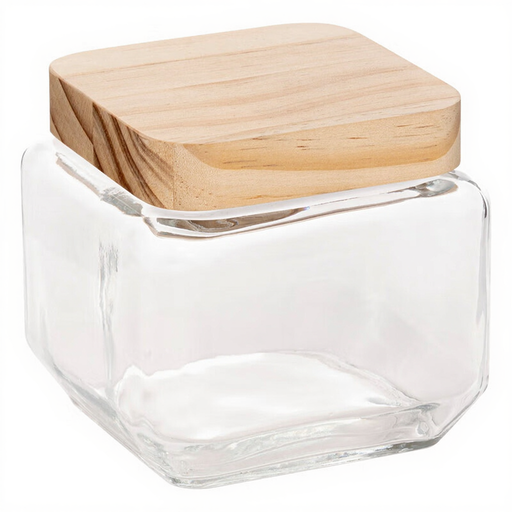
Why this product suits this profile: The 0.85-litre container is suitable for dry provisions such as coffee, rice, pasta or flour. Its transparent glass also gives you a clear view of the contents.
The product specifications clearly define its intended use: the container is not suitable for microwave use. The glass container is dishwasher-safe, while the pinewood lid should be cleaned by hand.
0.85 l capacity, transparent glass, compact square shape and reusable material.
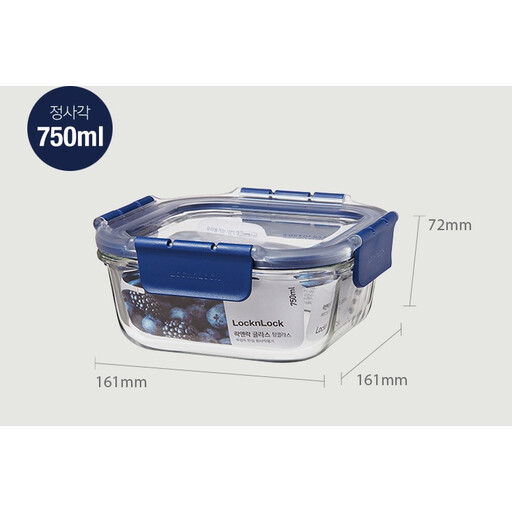
Why this product suits this profile: This square glass food storage container combines a four-sided locking system with a silicone seal. It is designed for storage in the pantry, fridge and freezer, as well as for heating without the lid.
The usage limits are clearly stated: oven-safe up to 400 °C without the lid, freezer-safe down to −20 °C, and suitable for microwave use without the lid.
750 ml capacity, stackable design, four-sided locking system, BPA-free lid and dishwasher-safe components.
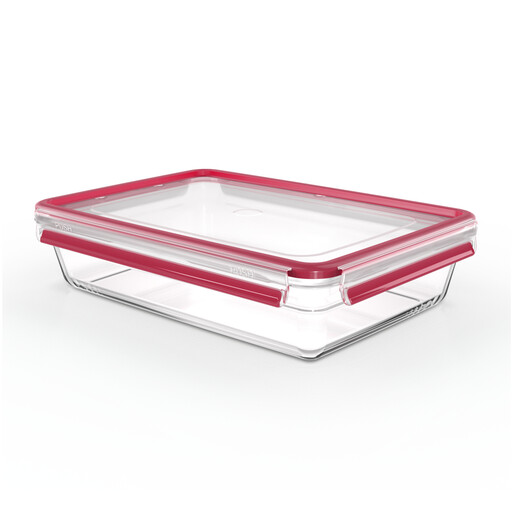
Why this product suits this profile: The large capacity is designed for family-sized portions, larger meal-prep quantities or storing bread and prepared dishes.
The clip closure is designed for leakproof storage. The product specifications also mention a reinforced edge and stacking rim for containers of the same size.
3 l capacity, suitable for oven and microwave use without the lid, freezer-safe down to −40 °C and dishwasher-safe.
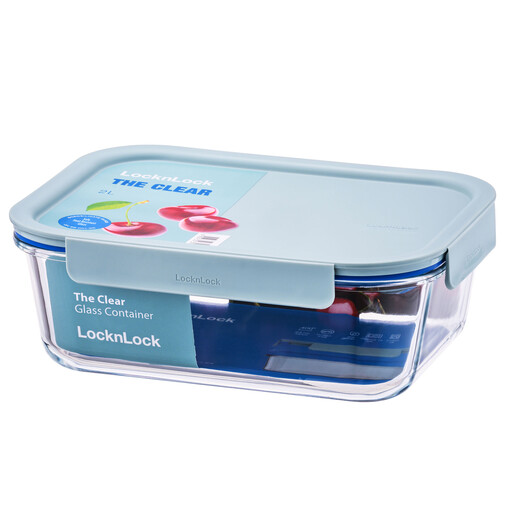
Why this product suits this profile: The compact format is ideal for side dishes, small leftovers and individual everyday portions.
The silicone seal is designed for airtight storage. The plastic lid must be removed before using the container in the oven or microwave.
380 ml capacity, stackable shape, heat-resistant glass body, and suitability for the fridge, freezer and dishwasher.
We have put together a complete, regularly updated list of products that fully meet these strict selection criteria and the safety regulations applicable in the EU.
Only fill a glass storage container once it is clean and dry. When storing hot food, leave the lid open or remove it until the contents have cooled sufficiently. For microwave and oven use, always follow the manufacturer’s instructions. This is particularly important for containers with plastic lids: only the glass body may be heated.
Check seals regularly for signs of deformation and clean the closure grooves thoroughly. Glass is not indestructible: impacts, scratches and sudden temperature changes can cause damage. Keep containers with small clips or individual parts out of the reach of young children.
That depends on the closure system. A lid with a silicone seal and mechanical closure can provide a much tighter seal than a loose cover. However, “airtight” does not automatically mean vacuum-sealed. When storing liquids, you should also look for specific information confirming leakproof performance.
Only if the manufacturer explicitly permits this use. With the products mentioned above, the lid must be removed before heating. Also check the permitted temperature and avoid sudden changes between freezer temperatures and high heat.
For individual meals, 630 to 950 ml is often practical. 380 ml is better suited to small portions or side dishes, while 2 to 3 litres is intended for family-sized portions and larger quantities. In addition to capacity, the internal dimensions and the amount of available space in your fridge are also important.