
Lieferung heute & morgen

Qualitätsgarantie

Willkommens-Angebote freischalten: KOSTENLOSE Lieferung | Bis zu 80 % RABATT | Kostenlose 30-Tage-JoyPlus-Testphase
App herunterladen
A cordless drill driver should drive screws securely, drill accurate holes and be ready for everyday use without an awkward cable. In practice, unclear performance figures, unsuitable batteries and oversized accessory cases often lead to disappointing purchases. What matters is not the number on the box, but the combination of torque, battery system, gearbox, chuck and intended use.
Figures such as 21V cordless drill driver or 18V cordless drill driver refer first and foremost to the battery’s nominal voltage. On their own, they reveal little about actual performance. Maximum torque, speed settings, motor, gearbox and battery quality are just as important.
A 12V model may be enough for assembling furniture and carrying out minor repairs. For drilling larger holes in wood or working for longer periods, 18V or 21V systems are often a better choice. Always consider these figures together.
A cordless drill driver set with 30 or 45 pieces may seem convenient. But the number of pieces alone doesn’t tell you whether the bits included are suitable for the jobs you have planned. You’ll need different types of drill bit for concrete, masonry, wood and metal. So check:
A cordless combi drill with a selectable hammer function may be suitable for occasional drilling into masonry. For frequent work in concrete or very hard masonry, a tool with a more powerful hammer mechanism – or a rotary hammer – is usually a better choice. Check that the product description clearly states whether the tool actually has a hammer-drilling mode.
Torque is measured in Newton metres (Nm). A higher figure can be useful for driving large screws or drilling into tough materials. For delicate furniture panels, however, a finely adjustable clutch is particularly important. It limits the force and can help prevent screws from being overtightened or materials from being damaged.
Many models have 18+1, 25+1 or similar torque settings. The first number typically refers to the adjustable clutch positions, while the additional setting is often the drilling mode.
Battery capacity is measured in Ah. A 3.0 Ah battery can run for longer than a 1.5 Ah battery under similar conditions, but it’s usually larger and heavier. A compact battery is fine for short assembly jobs; for renovation work or lots of drilling, a second battery is handy.
Also check whether the offer is for a drill driver with battery and charger or just the tool. With bare tools such as the Makita DDF487Z or DHP489Z, the battery and charger aren’t included. This can make sense if you already have compatible batteries, but will increase the overall cost if you’re new to the system.
A keyless chuck makes it easy to switch between drill bits and screwdriver bits. Two gears usually provide a low speed with higher torque for screwdriving, and a higher speed for drilling. For longer jobs, weight, grip design and balance all matter. A lighter tool is easier to handle, while larger models often offer more power in reserve.
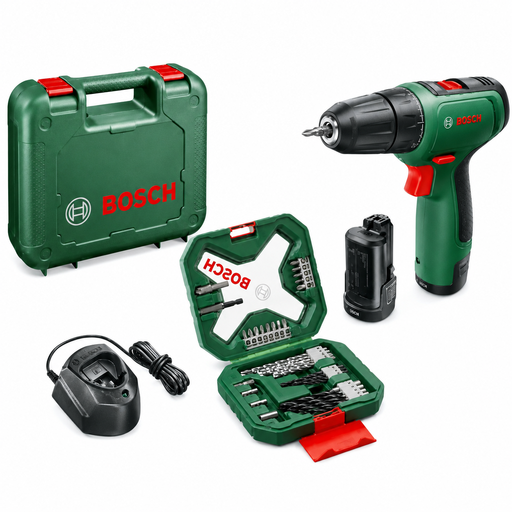
Why this product suits this profile: This 12V tool is designed for assembling furniture, light repairs, and drilling and screwdriving in wood, metal and plastic. The set includes a battery, charger and accessories.
The key items included in the set are clearly listed. The 12V version isn’t presented as a solution for heavy-duty masonry work.
34-piece accessory set, 1,500-mAh lithium-ion battery, keyless chuck and torque settings.
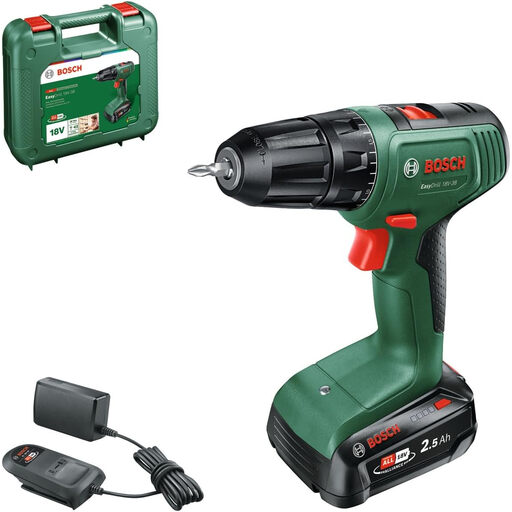
Why this product suits this profile: This 18V set combines two gears, 20 torque settings and a 10mm keyless chuck with a battery system that works with a range of household tools.
Details of the 38 Nm torque, speed settings and maximum drilling diameters in wood and steel help you plan realistically for the job.
38 Nm maximum torque, LED work light, weighs 1.2 kg with battery, and is compatible with the 18V POWER FOR ALL system.
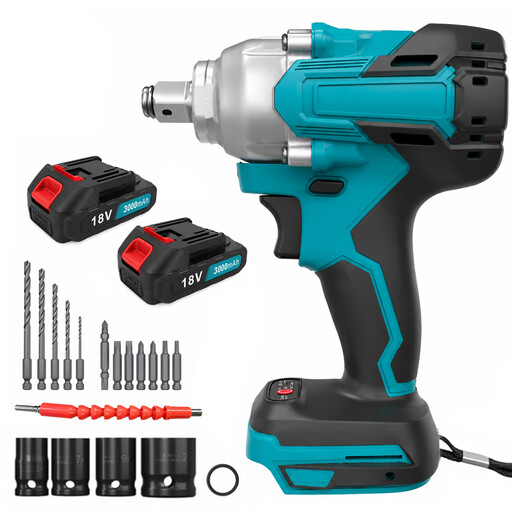
Why this product suits this profile: This model is designed for a range of jobs: screwdriving, drilling and using the hammer function. According to the product details, two 18V batteries, each with a capacity of 3.0 Ah, are included.
The three operating modes and included accessories are clearly specified. For heavy-duty concrete work, you should still check whether the drill bit you plan to use is suitable.
Up to 320 Nm maximum torque according to the product details, metal gearbox, two batteries, plus screwdriver bits, drill bits, sockets and an extension bar.
With any cordless drill driver, remove the battery before changing a bit or carrying out maintenance. Wear safety glasses when drilling; for longer jobs, you may also need hearing protection. Make sure the workpiece is securely clamped. Use only compatible batteries and chargers, and charge lithium-ion batteries according to the manufacturer’s instructions.
If you regularly work with metal or masonry, it’s also worth checking which drill bits are suitable and what the permitted drilling diameters are. A cordless drill driver for DIY use won’t necessarily be suitable for every material thickness.
We’ve put together a complete, regularly updated list of products that meet these strict selection criteria and fully comply with the safety regulations in force in the EU.
Its lifespan depends on how it’s used, battery quality, storage and maintenance. Avoid excessive heat, damp conditions and leaving the battery completely discharged for long periods. If you use the tool regularly, a spare battery can reduce wear on each battery and minimise interruptions while you work.
A 12V model is often enough for assembling furniture, hanging pictures and shelves, minor repairs, and drilling into wood or plastic. For larger screws, thicker materials or longer jobs, 18V and 21V tools usually offer more power in reserve. Suitability for a particular job depends on torque and the chuck.
The electricity cost of a single battery charge is usually modest. The main factors are battery capacity, charging efficiency and your electricity tariff. Replacement batteries, an additional charger and compatible accessories often have a greater impact on the overall cost. So check exactly what’s included before you buy.