Which solution is right for you?

Cover illustrators working on a computer

If you draw or retouch in a desktop app, decide whether you’d rather work on your existing monitor or directly on a pen display. Wacom describes the Intuos Pro (2025) as a screenless pen tablet, while XPPen lists the Artist Pro 16 (Gen 2) as a pen display.

Designers creating covers for print

For a cover that’s going to print, you need to consider the colour and file requirements of the production workflow as well as stylus input. Huion lists display colour-gamut coverage for the Kamvas 13 (Gen 3), while Adobe describes tools for RGB and CMYK colour values in Photoshop. You’ll still need to check the requirements for your specific job.

Illustrators with a tablet they already own

If you want to draw on an iPad you already own, check that the stylus is compatible with your exact device model and supports the features you need in your app. Apple and Apple Support list the compatibility requirements for Apple Pencil Pro.

What should you look for when buying?

A stylus for an iPad you already own

A good fit if: Your specific iPad is supported and you want to draw in a compatible iPad app.

Worth considering: Apple lists specific compatible iPad models and iPadOS versions for Apple Pencil Pro. You should also check which features your app supports.

A graphics tablet without a screen

A good fit if: You want to keep using your computer and monitor, and are happy to draw on a separate surface.

Worth considering: Your artwork appears on the monitor rather than beneath the stylus tip. The driver and input protocol must be compatible with your software.

A pen display for your computer

A good fit if: You want to draw or retouch directly on the displayed canvas and have a permanent space for it.

Worth considering: Check the video signal, data and power connections, as well as the space required for the specific model.

A standalone tablet with a stylus

A good fit if: You want to create without connecting a computer.

Worth considering: You’ll still need to check the app, file transfer and output requirements separately. According to Samsung Deutschland, the Galaxy Tab S10 FE comes with an S Pen, but no charging adapter.

What you’re looking for What to look out for Who it matters most to
Control over lines and brushes Check pressure input, tilt and, where applicable, stylus buttons, as well as your drawing app’s settings. If you want precise control over fine lines and brushes, your app needs to process the stylus input you require. Around 28% of consumers put line control first.
Draw directly on your artwork Compare the device dimensions and the video, data and power connections required by the specific model. If you want to see the stylus tip directly on the displayed drawing, you’ll need a screen that suits your workspace. Around 22% of consumers prioritise drawing directly on their artwork.
Preparing colours for print Check the file format and colour profile with your print service, and review your software’s colour settings. If your artwork is going to be printed as a physical cover, consider the on-screen appearance alongside the requirements for the print file. Around 22% of consumers say print output is their top priority.
Keep using devices you already own Note down the model and operating system, then check them against the manufacturer’s compatibility list and your app’s requirements. If you want to keep using your existing tablet or computer, the stylus or driver setup needs to be a precise match. Around 17% of consumers put compatibility first.
Create without a computer Check that your app runs on the tablet, that you can transfer files as required and what accessories are included. If you don’t want to be connected to a computer while you create, the app and file transfer matter just as much as what’s included. Around 11% of consumers prioritise a standalone tablet workflow.

Buying mistakes to avoid

  • Choosing an Apple Pencil based only on the connection or model name

    The name of a stylus alone doesn’t confirm that it works with your iPad. Apple lists the supported iPad models and system requirements for Apple Pencil Pro separately.

    Before you order, check your iPad’s exact model name and installed iPadOS version against Apple’s compatibility list.

  • Assuming a pen display and a standalone tablet are the same thing

    A pen display connected to a computer shows your workspace, but it doesn’t replace the computer it’s connected to. A standalone tablet is designed for a different workflow.

    First decide whether you want to use desktop software on a computer or work without one connected. Then check the connections on the specific pen display, or the apps and file transfer options available on the tablet.

    Depending on the workflow you choose, you may need additional computer equipment or connections.

  • Assuming factory calibration guarantees accurate cover printing

    Display specifications describe the screen, but don’t confirm the result of a specific print job. Huion lists display features for the Kamvas 13 (Gen 3), but print requirements are separate.

    Before submitting your artwork, check the required file format and colour profile with your print service, then set up your software accordingly.

    If your file doesn’t meet the output requirements, you may need to make further corrections or order another proof print.

A guide to relevant brands

Wacom

The Intuos Pro (2025) is a screenless graphics tablet for use with your existing computer monitor; Cintiq is the pen display range.

  • For the Intuos Pro (2025), Wacom lists a Pro Pen 3, 8,192 pressure levels and USB or Bluetooth connectivity.
  • The Intuos Pro doesn’t display your cover on its drawing surface. The manufacturer’s specifications aren’t a comparative test of every Wacom device.

XPPen

The Artist Pro 16 (Gen 2) is a pen display that connects to a computer, letting you work directly on the displayed artwork.

  • XPPen lists 16K pressure levels for the X3 Pro stylus.
  • The pressure-level specification isn’t independent proof of better lines. Check that you have enough space and the right connections for your specific workspace.

Huion

The Kamvas 13 (Gen 3) is a 13.3-inch pen display for use at a computer workstation.

  • Huion lists a resolution of 1,920 × 1,080 pixels, as well as 99% sRGB and Rec.709 coverage.
  • The factory calibration specification doesn’t confirm the colour result for a specific cover print job.

Apple

Apple Pencil Pro is an option for iPads that are explicitly listed as compatible.

  • Apple describes pressure, rotation and other input features.
  • According to Apple, Pencil Pro only works with the listed devices and a compatible iPadOS version. Also check that your app supports the features you want.

Samsung

The Galaxy Tab S10 FE is an example of a standalone tablet. According to the German product page, an S Pen is included.

  • You don’t need to buy a separate stylus for this offer.
  • Samsung notes that a charging adapter isn’t included. This doesn’t tell you whether a particular artwork app is supported or whether the tablet is suitable for print work.

Joybuy tablets and styluses

The Joybuy products below include styluses for existing touchscreen devices and standalone tablets with a stylus. Before buying, check that the model and features suit your specific device and drawing workflow.
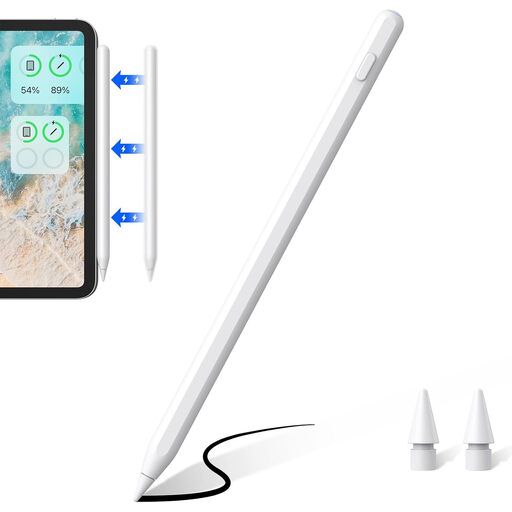
ZSPEED stylus pen for iPad

ZSPEED Wireless Charging Stylus Pen for iPad

For an iPad from the model ranges listed in the product title. Check the exact generation against your device before buying.

The listed models are the iPad Pro 11-inch (1st to 4th generation), iPad Pro 12.9-inch (3rd to 6th generation), iPad Air 4 and 5, and iPad mini. The product title also mentions palm rejection and tilt sensitivity.

Joybuy
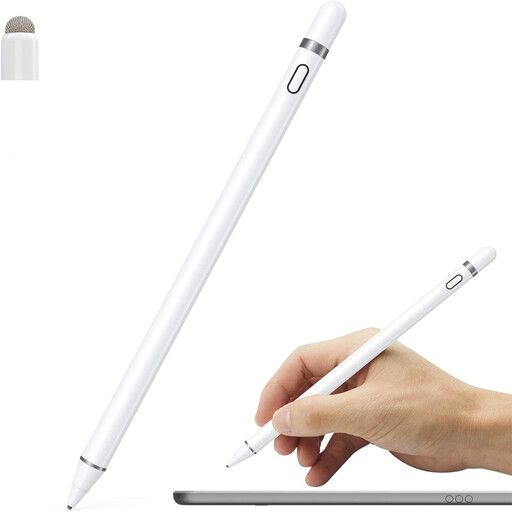
Active stylus with dual-touch functionality

Active Stylus Pen with Dual Touch Function

An option if you’re looking for a rechargeable active stylus for an iOS or Android touchscreen.

The product title mentions dual-touch functionality and compatibility with iOS and Android touchscreens. Check support for your exact device model.

Joybuy
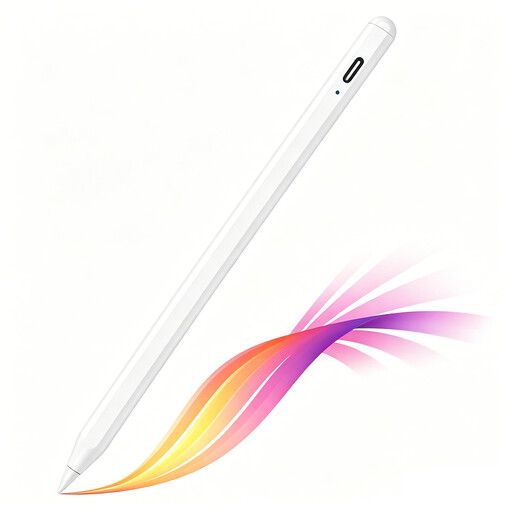
iPad stylus with USB-C charging port

iPad stylus with USB-C charging port

For selected iPad models. Check that your specific model is supported before buying.

The product title mentions tilt detection, palm rejection and a USB-C charging port. According to the product information, the magnetic attachment is for storage; wireless charging isn’t supported.

Joybuy

Teclast ArtPad Pro with 13.4-inch display and T-Pen

Teclast ArtPad Pro, 13.4-inch

A standalone tablet option if you don’t want to be connected to a computer while drawing.

The product title lists a 13.4-inch 2K display, Android 15 and a T-Pen with 4,096 pressure levels.

Joybuy

Teclast ArtPad Pro with 12.7-inch display, T-Pen, keyboard and protective case

Teclast ArtPad Pro, 12.7-inch, with keyboard and protective case

A standalone tablet option if you want to draw without a computer and have a keyboard and protective case included.

The product title lists a 12.7-inch 2K display, Android 15 and a T-Pen with support for 4,096 pressure levels. An English Bluetooth keyboard and a protective case are also listed.

Joybuy

Frequently asked questions

Are more pressure levels enough for smooth cover illustrations?

No, the number alone isn’t enough. Check that your operating system and driver pass stylus input to your drawing app, and that your brushes respond to pressure. The pressure-level specification describes the device itself.

What should I check first when setting up a graphics tablet on a computer?

Install a driver that’s compatible with your operating system, then test the input in your drawing app. The Krita manual highlights the importance of using the right input protocol, particularly on Windows.

What else might I need besides the device itself?

It depends on the solution you choose. According to Samsung’s German product page, the Samsung Galaxy Tab S10 FE comes with an S Pen, but no charging adapter. For an iPad setup, check that the stylus is compatible with your exact model and that your app supports the features you need.

What are my rights when shopping online in Germany?

Where a distance contract applies, you generally have a statutory right to cancel. The cancellation period is 14 days, although when it starts and any exceptions depend on the specific contract (§§ 312g and 355 BGB). The Verbraucherzentrale also explains that, for goods, claims relating to defects generally apply for two years from delivery. This is separate from any voluntary manufacturer’s guarantee.