
Lieferung heute & morgen

Qualitätsgarantie

Willkommens-Angebote freischalten: KOSTENLOSE Lieferung | Bis zu 80 % RABATT | Kostenlose 30-Tage-JoyPlus-Testphase
App herunterladen
Investing in an all-in-one car seat that grows with your child is a smart financial decision. A single seat can serve your child from birth until they no longer legally require one. However, the market is cluttered and full of marketing promises. Some models turn out to be impractical or fail to provide the expected safety over their entire lifespan. This guide will help you identify the crucial features and avoid common pitfalls.
To make an informed decision, you should carefully examine three technical aspects. These define the safety and longevity of an all-in-one car seat.
The ECE R129 standard, often referred to as an i-Size car seat, is the current benchmark for child safety in vehicles. Look for this certification, as it offers clear advantages:
A car seat with ISOFIX provides a rigid connection to the vehicle's chassis. This minimises the risk of incorrect installation.
A seat intended for use from birth to age 12 (car seat from birth to 12 years) must be highly adaptable.
Here are some models that represent a considered choice for different needs and budgets, based on objective criteria.
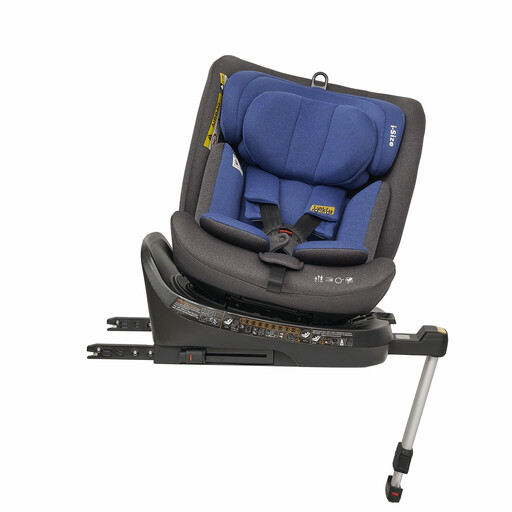
Why This Fits Their Persona: This model is an economical all-in-one solution that covers all essential safety and comfort features without breaking the bank. Ideal for families looking for a long-term investment.
It meets the current ECE R129 (i-Size) standard, thus avoiding the trap of outdated safety regulations. Its suitability for 40 to 150 cm ensures genuine long-term use.
Offers a 360° rotation and an adjustable recline position, which is not a given in this price range. Installation is secure via ISOFIX and a support leg.
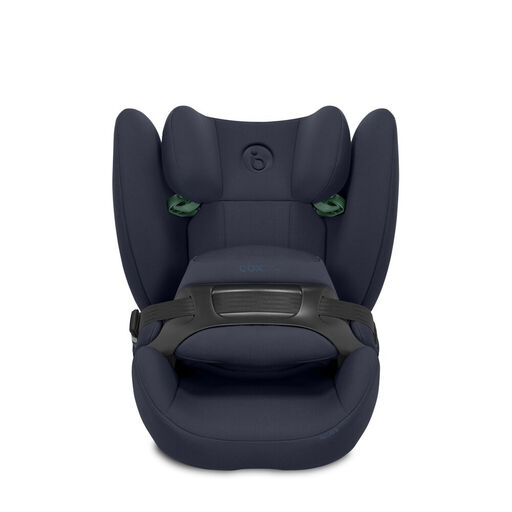
Why This Fits Their Persona: Perfect for parents seeking a single seat to last from the infant carrier stage until the end of the child seat requirement. The focus is on safety and a lifespan of over 10 years.
The 2-in-1 design, featuring an impact shield and later converting to a booster seat, is a well-thought-out solution that ensures comfort over the years, avoiding the pitfall of a seat becoming uncomfortable for older children.
According to the manufacturer, the adjustable impact shield reduces the risk of neck injuries in a frontal collision. Installation is simple and secure thanks to ISOFIX and a top tether.

Why This Fits Their Persona: For parents who refuse to compromise on safety and comfort during the first four years of their child's life. This seat combines advanced safety technology with high-quality materials.
It is designed as a rear-facing car seat up to 20 kg, promoting the safest possible rear-facing travel. The 360° air circulation and Plus fabric directly address the problem of overheating.
Features an integrated Linear Side-impact Protection system (L.S.P. System) and a 360° rotation function for easy entry and exit. Five recline positions ensure optimal comfort.
We have compiled a complete, up-to-date list of products that fully meet these strict selection criteria and safety standards.
According to the ECE R129 (i-Size) standard, rear-facing travel is legally required until 15 months of age and a height of 76 cm. However, safety experts recommend keeping children in a rear-facing car seat for as long as possible, ideally up to the age of four, as this provides better protection for the sensitive head and neck area in a frontal collision.
Not necessarily. Although i-Size is a universal standard, there are differences in vehicle interiors. For example, a support leg requires sufficient space on the vehicle floor. Therefore, always check the compatibility list on the car seat manufacturer's website. It specifies for which vehicle models the respective seat is approved.
An all-in-one car seat, such as a 9-36 kg car seat or a 40-150 cm model, is used until the child reaches the maximum height or weight limit. This is typically at a height of 150 cm or an age of 12 years. A backless booster seat offers no side-impact protection and should therefore only be considered a temporary solution. A high-back booster seat that optimises the seat belt path and protects the head is always the safer choice.