
Lieferung heute & morgen

Qualitätsgarantie

Willkommens-Angebote freischalten: KOSTENLOSE Lieferung | Bis zu 80 % RABATT | Kostenlose 30-Tage-JoyPlus-Testphase
App herunterladen
An all-purpose cleaner should tackle as many household cleaning jobs as possible: mopping floors, cleaning kitchen surfaces, removing dirt and caring for bathroom surfaces. There’s plenty of choice, but not every product is suitable for every task. If you choose based only on fragrance, brand name or bold advertising claims, you could easily end up with a cleaner that isn’t suitable for your surfaces.
Many multi-purpose cleaners are designed for smooth, wipeable surfaces. That doesn’t automatically include unsealed wood, oiled floors, acrylic, aluminium or delicate lacquered finishes. A product may work well on tiles but damage the surface of an oiled parquet floor.
A lavender, citrus or floral fragrance doesn’t tell you whether a product is suitable for cleaning kitchens or floors. Fragrances may also appear in the list of ingredients and could be a concern for people with sensitivities. What matters are the instructions for use, dosage, suitable surfaces and safety information.
A 750-ml spray cleaner can’t be compared directly with a 1-litre concentrate. To work out the cost, consider how much ready-to-use cleaning solution you can make from one bottle. Using too much isn’t an advantage either: it can leave residue and increase running costs.
Before you buy, decide where you’ll use the household cleaner:
A pH-neutral cleaner may be a suitable option for more delicate, wipeable surfaces. However, neutral doesn’t mean suitable for every surface. Always follow the care instructions from your flooring or furniture manufacturer.
When using a concentrate, check the recommended amount per litre of water. Examples from product information:
These figures aren’t universal, so always follow the label on the product you’re using. A concentrated product with a good yield can be more practical for businesses or larger households; for cleaning individual surfaces, a ready-to-use spray cleaner is often enough.
Cleaning products can irritate the eyes, trigger allergic reactions or be dangerous if used incorrectly. Before use, check the hazard warnings, dosage and storage instructions. Never mix cleaning products, especially chlorine-based cleaners and acidic products.
For delicate materials, test the product on an inconspicuous area first. Keep cleaning products out of reach of children and pets. A cleaner marketed as environmentally friendly isn’t automatically free from safety requirements or fragrances. Check specific product information to understand claims such as vegan, biodegradable or plant-based.
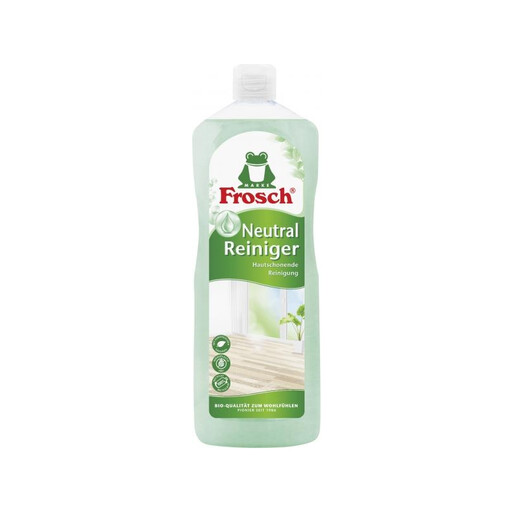
Why it suits this profile: According to the product information, this 1-litre all-purpose cleaner is suitable for floors, wood, and kitchen and bathroom surfaces. It can be diluted or used neat on heavier dirt.
The product information specifies that it’s pH-neutral and gives clear dosage instructions. That makes it easier to plan how to use it, rather than choosing based only on fragrance or advertising claims.
pH-neutral according to the product description; 1-litre bottle; designed for use on a range of wipeable surfaces.
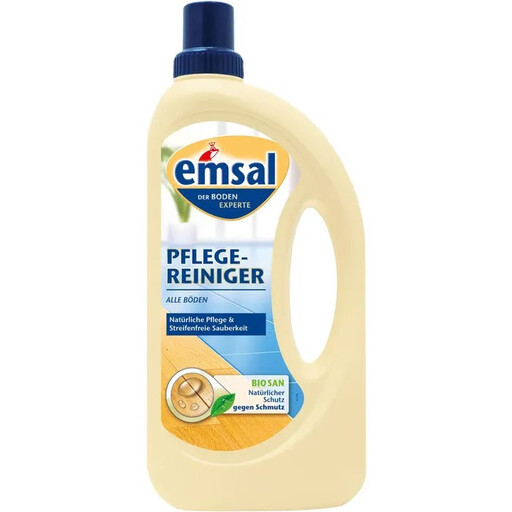
Why it suits this profile: This cleaner is designed for sealed hard floors and combines cleaning with care. It’s suitable for households or commercial spaces where floors are mopped regularly.
The product description limits its use to certain sealed floors and clearly names surfaces that need different care products. This helps reduce the risk of using it on the wrong surface.
Suitable for sealed wood, vinyl, PVC, linoleum, stone and tiles; concentrated formula; use with a well-wrung mop.
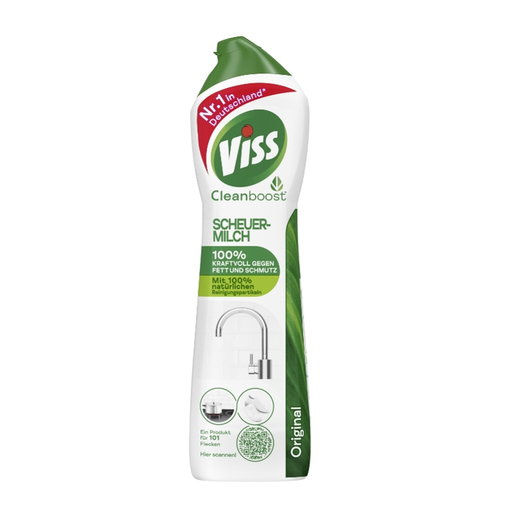
Why it suits this profile: This cream cleaner is designed for kitchen and bathroom surfaces with stubborn dirt. It complements an all-purpose cleaner when a more hands-on clean is needed.
The product information advises testing delicate surfaces and aluminium on an inconspicuous area first. The product isn’t intended for textiles.
Designed for kitchens and bathrooms; contains natural cleaning particles according to the product description; identifies eye irritation as a safety risk.
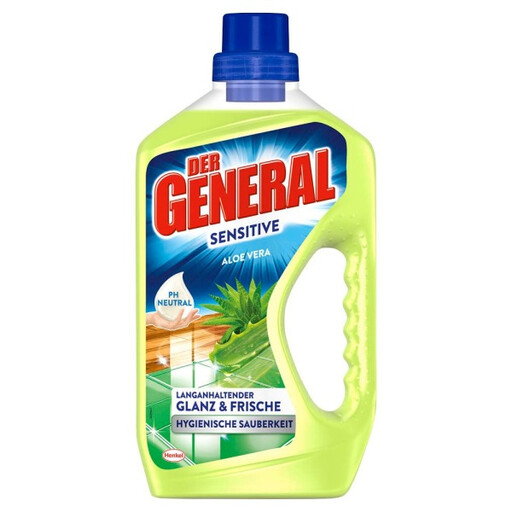
Why it suits this profile: The product description specifies a pH-neutral formula and says it’s suitable for wipeable surfaces. That could make it a good option for regular household cleaning.
Its pH-neutral formula and dilution instructions offer more guidance than claims based solely on fragrance or shine. Always follow the safety information on the label.
750-ml bottle; pH-neutral formula according to the product description; designed for all wipeable surfaces.
A streak-free cleaner alone won’t guarantee a streak-free finish. The right dosage, a clean cloth and as little standing water as possible are all important. When cleaning floors, wring out the mop well. For wood, cork and laminate, it’s best to use a barely damp mop, particularly when caring for floors, unless the manufacturer advises otherwise.
For stubborn marks, you can use a more concentrated solution or apply the cleaner neat if the label allows it. Then wipe the surface again as directed. All-purpose cleaners, specialist cleaners and floor-care products each have different uses, so you don’t always need to replace one with another.
We’ve put together a complete, regularly updated list of products that meet these strict selection criteria and fully comply with the safety regulations in force in the EU.
It depends on the type of flooring. Suitable floor cleaners can be used on sealed hard floors. With laminate, wood and cork, keep moisture to a minimum. Oiled or unsealed floors often need a specially formulated care product.
The dosage depends on the product. Concentrates are often diluted using a specified amount for several litres of water. Using more cleaner won’t necessarily improve the result and may leave residue. Always follow the instructions on the label.
The best-before date, batch number and any storage instructions are printed on the packaging. Keep cleaning products sealed, dry and protected from frost, and store them out of reach of children. If the product changes in colour, smell or consistency, check whether it’s still suitable for use.