
Lieferung heute & morgen

Qualitätsgarantie

Willkommens-Angebote freischalten: KOSTENLOSE Lieferung | Bis zu 80 % RABATT | Kostenlose 30-Tage-JoyPlus-Testphase
App herunterladen
Choosing the right diagnostic tool is crucial for professional auto repair shops and advanced DIY mechanics. A simple device for reading fault codes is often no longer sufficient for complex repairs on modern vehicles. An all-system OBD2 diagnostic tool offers in-depth access to all control units and enables functions that go far beyond standard diagnostics.
This article serves as a guide. It highlights the most important criteria to consider when selecting an advanced diagnostic tool and presents a selection of models that stand out for their range of functions and technical specifications.
Investing in a high-performance diagnostic tool should be a well-considered decision. The following points will help you separate the wheat from the chaff and find a tool that meets your requirements.
To be called a professional car diagnostic tool, a device needs to do more than just display and clear fault codes from the engine control unit. Look for these advanced features:
For complex repairs and work on newer vehicle models, special protocols and coding functions are critical.
The performance of the hardware determines how smoothly and efficiently you can work. A fast processor, sufficient RAM, and a long battery life are important here. Equally crucial is the manufacturer's update policy. Regular software updates ensure that new vehicle models, functions, and bug fixes are added, preserving the value of your investment in the long term.
Based on the criteria mentioned above, we have compiled a selection of tools that are well-suited for demanding users due to their technical specifications and range of functions.
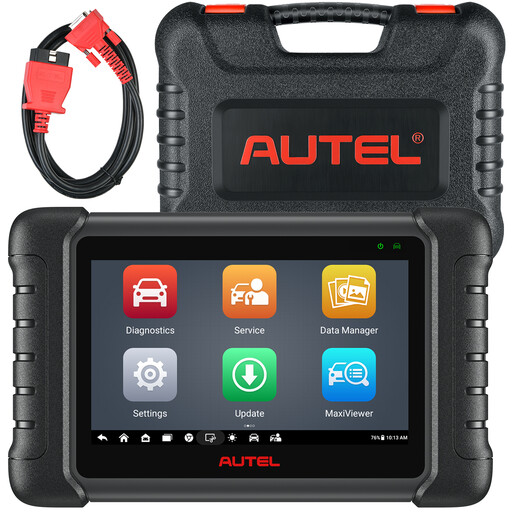
What makes it stand out: The Autel MX808S is a versatile diagnostic tablet that combines OE-level system diagnostics with extensive bi-directional control. With its solid hardware based on Android 11 and a Rockchip RK3566 processor, it offers smooth operation. According to the manufacturer, it covers over 38 service functions and allows access to FCA vehicles (Fiat, Chrysler) via the Secure Gateway (SGW).
Advantages:
Who is it for: Workshops and advanced DIYers looking for a reliable all-around tool with a strong focus on bi-directional tests and broad service function coverage.
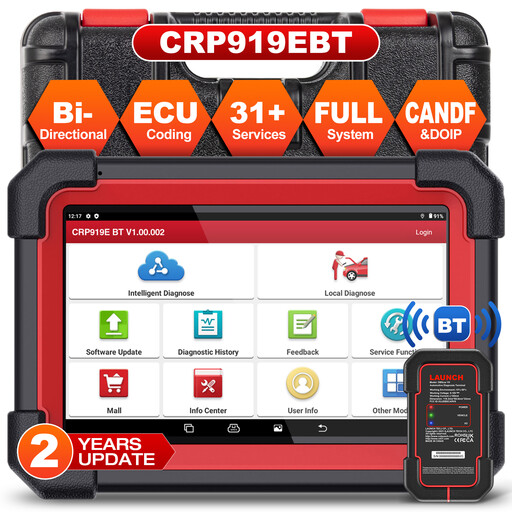
What makes it stand out: The LAUNCH CRP919E BT distinguishes itself with its wireless DBScar VII VCI module, which allows for flexible diagnostics via Bluetooth. It is one of the few devices in its price range that supports the modern CAN FD and DoIP protocols, making it ready for diagnosing the latest vehicle models from GM, BMW, and Volvo. It also offers advanced functions like ECU Coding.
Advantages:
Who is it for: Professional users and workshops who value maximum flexibility through a wireless connection and need a tool that is prepared for diagnosing the most modern vehicles with CAN FD and DoIP architecture.
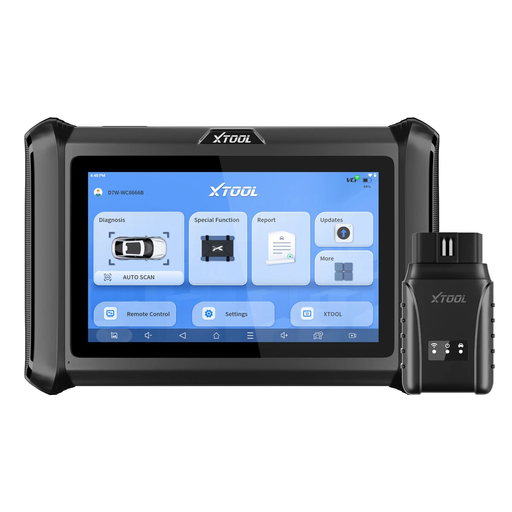
What makes it stand out: The XTOOL D7W relies on a fast and stable wireless Wi-Fi connection for diagnostics, promising a greater range and higher transfer rates than Bluetooth. A special feature is the "Programmable Module Installation" (PMI) function for Ford, Lincoln, and Mazda, which allows for copying data to new control units. With 3 years of free updates, it offers long-term value.
Advantages:
Who is it for: Technicians and workshops looking for a long-term investment with a comprehensive update package, and who frequently work on Ford, Lincoln, or Mazda vehicles where the PMI function provides significant added value.
If the models presented here do not exactly match your requirements or if you would like to compare a wider selection, you can find more tools for various applications and budgets in our Diagnostic Code Scanners category.
A basic OBD2 scanner can typically only read and clear generic fault codes (DTCs) from the engine control unit. In contrast, an all-system OBD2 diagnostic tool accesses all control units installed in the vehicle, including ABS, airbag, transmission, and body electronics. It also offers advanced functions like live data display, bi-directional control for actuating components, and special service resets.
If you regularly work on modern vehicles (especially models from 2020 onwards from brands like GM, BMW, Volvo, or Jaguar Land Rover), support for CAN FD and DoIP is highly recommended. These protocols enable much faster data communication, which is necessary for diagnosing the complex electronic architecture of these vehicles. Without this support, many systems in newer cars cannot be diagnosed, or can only be diagnosed incompletely.
Bi-directional control, also known as an active test, refers to the ability of a diagnostic tool to send commands to a vehicle's control units to activate specific components or systems. Instead of just receiving data (like fault codes), the tool can actively trigger actions, such as turning the fuel pump on and off, testing injectors, or moving actuators. This is a crucial tool for fast and accurate fault diagnosis.