
Lieferung heute & morgen

Qualitätsgarantie

Willkommens-Angebote freischalten: KOSTENLOSE Lieferung | Bis zu 80 % RABATT | Kostenlose 30-Tage-JoyPlus-Testphase
App herunterladen
A warning light on your dashboard can be unsettling. Is it a serious issue or just a minor glitch? A trip to the garage often means time and uncertain costs. An all-system OBD2 diagnostic tool that can analyse every system in a vehicle offers a practical solution. It allows you to identify the cause yourself, read and clear fault codes, and make informed decisions about the next steps.
This guide presents a selection of diagnostic tools for various needs—from compact adapters for a quick check to powerful tools for ambitious DIY mechanics and professional users.
The market is flooded with options. To find the right model for your needs, consider these three key aspects.
Basic OBD2 scanners are often limited to reading fault codes from the engine and exhaust system (standard OBD2 functions). A professional-grade automotive diagnostic tool, on the other hand, accesses all electronic control units (ECUs) in the vehicle. These include, but are not limited to:
A tool for all systems provides a complete picture of the vehicle's health and is essential for comprehensive fault analysis.
Modern vehicles often require an electronic reset after maintenance. Pay attention to the range of available service functions. Key functions include:
For advanced users, features like bi-directional control (activating components like fans or fuel pumps to test their function) and ECU coding (customising ECU features) are crucial.
Diagnostic tools come as wired handheld devices or as compact OBD2 Bluetooth adapters that communicate with a smartphone app (car diagnostic tool with app). Adapters are portable and often more affordable, while handheld units with their own display work independently of a smartphone.
Another important point is software updates. Many manufacturers offer free updates for a limited period. Models with lifetime updates ensure that future vehicle models and features are supported without additional costs. Also, check for compatibility with modern vehicle protocols like CAN FD and DoIP, which are used in newer vehicles (e.g., from GM, BMW, Jaguar Land Rover).
Here is a selection of tools that stand out for their feature set and intended use.
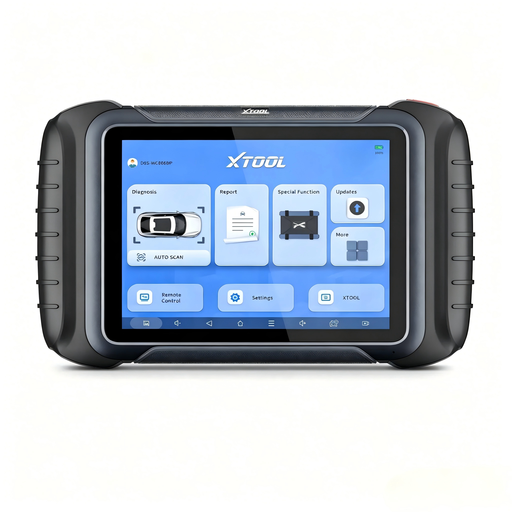
Why it stands out: The XTOOL D8S is a powerful diagnostic tablet designed for professional use and for highly demanding users. Its key strength is the intelligent topology mapping function, which graphically displays the communication structure of all ECUs, making fault relationships visible at a glance. Support for CAN FD and DoIP protocols makes it future-proof.
Pros:
Who is it for? Professional auto shops and experienced DIY mechanics who need a tool for in-depth diagnostics, coding, and complex maintenance tasks on a wide variety of vehicle brands.
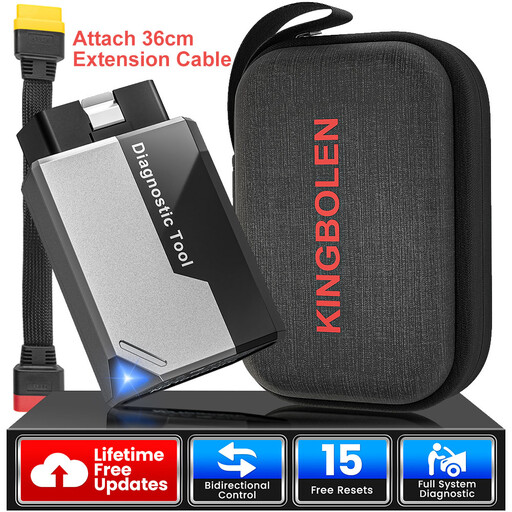
Why it stands out: The KINGBOLEN Ediag Elite is a compact OBD2 Bluetooth adapter that turns a smartphone into a powerful diagnostic tool. Its standout feature is lifetime updates for all functions, including all-system diagnostics, 15 service resets, and bi-directional control. This makes it a highly cost-effective option.
Pros:
Who is it for? Ambitious DIY mechanics and budget-conscious car owners who want a wide range of features, including bi-directional tests, without worrying about ongoing subscription costs.
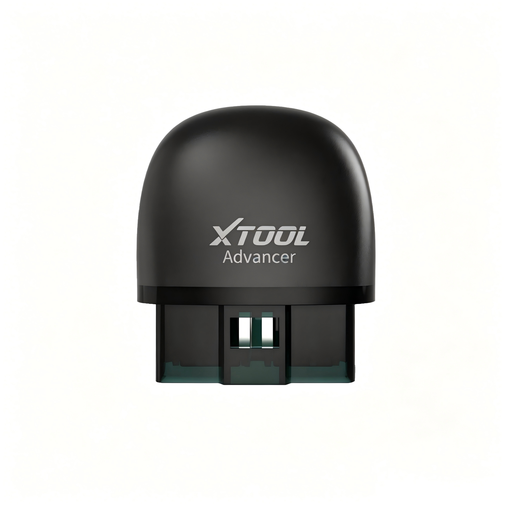
Why it stands out: The XTOOL AD20Pro is a particularly beginner-friendly and affordable OBD2 Bluetooth adapter. Despite its compact size, it offers the ability to scan all systems—a feature not commonly found in this price range. It is operated entirely through a user-friendly app for iOS and Android.
Pros:
Who is it for? Car owners looking for a simple and affordable solution to quickly read fault codes, monitor their vehicle's health, and perform basic maintenance tasks like an oil reset themselves.
The models presented here cover a wide range of needs. However, if you are looking for specific features or tools for other vehicle brands, you will find an even larger selection in our main category.
? Discover More OBD Car Diagnostic Scanners
"All systems" means the tool can access not just the engine control unit (as required by the OBD2 standard), but all electronic control units (ECUs) in the vehicle. This includes systems like the airbag (SRS), ABS, transmission, climate control, central locking, and many more. This allows for a complete, manufacturer-specific fault diagnosis.
Yes, one of the core functions of a diagnostic tool is to read and clear fault codes. After a fault code has been read, you can attempt to clear it. However, note that if the underlying cause of the fault has not been fixed, the fault code and the corresponding warning light will reappear shortly after. Safety-related faults (e.g., in the airbag or ABS system) should always be checked by a professional workshop.
CAN FD (Flexible Data-Rate) and DoIP (Diagnostics over Internet Protocol) are newer communication protocols used in modern vehicles to ensure faster and more stable data transmission. For example, CAN FD has been used in many models from General Motors (GM) and Ford since around 2020. DoIP is found in newer vehicles from BMW (E/F/G series), Jaguar, Land Rover, and Volvo. If you own or professionally work on a vehicle from these newer generations, a diagnostic tool that supports these protocols is recommended to ensure full compatibility.