People with a specific food allergy
If you need to avoid a particular ingredient, check the current ingredients list and allergen information for the exact variety. ‘Vegan’ or ‘free from’ on its own doesn’t answer this question.


If you’re looking for a protein bar with specific exclusions for movie night, choose based on the particular ingredient you need to avoid – not simply whether it’s labelled ‘vegan’ or ‘free from’. If you have a food allergy, the ingredients and allergen information on the current packaging, along with your individual medical advice, are what matter; protein content and flavour come next.
If you need to avoid a particular ingredient, check the current ingredients list and allergen information for the exact variety. ‘Vegan’ or ‘free from’ on its own doesn’t answer this question.
A chocolate or crunchy variety labelled vegan may suit your preference for a plant-based snack. Peanuts, tree nuts and possible traces are still a separate consideration.
What matters is whether the specific variety is labelled as free from the ingredient you need to avoid. You can then compare nutritional information such as protein and sugar per bar, as well as polyols.
First, work out whether you need to avoid an ingredient for medical reasons or are simply looking for a plant-based snack or one with a different nutritional profile. Then compare the information for each individual serving.
| What matters to you | What to check when buying | Who it matters to |
|---|---|---|
| Specific allergy | Check the ingredients, highlighted allergens and precautionary allergen information on the current packaging against the ingredients you personally need to avoid. | If I need to avoid peanuts or another allergen, I need information for the exact variety rather than a general ‘free from’ claim. Avoiding specific allergens is the main priority for around 33% of consumers. |
| Vegan snack | Check that the variety is labelled vegan, then also look at its ingredients and allergen information. | For a plant-based movie-night snack, I’m looking for a vegan variety, but I won’t assume that means it’s nut-free. A vegan snack is the top priority for around 20% of consumers. |
| Specific exclusion | Check the gluten, soya or lactose information for the exact variety; avoiding one doesn’t automatically mean the others are excluded. | If I mainly want to avoid gluten, soya or lactose, the variety I choose must be labelled as free from that specific ingredient. This is the main priority for around 20% of consumers. |
| Sugar and sweeteners | Compare sugar and polyols per bar, and check the information on the packaging. | When choosing a sweet snack, I want to know which sweeteners are in a serving as well as its sugar content. Around 20% of consumers prioritise sugar and sweeteners. |
| Protein and snack appeal | Compare the protein content and serving size per bar, along with the ingredients in your preferred flavour. | If I don’t have a particular ingredient to avoid, I’m mainly looking for a flavour I’ll enjoy on movie night and want to know how much protein each bar contains. This is the top priority for around 7% of consumers. |
A vegan label doesn’t tell you whether a product contains peanuts, tree nuts, soya or other allergens that matter to you. According to REWE, the vegan HEJ Double Peanut contains peanut and almond ingredients.
If you have an allergy, check the ingredients and information for the specific variety first. Then compare its vegan status, flavour and nutritional information.
A bar labelled gluten-free may still contain other allergens. The Peanut Caramel bar described by ALL STARS contains peanuts.
Decide which ingredients matter to you and check for them on the current packaging as well as checking the gluten information.
Polyols can also be important when choosing a portion: ALL STARS lists 10,9 g per 45-g bar; REWE lists 16 g per 45-g HEJ Double Peanut bar and warns that excessive consumption may have a laxative effect.
Compare sugar and polyols per bar rather than focusing on just one figure.
For allergy decisions, what matters is the exact variety you buy and its current ingredients list. Information about another variety won’t answer your question.
Check the packaging before eating the bar, especially if the online description differs from what’s on the pack.
ProFuel describes its veePRO CRISP Double Chocolate Brownie as vegan and free from gluten, soya and lactose, and lists 20 g of protein per bar.
ALL STARS describes its vegan Peanut Caramel protein bar as gluten-free and lists 14,4 g of protein per 45-g bar.
HEJ Natural offers vegan protein bars made with pea and fava bean protein in a range of dessert-inspired flavours.
This Joybuy selection features a Peanut Caramel bar described as vegan and a chocolate and raspberry variety with information to help you check for gluten. For both, the current packaging is the key reference for your individual allergen questions.
 Image unavailable
A peanut caramel variety described as vegan, ideal for movie night. If you need to avoid peanuts, soya or wheat, check the ingredients and precautionary allergen information on the current packaging. Before comparing protein content, also check the serving information on the pack.
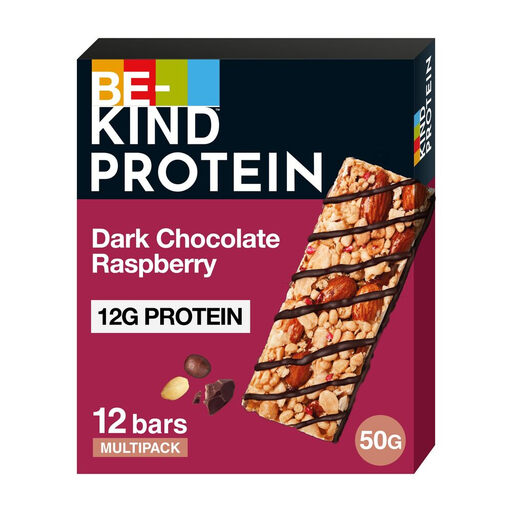 Image unavailable
A chocolate and raspberry variety where the information on the specific pack is what matters if you’re checking for gluten. Peanuts, soya and almonds are listed as ingredients; if you need to avoid milk or other nuts, check the precautionary allergen information too.
No. A vegan variety may contain peanuts, tree nuts or soya, for example. For the vegan HEJ Double Peanut, REWE lists peanut and almond ingredients, as well as possible traces of other allergens. So check the information for the variety you’re actually buying.
The German Food Federation describes this as a voluntary warning about the possible unintended presence of an allergen. It doesn’t confirm that traces are present in the bar, but it also doesn’t provide blanket reassurance if you have a relevant allergy; your individual medical advice remains the key consideration.
Check the ingredients list and highlighted allergens on the current packaging for the exact variety. EU Regulation No. 1169/2011 sets out how ingredients that cause allergies or intolerances must be declared; a separate precautionary allergen warning relates to possible unintended presence.
No, check both figures for the relevant serving. REWE lists 16 g of polyols per 45-g HEJ Double Peanut bar and warns that excessive consumption may have a laxative effect.