What to look for when buying
First decide whether you want to bake several trays at once or whether one tray, or batches baked one after another, will be enough. You can then choose the right type of oven, heating functions and cleaning features for your needs.
| Buying priority |
What to check |
Who it matters most to |
| Several trays at once |
Check the stated number of levels that can be used at the same time and whether suitable trays are included. |
If several people are shaping biscuits at the same time and you don’t want the baking session held up by individual batches, the exact details of the levels and trays matter. Around 36% of consumers put the need for several trays first. |
| Oven type and space |
For a built-in oven, check the cabinet dimensions and connection type; for a countertop model, check the external dimensions and usable tray area. |
If you don’t have a suitable built-in space or can only spare a limited amount of room, make sure the type of appliance suits the tray size you need. Around 29% of consumers prioritise available space and fit. |
| Heating function and browning |
Check whether fan and conventional top and bottom heat can be selected, and follow the recipe instructions for the biscuits you’re making. |
If you want to keep an eye on browning during a short bake and follow your own almond biscuit recipe, the right heating function matters more than extra shelf levels. Around 21% of consumers prioritise control over their recipe. |
| Cleaning and energy |
Check the cleaning system and removable parts; for appliances that require an energy label, compare the kWh figures per standardised cycle. |
If you bake often and want less cleaning to do afterwards, cleaning features and energy information can help you choose. Around 14% of consumers prioritise care and running costs. |
Joybuy ovens for baking sessions
This selection includes built-in and countertop ovens with stated baking functions. For each model, check whether it has the fan function you need for your recipe and enough tray space.
 No image available
Comfee built-in oven, 60 cm, 70 l
For a built-in setup where several levels are important: the description lists fan cooking with a rear fan and baking on several levels.
10 functions, including fan cooking and grill; 3 kW; AquaClean cleaning; energy class A.
View at Joybuy
 No image available
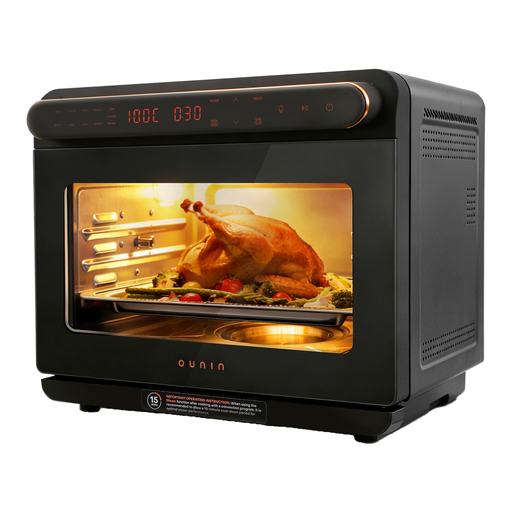
OUNIN 24L Steam Combi Oven, 10-in-1
Described as a countertop oven for smaller baking projects. Before buying, check that it has the heating function you need for your recipe.
24 l capacity, 1-litre water tank, Bake and Steam-Bake functions, and seven accessories.
View at Joybuy
 No image available
Woltu BF12sz mini oven, 32 l
A freestanding baking option; before buying, check whether this specific model has the fan function you want.
32 l, 1,600 W, temperature control from 100 to 250 °C and a 60-minute timer; one baking tray and one rack are listed as accessories.
View at Joybuy
 No image available
23L Air fryer mini oven, Dual zone
If you want to use two cooking areas at once, this model has two independent zones with settings that can be synchronised. For almond biscuits, also check that it has the right heating function and tray space.
23 l total capacity, 15 programmes and an LED touchscreen.
View at Joybuy
 No image available
Bosch Serie 6 built-in oven HBG578ES3, 60 cm
For a suitable built-in space when several levels matter: the description lists 3D hot air for up to three levels.
71 l oven cavity, 10 heating functions and pyrolytic cleaning. One baking tray is listed; three included trays are not confirmed.
View at Joybuy
Frequently asked questions
Can I use the same fan oven temperature for all almond biscuits?
No, the right setting depends on the recipe. A Dr. Oetker recipe for Canarian almond biscuits suggests around 180 °C on the fan setting rather than 200 °C with conventional top and bottom heat, with one tray on the middle shelf and a baking time of about nine minutes. For other doughs, follow the recipe and keep an eye on the browning.
Does every compact oven need an EU energy label for ovens?
No. The European Commission lists small ovens as an example of appliances outside the scope of the oven energy labelling requirements referred to. So a missing label on one of these appliances doesn’t, by itself, prove that it’s energy efficient.
Can I change the electrical connection for a built-in oven myself?
Under § 13 NAV, electrical installation work may generally only be carried out by the network operator or an installation company registered in its installer directory; the regulation includes an exception for certain maintenance work. This is not the same as plugging in an appliance fitted with a suitable plug. Before installation, check the connection type and fitting instructions for the specific oven.
What should I consider if someone at the baking session has a nut allergy?
Check in advance with everyone taking part about ingredients and any potential intolerances or allergies. Almonds are one of the tree nuts that must be declared for foods offered for sale where applicable; this doesn’t mean there’s a commercial labelling requirement for a private baking session. Using a different oven won’t make a recipe containing almonds allergy-free.
How do I compare cleaning effort and electricity use?
For ovens that require an energy label, compare the stated kWh per standardised conventional top-and-bottom-heat and fan cycle on a like-for-like basis. These figures don’t automatically show what your own baking session will cost. Pyrolytic cleaning can loosen residue, but the cleaning cycle uses additional energy.


