
Lieferung heute & morgen

Qualitätsgarantie

Willkommens-Angebote freischalten: KOSTENLOSE Lieferung | Bis zu 80 % RABATT | Kostenlose 30-Tage-JoyPlus-Testphase
App herunterladen
An aluminium frying pan can make everyday cooking easier thanks to its low weight, rapid heat absorption and coated surface. However, unclear product specifications often lead to the wrong purchase. A pan may not be suitable for an induction hob, can warp if used incorrectly or may lose its non-stick properties if cleaned in the dishwasher.
This buying guide explains which technical specifications really matter and which aluminium pan is best suited to different households and cooking habits.
An aluminium pan is not automatically suitable for induction cooking. Aluminium conducts heat, but an induction hob cannot heat it directly on its own. The pan therefore needs a magnetic base layer, usually made of stainless steel.
Look for an explicitly stated suitability for gas, electric, ceramic and induction hobs. An induction frying pan should also sit flat on the hob. The product specifications often refer to a stainless steel induction base or stainless steel induction disc.
Even a non-stick surface described as scratch-resistant or particularly hard-wearing remains a delicate component during everyday use. Metal turners, knives and scouring sponges can damage the coating. Heating an empty pan at a high temperature can also put unnecessary strain on the surface.
Wooden, silicone or plastic kitchen utensils are therefore a sensible choice for a coated frying pan. Descriptions such as “two non-stick layers” or “three-layer coating” refer to the structure of the coating, but do not guarantee a specific service life.
For some models, the manufacturer permits cleaning in the dishwasher, while for others it is expressly not recommended. Even when a dishwasher-safe frying pan is labelled accordingly, regular cleaning can expose the surface to greater wear from high temperatures, detergent and movement in the dishwasher basket than hand washing would.
Always check the specific care instructions for the model before buying. For pans that are not dishwasher-safe, warm water, mild washing-up liquid and a soft sponge are the right choice.
Forged aluminium, also searched for as a forged aluminium frying pan, generally refers to a pan body made from forged aluminium. It is not the same as a traditional iron pan. This construction can help provide a stable shape and even heat distribution.
The combination of material thickness, base construction and hob type remains important. A stainless steel base is particularly relevant for induction cooking. With thin bases or bases that do not sit evenly, heat distribution may be less uniform during everyday use.
The stated diameter usually refers to the upper rim, rather than the entire usable cooking surface. The following practical guidelines can help you choose:
A large pan on a hob that is too small can affect heat distribution. Conversely, a 20 cm pan is not always efficient on a large cooking zone.
A lightweight frying pan is easier to lift and manoeuvre. However, the weight should be assessed together with the handle and pan base. An ergonomic handle made from Bakelite or soft-touch plastic can make the pan easier to use; whether the handle is oven-safe must be stated separately in the product specifications.
For coated models, we recommend:
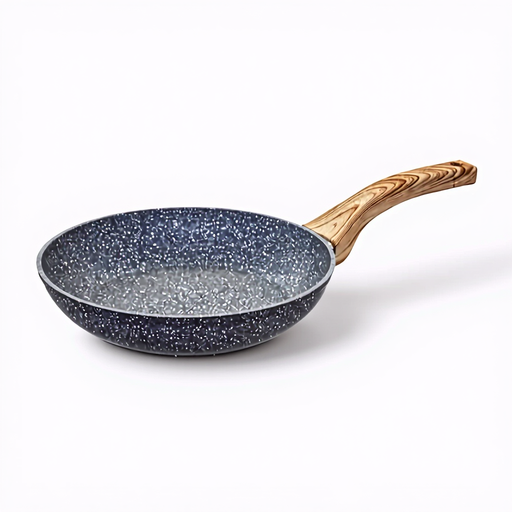
Why this product suits this profile: With a diameter of 20 cm and a weight of around 0.52 kg, this model is suitable for small portions and everyday use.
The specifications explicitly state that it has a stainless steel induction plate and is not dishwasher-safe. This makes the hob and care requirements easier to assess.
20 cm diameter, 0.52 kg weight and a non-stick coating described by the product information.
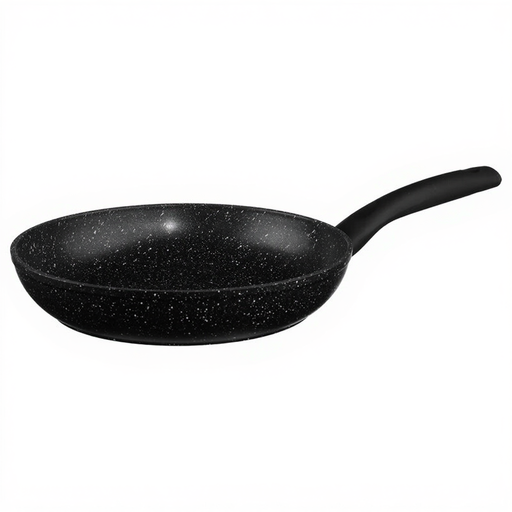
Why this product suits this profile: The 26 cm size combines a versatile cooking surface with a stated weight of 0.75 kg.
The product description specifies 2.2 mm forged aluminium, a 3 mm-thick stainless steel base and hand washing as the recommended care method.
Three-layer non-stick coating, stainless steel base and ergonomic Bakelite handle according to the product specifications.
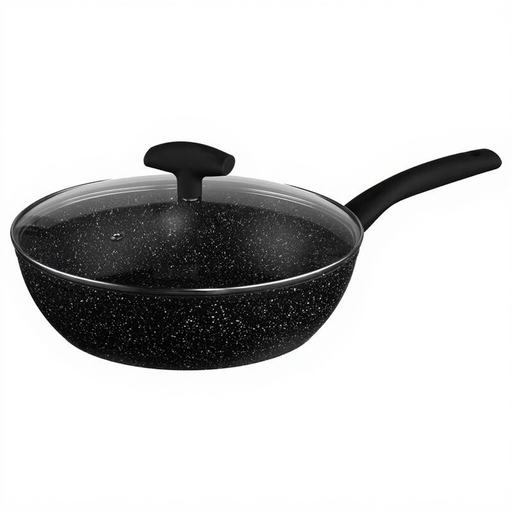
Why this product suits this profile: The 28 cm sauté pan with glass lid is suitable for larger portions, slow-cooked dishes and food whose cooking process you want to monitor.
The description specifies a stainless steel induction base and recommends hand washing. This means hob compatibility and care are not assessed solely by the coating.
28 cm diameter, glass lid, soft-touch handles and suitability for various hob types according to the product specifications.
An individual pan is a sensible choice if you want to replace a specific size. For one or two people, a 20 or 24 cm pan is often sufficient. Households that cook different portion sizes may benefit from a set. The 7-piece forged aluminium cookware set includes, among other items, a 20 cm and a 24 cm frying pan, as well as additional pots and glass lids.
Before buying a set, check whether you will genuinely use all the included pieces, which hob types they support and whether the care instructions apply to every item. A set of two Caractère pans measuring 24 and 28 cm can be a space-saving alternative to buying several individual pans.
We have put together a complete, regularly updated list of products that fully meet these strict selection criteria and the safety regulations applicable in the EU.
No. Aluminium needs a magnetic base for induction cooking, often made of stainless steel. Look for clear labelling as an induction frying pan or for information specifying a stainless steel induction base.
A 24 cm frying pan is sufficient for many everyday dishes. For smaller portions or individual eggs, a 20 cm pan may be more practical. If you regularly fry several ingredients at the same time, a 26 or 28 cm pan provides more space.
There is no standard service life that applies in every case. It depends on factors including the type of coating, temperature, utensils used and cleaning method. Low to medium heat, hand washing and soft kitchen utensils can help protect the surface during everyday use.