
Lieferung heute & morgen

Qualitätsgarantie

Willkommens-Angebote freischalten: KOSTENLOSE Lieferung | Bis zu 80 % RABATT | Kostenlose 30-Tage-JoyPlus-Testphase
App herunterladen
An aluminium pan can heat up quickly in everyday use, is relatively lightweight, and is suitable for frying, sautéing or braising. However, not every model leads to the right purchasing decision. Features such as "scratch-resistant", "suitable for all hob types" or "dishwasher-safe" are often mentioned, without the details matching how you'll actually use it.
This buying guide from the Joybuy Product Recommendation Officer shows what hobby cooks, families and households in the UK should look for when buying aluminium frying pans.
An aluminium pan is not automatically an induction pan. Pure aluminium is generally not recognised directly by an induction hob. For that, you usually need a magnetic stainless steel base or an induction disc.
If you have an induction hob, you should therefore look specifically for "induction" or a corresponding stainless steel base in the product details. Different requirements apply for gas, electric and ceramic hobs. The size of the base area must also match your hob so that the heat is transferred as evenly as possible.
A coated frying pan makes it easier to release delicate foods. However, the coating does not automatically remain intact forever. Metal utensils, abrasive sponges, high heat when empty and sudden temperature changes can damage the surface.
Even with a pan described as dishwasher-safe, hand washing with a soft sponge can be gentler on the coating. You should check the manufacturer's instructions for cleaning and maximum temperature before buying and before first use.
The specification "28 cm" usually describes the top diameter, not necessarily the usable frying surface. High sides, a smaller base or a wide rim can affect the actual capacity.
For single portions, a 20 cm frying pan is often sufficient. Two to three portions are usually better prepared in a 24 cm frying pan. For family meals, a 28 cm frying pan or a 30 cm frying pan come into consideration. With high sides, it is often more of a braising pan or sauté pan than a flat frying pan.
Aluminium conducts heat quickly. However, pressed, forged or cast aluminium can differ in weight, stability and build height:
For induction, a suitable base is also required. A stainless steel base can enable use on induction, electric, ceramic and gas hobs, provided this is explicitly stated in the product data.
With a non-stick pan, you should pay attention to the number and type of coating layers, recommended utensils and cleaning instructions. Details such as "two layers" or "three-layer non-stick coating" are technical product features, but not a guarantee of a specific lifespan.
For everyday use, wooden, silicone or plastic utensils are a careful choice. The pan should not be heated empty on a high setting for a long time. If you see visible peeling or deep scratches, the pan should no longer be used.
A fixed handle requires less additional equipment, but can take up more space when storing. A removable handle can be practical for small kitchens, camping or storage. With the 5five Simply Smart 20 cm, the handle is not included; the model is designed for a separate, compatible handle system.
A frying pan with a lid or a tall sauté pan is useful if you want to sear ingredients first and then cook them through. For oven use, you must check the temperature limit and handle material. A glass lid allows you to see the cooking process, but it also gets hot and should be handled with care.
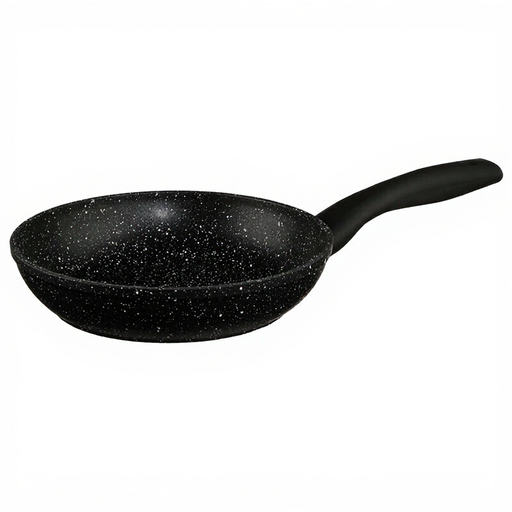
Why this product fits the profile: With a 20 cm diameter and a stated weight of 0.471 kg, this pan is suitable for single portions, fried eggs or small side dishes. According to the product details, it is suitable for gas, electric, ceramic, halogen and induction hobs.
The hob compatibility and capacity of 1.9 litres are clearly stated. The pan is not dishwasher-safe, which makes the care requirements transparent.
Forged aluminium, non-stick coating and comparatively low weight. Hand washing with a soft sponge is recommended.
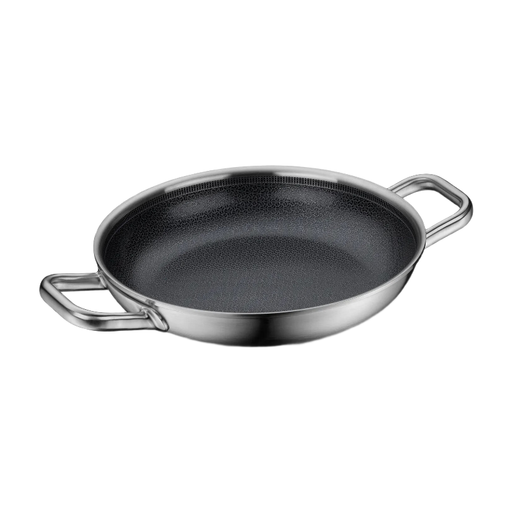
Why this product fits the profile: This 24 cm serving pan combines an aluminium core with stainless steel and is, according to the product details, suitable for induction, gas, electric, ceramic hobs and the oven.
The three-layer construction, the aluminium core and the stated hob compatibility are clearly named. The permitted oven temperature should be checked before use.
PermaDur coating with stainless steel structure, ergonomic stainless steel handle and dishwasher suitability according to the product description.

Why this product fits the profile: This deep 28 cm pan comes with a glass lid, steamer insert and spatula. It is aimed at households that want to fry, steam and prepare larger quantities in one vessel.
The accessories are described as part of the delivery contents, rather than just being mentioned as an optional extra. Suitability for induction and other hob types is stated.
Two-layer non-stick coating, deep design and four-piece set. The soft-touch handles are reportedly made from Bakelite.
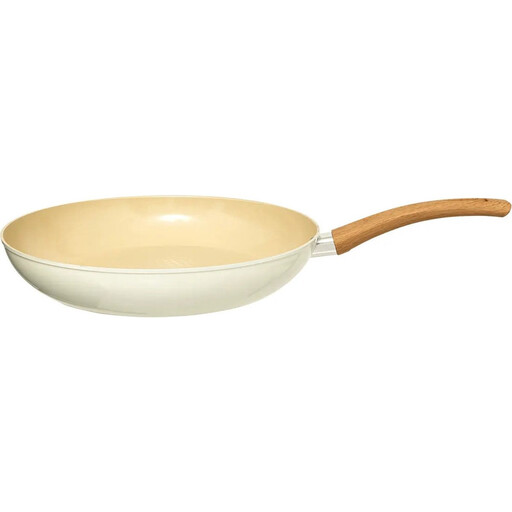
Why this product fits the profile: The 30 cm diameter and stated usable volume of 5.6 litres offer space for larger portions. A stainless steel induction disc extends its use to different hob types.
The actual dimensions, volume and material details are listed separately. This makes it easier to assess whether the pan will fit in your cupboard and dishwasher.
Forged aluminium, two non-stick layers, soft-touch handle and stated dishwasher suitability. Hand washing is recommended for a longer lifespan.
We have put together a complete, regularly updated list of products that fully meet these strict selection criteria and the safety regulations in force in the EU.
Not automatically. Models that are explicitly stated as induction-compatible and have a suitable magnetic stainless steel base are suitable. The product description should clearly contain this information.
A 28 cm or 30 cm frying pan offers more surface area for several portions. A tall braising pan can also be practical for sauces, vegetable dishes and stews. Alongside the diameter, the base area, height, weight and available capacity are also decisive factors.
It is not possible to give a reliable general figure for a fixed lifespan. It depends on temperature, cleaning, the kitchen utensils used and the frequency of use. Gentle handling, medium heat and hand washing can put less strain on the surface. If the coating is damaged or peeling, the pan should be replaced.