
Lieferung heute & morgen

Qualitätsgarantie

Willkommens-Angebote freischalten: KOSTENLOSE Lieferung | Bis zu 80 % RABATT | Kostenlose 30-Tage-JoyPlus-Testphase
App herunterladen
A modern aluminum induction pot makes many promises: it's a lightweight pot, ensures rapid heat distribution, and is easy to clean thanks to its non-stick coating. In practice, however, not all models live up to these claims. Many buyers soon discover that their new pot heats up slowly on the induction hob, or that the coating begins to fail after just a few months.
As a Joybuy Product Recommendation Officer, I'm here to help you identify the common pitfalls and establish the right criteria for your choice. This guide focuses on the technical features that truly matter, enabling you to make an informed decision.
Marketing terms can be misleading. Watch out for these two common issues to avoid disappointment:
To avoid the problems mentioned above, you should check three core parameters before buying. These determine the performance, durability, and safety of your cookware.
An induction pot requires a ferromagnetic base for the hob's magnetic field to generate heat. For aluminum pots, a special magnetic stainless steel plate is bonded into the base.
The coating not only prevents food from sticking but also influences the pot's durability and ease of care.
Regardless of the type, always use wooden or silicone utensils and avoid heating the empty pot on high to maximize the coating's lifespan.
Aluminum is popular for its low weight. However, there are differences in manufacturing that affect its stability.
Also, pay attention to the handles. They should be ergonomically shaped and heat-insulated (e.g., made of Bakelite or coated with silicone) to allow for safe handling without pot holders.
Here are some models that represent a considered choice for different user profiles, based on the criteria above.
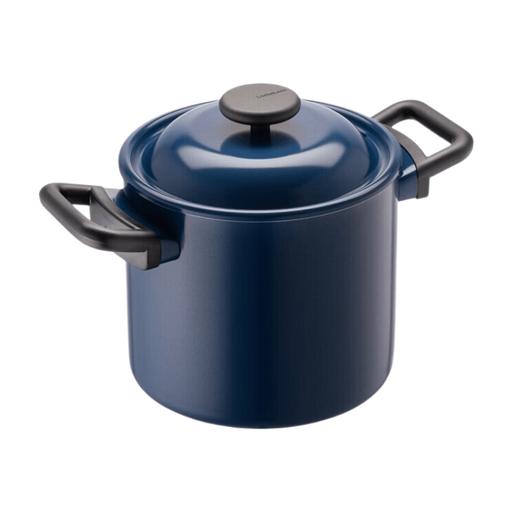
Why This Fits Their Persona: Ideal for daily use. This pot combines a lightweight design with an easy-to-clean ceramic coating and is designed for all hob types, including induction. Perfect for soups, stews, or pasta.
The full-surface induction base ensures reliable and even heating. The ceramic coating on the inside and outside makes cleaning easy and is durable with proper care.
Heat-resistant Bakelite handles for safe handling; suitable for all hob types; easy-to-clean ceramic coating.
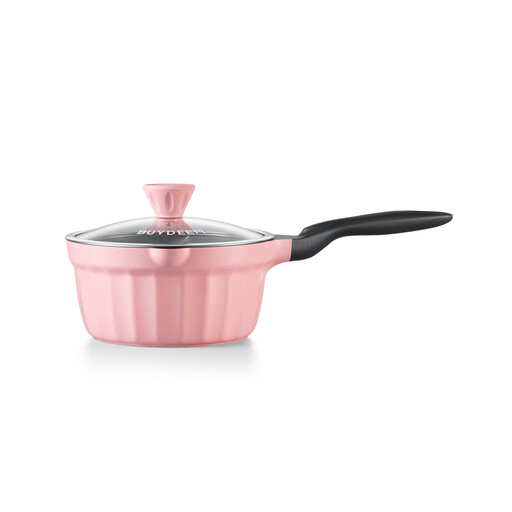
Why This Fits Their Persona: This aluminum saucepan is designed for users who value material quality. According to the manufacturer, the Swiss ceramic coating is free of PFAS, PFOS, and PFOA. The cast aluminum body ensures stability and even heat conduction.
The robust cast aluminum construction prevents warping and ensures efficient heat absorption on induction hobs. The high-quality ceramic coating is designed for durability.
PFAS/PFOA-free Swiss ceramic coating; stable cast aluminum body; practical pouring spout for drip-free serving.
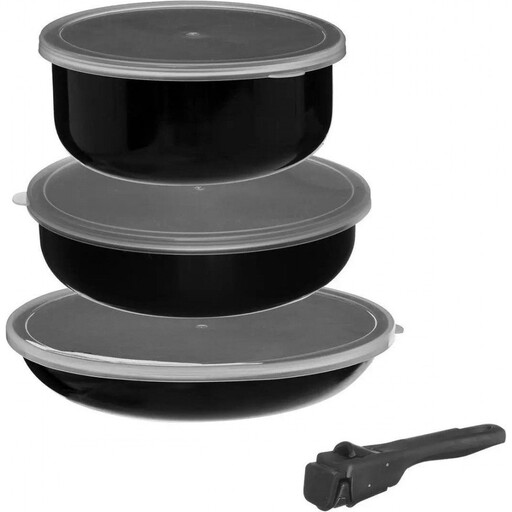
Why This Fits Their Persona: This set is a solution for kitchens with limited storage space. The removable handle allows the pots to be stacked compactly. The set is also suitable for all hob types, including induction.
This set bypasses the problem of impractical fixed handles. The removable handle is a functional solution that not only saves space but also simplifies cleaning and storage.
Extremely space-saving due to its stackable design and removable handle; versatile for use on all hob types; set includes three different pot sizes.
We have compiled a complete, real-time updated list of products that fully meet these strict selection criteria and relevant safety standards.
The most reliable sign is the induction symbol (a coil inside a square) on the pot's base or packaging. Additionally, you can hold a magnet to the base. If it adheres strongly and flatly across the surface, the pot is suitable for induction. A weak magnetic pull indicates a low-quality ferromagnetic layer.
To extend the life of a ceramic coating, you should wash the pot by hand with a soft sponge and mild dish soap. Avoid metal utensils and abrasive scouring pads. Do not heat the empty pot on the highest setting, and let it cool down before washing to prevent thermal shock.
Not necessarily. While a lightweight pot is comfortable to handle, a certain minimum weight is necessary for stability and even heat distribution. Extremely light pots tend to warp at high temperatures and can be unstable on the hob. A good compromise is a cast aluminum pot, which combines stability with a moderate weight.