
Lieferung heute & morgen

Qualitätsgarantie

Willkommens-Angebote freischalten: KOSTENLOSE Lieferung | Bis zu 80 % RABATT | Kostenlose 30-Tage-JoyPlus-Testphase
App herunterladen
Choosing the right RAM is crucial for the performance of a modern PC, especially for AMD systems. A DDR5 6000 CL30 32GB kit is often considered the sweet spot, but the market is flooded with technical specs and marketing terms that confuse more than they clarify. Before you make a decision, it's important to understand the most common pitfalls to avoid a bad investment.
By a Joybuy Product Recommendation OfficerPublished July 28, 2026
Selecting RAM can quickly become overwhelming. Many users invest in expensive modules that ultimately fail to deliver the expected performance. Here are the three most common mistakes you should avoid:
To avoid these mistakes, you should focus on three core technical parameters. These determine whether a 32GB DDR5 6000MHz kit can unleash its full potential in your system.
For current AMD Ryzen processors, a combination of 6000 MT/s and a CAS Latency of 30 (CL30) has proven to be the ideal sweet spot. This value harmonizes perfectly with the CPU's Infinity Fabric Clock (FCLK), leading to synchronous and highly efficient data processing. This configuration offers a balanced ratio of high bandwidth and fast access times, which directly translates to higher frame rates in games and better system responsiveness.
AMD EXPO RAM is specifically designed and validated for AMD platforms. Instead of having to manually adjust timings and voltages in the BIOS, EXPO allows you to activate the performance profile with a single click. This ensures your DDR5 for AMD runs stably at the advertised 6000 MT/s and CL30 timings. It's the most important feature for a straightforward and reliable performance boost.
While 16 GB may still be sufficient for basic applications, a 32 GB kit (consisting of two 16 GB modules) has established itself as the standard for demanding gaming, streaming, and content creation. It provides enough headroom to ensure smooth performance even with multiple programs running simultaneously or in future, more memory-intensive games.
Based on these criteria, we have identified several products suited for different user profiles and their requirements.
Why This Fits Their Persona: This kit is designed for users who want to get the absolute maximum out of their AMD system. It hits the performance sweet spot of 6000 MT/s at CL30 and is explicitly certified for AMD EXPO.
Thanks to AMD EXPO support, it bypasses the compatibility trap and ensures stable performance with a single click in the BIOS. It focuses on the optimal balance of speed and latency rather than a single, misleading metric.
Specifically optimized for AMD platforms; low CL30 latency for maximum responsiveness; also supports Intel XMP 3.0 for cross-platform flexibility.
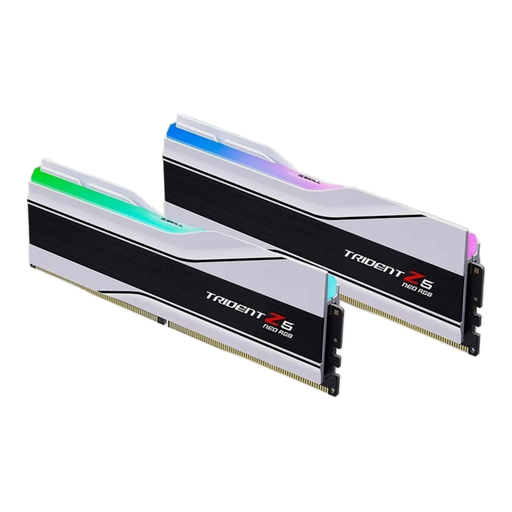
Why This Fits Their Persona: For users where looks are just as important as performance. This kit combines the ideal 6000/CL30 spec with an elegant white heat spreader and a customizable RGB light bar.
The RGB lighting is compatible with software from major motherboard manufacturers (like ASUS Aura Sync, MSI Mystic Light, etc.). This avoids the incompatible lighting trap and allows for seamless synchronization.
Combines high performance with appealing aesthetics; synchronizable RGB lighting; elegant dual-texture design in white.
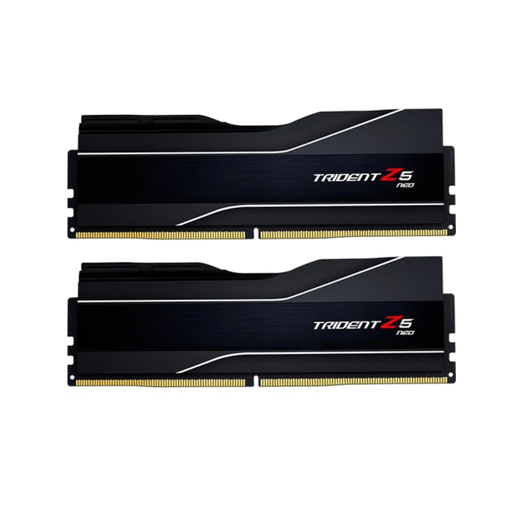
Why This Fits Their Persona: Ideal for users seeking high performance at a reasonable price. This kit also offers 6000 MT/s and AMD EXPO support, but with a slightly higher latency of CL32, which often provides a price advantage.
This kit intentionally omits RGB lighting and its associated premium. The focus is purely on core performance and AMD compatibility, thus avoiding the "overpaying for aesthetics" trap.
Attractive price-to-performance ratio; full AMD EXPO support for easy configuration; simple, low-profile design.
We have compiled a complete, real-time updated list of products that fully meet these strict selection criteria and local regulations.
No, not if you purchase a kit with AMD EXPO support. After installing the modules, you just need to enter your motherboard's BIOS/UEFI and enable the EXPO profile. The system will then automatically configure all the necessary timings, frequencies, and voltages for stable operation at 6000 MT/s and CL30.
Yes, for the vast majority of use cases, 32 GB is a very future-proof choice. Current and upcoming games are well-served by this capacity. It also provides sufficient headroom for parallel streaming, using voice chat applications, and keeping browser tabs open while gaming. Only for extremely professional workloads like high-resolution video editing or complex simulations might 64 GB be beneficial.
For most users, the difference in real-world application is minor and often only measurable in synthetic benchmarks. CL30 theoretically offers faster access times, which can lead to minimally higher frame rates (in the 1-3% range) in certain CPU-bound gaming scenarios. For budget-conscious buyers, a CL32 kit can be an excellent alternative, as the performance difference is barely perceptible in daily use, but the cost savings can be significant.