
Lieferung heute & morgen

Qualitätsgarantie

Willkommens-Angebote freischalten: KOSTENLOSE Lieferung | Bis zu 80 % RABATT | Kostenlose 30-Tage-JoyPlus-Testphase
App herunterladen
An AMD Ryzen 9 processor is designed for users who need more headroom for gaming, streaming, rendering or multitasking than a typical mid-range chip can offer. However, the model name alone isn’t enough to make an informed choice. There are significant differences in platform, cooling, memory and intended use between a Ryzen 9 9900X, an AMD Ryzen 9 9950X3D and a Threadripper.
A boost clock of 5.5 or 5.7 GHz sounds impressive at first. However, it doesn’t automatically tell you how well a processor will perform in every programme. Games often benefit from cache and low latency, while rendering, software compilation and video editing make extensive use of cores and threads.
That’s why the combination of core count, architecture, cache, power consumption and application matters more than a single clock speed.
3D V-Cache can reduce the time it takes for a processor to access data in certain games. But that doesn’t mean every creative programme or professional application will benefit to the same extent. If you mainly export videos, render 3D scenes or use virtual machines, you should also consider the number of cores and threads.
Many Ryzen 9 models are sold as processors without a cooler. A suitable air or liquid cooler is an essential part of planning a system with high-performance variants rated at 120 or 170 W TDP. You’ll also need a compatible AM5 motherboard, DDR5 memory and, in some cases, a BIOS update.
The AMD Ryzen Threadripper 7980X requires the sTR5 socket, not AM5. It also needs a platform with quad-channel DDR5 and cooling suitable for up to 350 W TDP.
A modern AM5 processor requires an AM5 motherboard. Depending on the model and BIOS version, compatible chipsets may include B650, B850, X670 or X870. Check the motherboard manufacturer’s support page to confirm compatibility before buying.
AM5 Ryzen 9 models use DDR5 memory. For many desktop systems, two identical memory modules running in dual-channel mode are a practical starting point. Higher capacities may be worthwhile for professional workloads. The officially supported memory speed depends on factors including the module configuration and motherboard.
A 12-core processor with 24 threads, such as the Ryzen 9 9900X, is well suited to gaming, streaming and running multiple applications at once. A 16-core processor with 32 threads, such as the Ryzen 9 9950X or 9950X3D, offers more resources for heavily multithreaded tasks.
With 64 cores and 128 threads, the Threadripper 7980X belongs to a different platform class. Its extra cores are most useful when applications make sustained use of many threads. An sTR5 platform is generally unnecessary for a gaming-only PC.
According to the product specifications, the Ryzen 9 9900X has 64 MB of L3 cache, while the Ryzen 9 9900X3D and Ryzen 9 9950X3D each have 128 MB of L3 cache. A larger cache can make a difference in games, depending on the title and graphics card. Actual performance still depends on the overall system configuration.
As a PCIe 5.0 CPU, an AM5 Ryzen 9 model can support modern graphics cards, NVMe SSDs and other components with the relevant interface. The motherboard must also provide the PCIe lanes and slots you need.
Be sure to check the TDP too: the Ryzen 9 9900X is rated at 120 W, while the Ryzen 9 9950X3D and Ryzen 9 9950X are rated at 170 W, so each needs suitable cooling. The Ryzen 9 9900X3D is offered as a tray version without a cooler. Box versions of the models mentioned don’t necessarily include a cooler either.
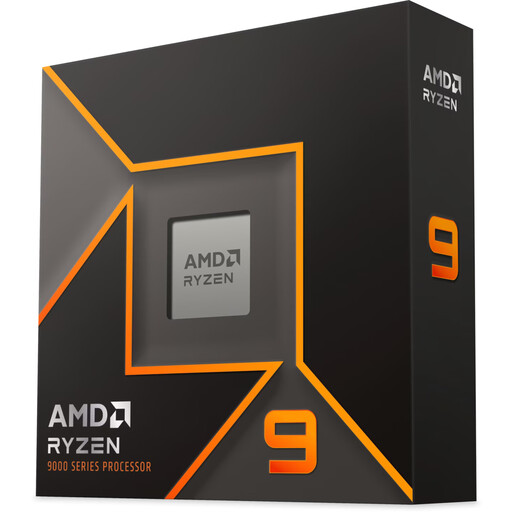
Why this product suits this profile: With 12 cores, 24 threads, an AM5 socket and a 120 W TDP, this processor provides a clearly defined foundation for a versatile desktop PC.
The specifications—4.4 GHz base clock, up to 5.6 GHz boost clock, DDR5 and PCIe 5.0—make it easier to plan your system. Remember to budget for a separate cooler.
12 cores, 24 threads, integrated AMD Radeon Graphics and an unlocked multiplier.
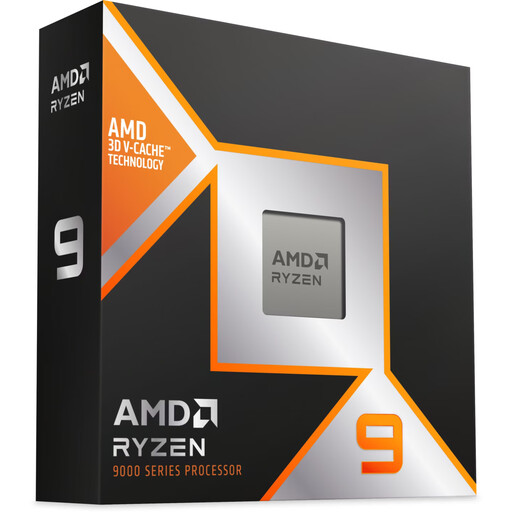
Why this product suits this profile: With 16 cores, 32 threads, 128 MB of L3 cache and AM5 support, this processor is designed for gaming and multitasking on a desktop PC.
The key specifications show why you need to consider more than the X3D suffix: core count, DDR5 and PCIe 5.0 matter too. A robust cooling solution is essential for its 170 W TDP.
16 cores, 32 threads, up to 5.7 GHz boost clock and 20 PCIe Gen 5 lanes, according to the product specifications.
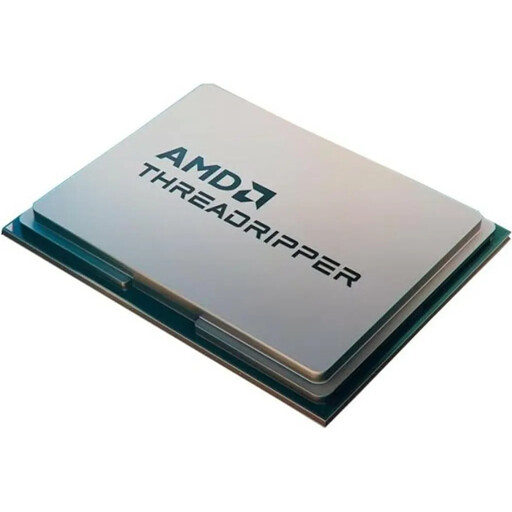
Why this product suits this profile: Its 64 cores and 128 threads are ready for professional rendering, simulation, development and virtualisation tasks.
The separate sTR5 platform helps prevent you from planning an incompatible AM5 build. You’ll need to budget for extra components, as this processor has a 350 W TDP, no integrated graphics and no cooler included.
64 cores, 128 threads, 256 MB of L3 cache, PCIe 5.0 and quad-channel DDR5 support.
Not every buyer needs a desktop they can configure themselves. The MSI Katana A15 AI B8VG-459 combines an eight-core, 16-thread AMD Ryzen 9 8945HS with a GeForce RTX 4070, 16 GB of DDR5 RAM and a 1 TB PCIe 4.0 SSD. Its 15.6-inch Full HD display has a 144 Hz refresh rate, and the device weighs 2.25 kg according to the product specifications.
This laptop is aimed at users looking for a portable gaming processor in a system with components that are already matched to work together. Before buying, make sure its upgrade options, battery life, display and noise levels suit the way you plan to use it. See the MSI Katana A15 AI B8VG-459.
We’ve put together a complete, regularly updated list of products that meet these strict selection criteria and fully comply with the safety regulations in force in the EU.
For a mix of uses, consider models with 12 or 16 cores. The Ryzen 9 9900X has 12 cores and 24 threads, while the Ryzen 9 9950X and Ryzen 9 9950X3D each have 16 cores and 32 threads. 3D V-Cache may be useful for gaming, while rendering and exports also depend on core count and software support.
Not necessarily. The right choice depends on the TDP, case ventilation, cooler compatibility and how quiet you want your system to be. With 170 W models or sustained heavy workloads, a high-performance liquid cooler may be a good option. The processors mentioned don’t automatically come with a cooler.
How long it remains suitable depends on your tasks, graphics card, memory and personal performance requirements. An AM5 system with DDR5 and PCIe 5.0 gives you a modern foundation, but you should still check motherboard compatibility. Regular BIOS, chipset and operating system updates, along with effective cooling, help keep your system running reliably.