
Lieferung heute & morgen

Qualitätsgarantie

Willkommens-Angebote freischalten: KOSTENLOSE Lieferung | Bis zu 80 % RABATT | Kostenlose 30-Tage-JoyPlus-Testphase
App herunterladen
An AMD Ryzen processor can be the foundation of a fast gaming PC, a quiet work computer or a professional workstation. However, model names alone reveal little about whether a CPU is suitable for your system. Between a Ryzen 5, Ryzen 9 and an AMD Ryzen Threadripper, there are significant differences not only in performance, but also in socket, memory, cooling and platform costs.
If you focus only on the highest clock speed or the greatest number of cores, you risk making the wrong purchase. What really matters is the combination of intended use, motherboard, memory, graphics card and cooling solution.
An AM5 processor will not fit an AM4 motherboard. A Threadripper CPU likewise requires a motherboard with an sTR5 CPU socket. A processor that looks similar is therefore not automatically compatible. Before buying, check the motherboard socket, supported CPU type and BIOS version.
The product information provided for the Ryzen 5 8400F contains conflicting socket details. The model is offered as an AM5 processor with DDR5 support, but some specifications list AM4 instead. Any such discrepancies should be clarified directly using the latest information from the manufacturer and retailer before purchase.
The term box processor initially describes the type of packaging, but does not guarantee that every model includes a cooler. A processor without a cooler requires an additional cooling solution that is suitable for its power consumption and socket. Ryzen 9 and Threadripper models in particular require careful planning for heat dissipation.
The Ryzen 7 8700F, for example, is listed as a BOX version with an AMD Wraith Stealth cooler. The tray or OEM version of the same model, on the other hand, is offered without a cooler. Always check the exact contents of the package on the relevant product page.
Multiple cores are particularly useful for rendering, video editing, simulations and extensive multitasking. For gaming, single-core performance, cache, graphics card, resolution and the software being used are also important. A gaming CPU should therefore not be selected based solely on the number of threads.
A high boost clock is not a permanently guaranteed all-core clock speed either. The actual frequency depends, among other things, on temperature, motherboard, BIOS settings and the power limit.
For current desktop Ryzen models, Socket AM5 is relevant. This platform uses DDR5 memory and supports PCIe 4.0 or PCIe 5.0, depending on the chipset. Before installation, check the motherboard manufacturer’s CPU compatibility list and the required BIOS version.
Threadripper models use sTR5. This platform is designed for heavy workloads and differs completely from AM5 in terms of motherboard, memory channels and cooler. An sTR5 motherboard is therefore an essential additional investment.
The number of cores and threads provides an initial indication of parallel processing performance:
A large L3 cache can reduce data access times in certain games and applications. However, the actual impact depends on the software in question. According to the product information, the Ryzen 9 9900X3D has 128 MB of L3 cache and 3D V-Cache technology.
TDP is an important planning value for the cooler and case ventilation, but it is not the same as the system’s total power consumption. The Ryzen 9 9950X is specified at 170 W and is offered without a cooling solution. Threadripper models such as the Threadripper 7960X and Threadripper PRO 7975WX are listed with a 350 W TDP. They require a suitable cooler and a motherboard with an appropriate power delivery system.
You should also ensure:
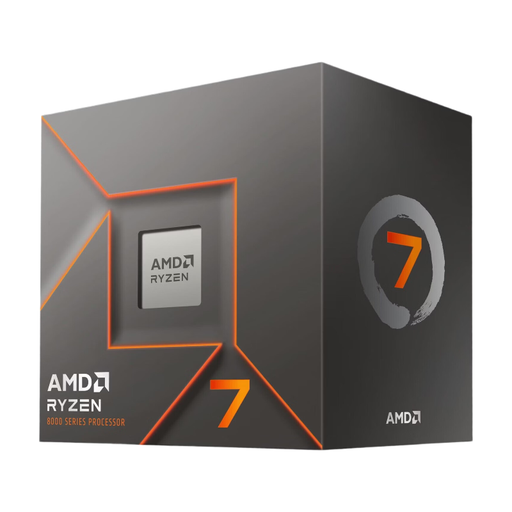
Why this product suits this profile: 8 cores, 16 threads, boost speeds of up to 5.0 GHz and a stated TDP of 65 W make it suitable for a versatile AM5 desktop with a dedicated graphics card.
The BOX version is listed with an AMD Wraith Stealth cooler. As there is no integrated graphics, you will need to allow for a dedicated graphics card.
Zen 4 architecture, AM5 compatibility and 8 cores with 16 threads. The specifications also mention Ryzen AI with up to 16 TOPS.
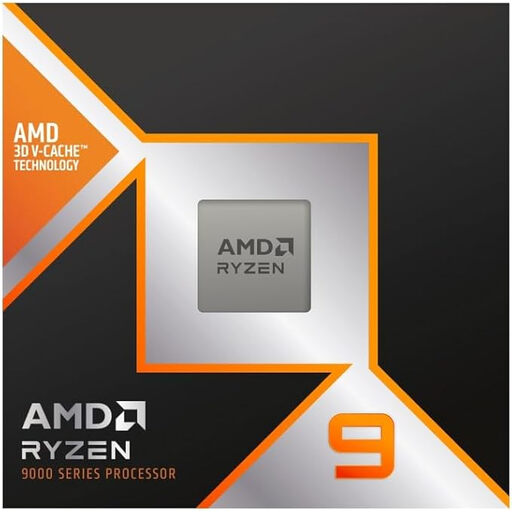
Why this product suits this profile: This Zen 5 CPU is aimed at users who want to combine gaming, rendering, streaming and demanding desktop applications in an AM5 system.
The product information explicitly states that the processor is supplied without a cooler. This allows you to choose a cooling solution suited to the 170 W TDP, but it must be budgeted for separately.
16 cores, 32 threads, boost speeds of up to 5.7 GHz and 80 MB of combined L2/L3 cache according to the product description.
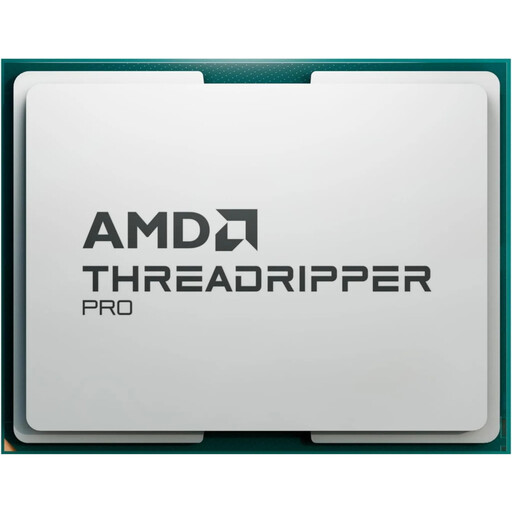
Why this product suits this profile: A workstation CPU for rendering, simulations, data processing and other tasks that make sustained use of numerous parallel threads.
The sTR5 format, support for eight DDR5 memory channels and 350 W TDP make the required platform and cooling investment clear.
32 cores, 64 threads, boost speeds of up to 5.3 GHz and 148 PCIe 5.0 lanes according to the stated technical specifications.
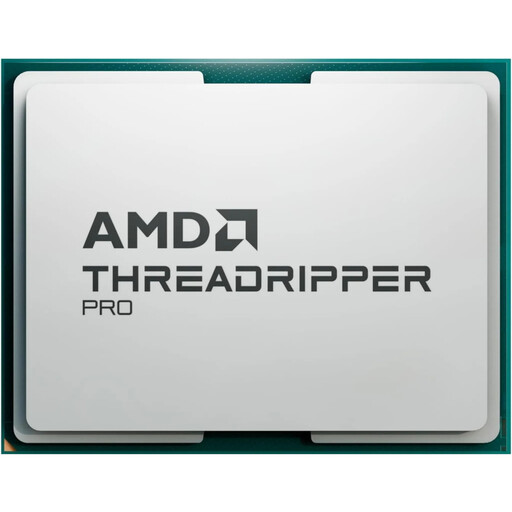
Why this product suits this profile: 64 cores and 128 threads are designed for highly parallelised professional software, including 3D rendering, simulations and large-scale data processing.
The clear sTR5 and DDR5 specification prevents confusion with standard AM5 desktop CPUs. According to the specifications, the cooler is not included and must be suitable for 350 W.
256 MB of L3 cache, eight DDR5 memory channels and 148 PCIe 5.0 lanes according to the product data.
We have put together a complete, regularly updated list of products that fully meet these strict selection criteria and the safety regulations applicable in the EU.
Depending on your graphics card and budget, Ryzen 5, Ryzen 7 or Ryzen 9 models may be suitable for gaming. Alongside clock speed, cache, platform, game resolution and refresh rate are also important. A model such as the Ryzen 7 8700F is designed for an AM5 system with a dedicated graphics card. X3D models such as the Ryzen 9 9900X3D also use a large L3 cache and are aimed at users with a particular focus on gaming.
With correct installation, sufficient cooling and a stable power supply, a CPU can be used for many years. Its service life depends more on temperature, voltage, operating time and overclocking than on the model name itself. BIOS and chipset updates should be obtained from the motherboard manufacturer or AMD.
Power consumption depends on usage and settings. Ryzen 9 models with a 120 or 170 W TDP require suitable cooling and power delivery. Threadripper and Threadripper PRO CPUs with a 280 to 350 W TDP are designed for high-performance workstations and can require considerably more energy under full load than typical desktop processors.