
Lieferung heute & morgen

Qualitätsgarantie

Willkommens-Angebote freischalten: KOSTENLOSE Lieferung | Bis zu 80 % RABATT | Kostenlose 30-Tage-JoyPlus-Testphase
App herunterladen
An AMD Ryzen processor shouldn’t be chosen on model number or clock speed alone. Many buying mistakes only come to light when it’s time to install the CPU: the socket doesn’t match the motherboard, the cooler you need isn’t included, or a tray CPU is mistaken for a retail-packaged one.
For gamers, content creators, streamers and system builders, three common pitfalls are particularly worth watching out for:
Checking the socket is the first technical step before you buy. For existing systems, AM4 processors such as the Ryzen 5 5600X or Ryzen 7 5700X are often worth considering. This platform uses DDR4 and supports PCIe 4.0, depending on the motherboard.
A newer AM5 processor, such as the Ryzen 5 7600X, Ryzen 9 9900X or Ryzen 9 9900X3D, needs an AM5 motherboard and DDR5 memory. BIOS versions can also matter, depending on the chipset. Before installing the CPU, check the motherboard manufacturer’s CPU compatibility list.
There are other platforms for professional workstations:
So, moving from AM4 to AM5 usually means replacing not just the CPU, but also the motherboard and memory.
A 6-core processor with 12 threads is suitable for many gaming PCs, office tasks and multi-threaded applications. An 8-core processor with 16 threads offers extra headroom for streaming, video editing and multitasking.
For regular content creation or complex calculations, 12, 24 or more cores may be a good fit. Threadripper models are designed for workstation tasks, with 24, 32 or 64 cores and a corresponding number of threads.
Cache helps the processor access frequently used data quickly. Some gaming models feature 3D V-Cache. According to the product specifications, the AMD Ryzen 9 9900X3D has 128 MB of L3 cache, along with 12 cores and 24 threads. However, the effect on performance depends on the game, graphics card, motherboard and settings.
TDP is an important guide when planning your cooling and system. It doesn’t simply describe the processor’s total power consumption, but can help you choose a suitable cooling solution.
The AMD Ryzen 5 5600X is rated at 65 W TDP, while the Ryzen 9 9900X3D is rated at 120 W and Threadripper PRO models at up to 350 W. If your CPU doesn’t include a cooler, you’ll need to factor in a compatible air or liquid cooler separately.
Before you buy, check:
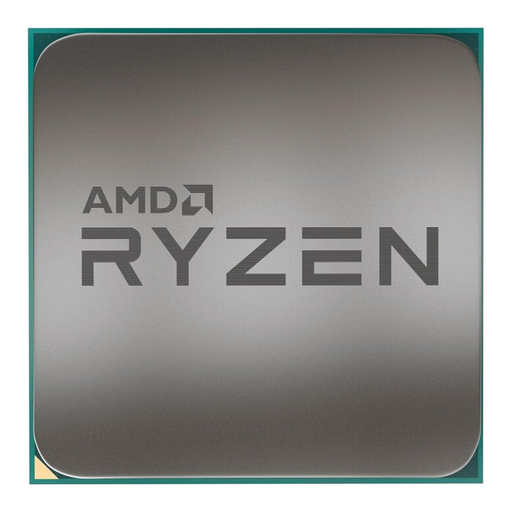
Why this product suits this profile: This 6-core processor with 12 threads is a good option for upgrading an AM4 system if you already have a compatible motherboard and DDR4 memory.
The specifications clearly state AM4 socket, DDR4 and PCIe 4.0. The tray version is explicitly supplied without a cooler or retail packaging.
6 cores, 12 threads, boost clock of up to 4.6 GHz and 65 W TDP, according to the product specifications.
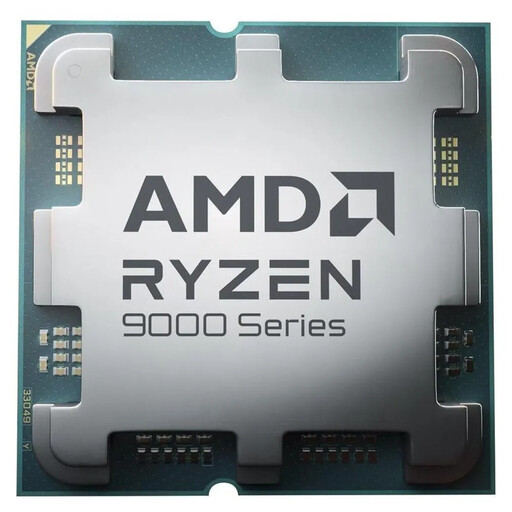
Why this product suits this profile: With its AM5 platform, Zen 5 architecture, 12 cores and 3D V-Cache, this processor is aimed at users who want to combine gaming with demanding applications.
The AM5 socket, DDR5 and PCIe 5.0 are clearly listed. You’ll still need to allow for a compatible motherboard and a cooling solution suitable for 120 W.
12 cores, 24 threads, 128 MB of L3 cache and boost clock of up to 5.5 GHz, according to the listed specifications.
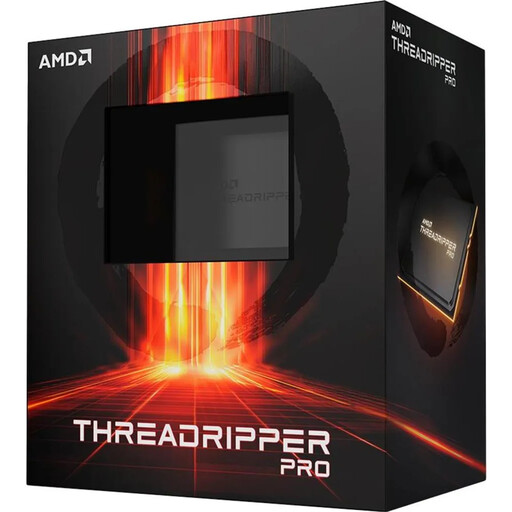
Why this product suits this profile: With 24 cores and 48 threads, this workstation CPU is designed for rendering, simulation, data processing and demanding professional applications that run in parallel.
The platform is clearly listed as sTR5 with DDR5 and PCIe 5.0. A cooler isn’t included despite the boxed packaging, and a suitable cooling solution is needed for the 350 W TDP.
24 cores, 48 threads, boost clock of up to 5.3 GHz, 128 MB of L3 cache and eight-channel DDR5 support, according to the product specifications.
We’ve put together a complete, regularly updated list of products that meet these strict selection criteria and fully comply with the safety regulations applicable in the EU.
Ryzen 5000 Series models such as the Ryzen 5 5600X, Ryzen 7 5700 or Ryzen 7 5700X are examples of processors for AM4 motherboards. Compatibility depends on the exact chipset and BIOS version. AM5 models aren’t compatible with AM4.
Yes. The tray and OEM models mentioned here don’t include a cooler. Check the product description for boxed processors too, as some workstation CPUs are also supplied without one. The cooler must be compatible with the socket and TDP.
Running costs depend on TDP, workload, how long you use the PC, BIOS settings and the system as a whole. A 65 W CPU has different cooling and power requirements from a 350 W Threadripper model. For a realistic estimate, consider the CPU, graphics card and power supply together.